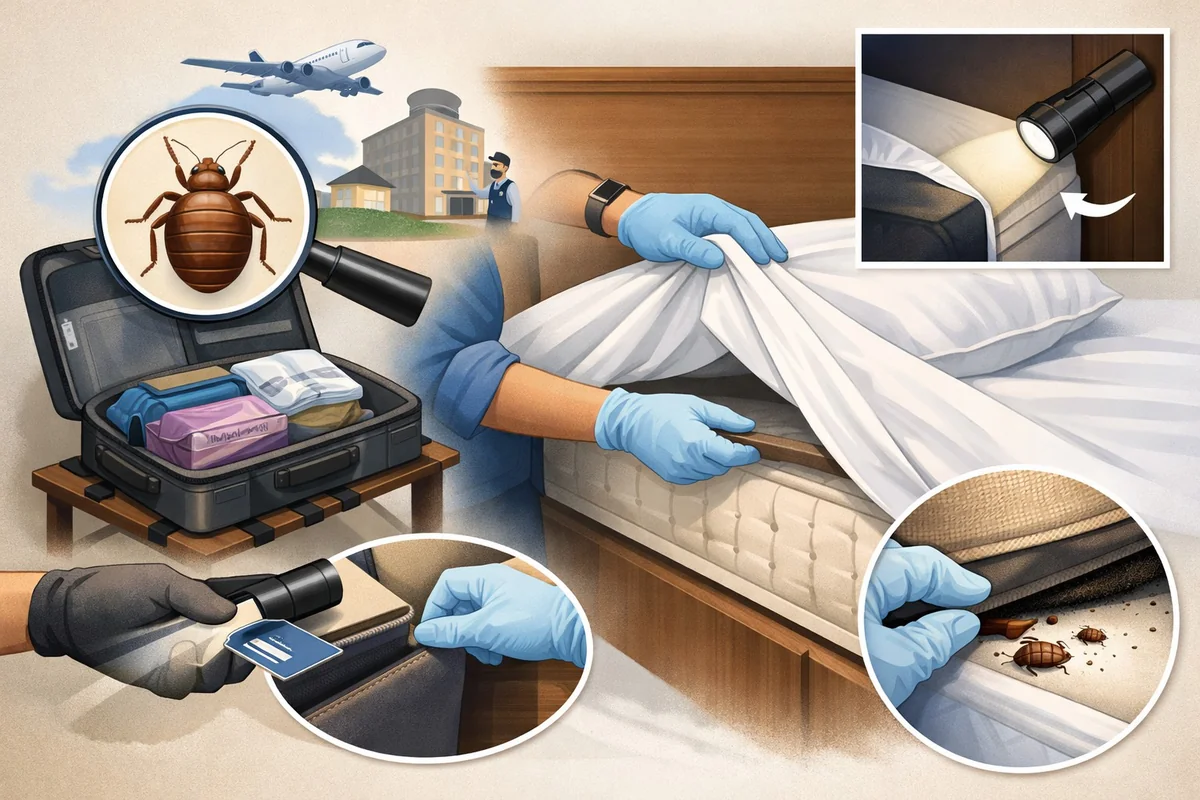

How to Check for Bed Bugs in Hotels: Step-by-Step Guide for 2026 Travelers
Worried about bed bugs in hotels? Learn how to inspect your room, protect your belongings, and avoid bringing bed bugs home with this practical 2026 guide to hotel bed bug checks and travel tips.
To check for bed bugs in hotels, examine mattress seams, headboards, and furniture for live bugs, stains, or shed skins before unpacking. Use a flashlight and keep luggage isolated during inspection. The process usually takes 10-15 minutes and can prevent costly infestations at home.
Why Bed Bug Checks Matter in Hotels
If you travel frequently or just occasionally, hotel bed bug inspections are your best defense against bringing an infestation home. Bed bugs don’t care about cleanliness or hotel reputation - they follow people, not dirt. Missing early signs can turn a short stay into a long-term headache.
How Bed Bugs Spread in Hotels
Bed bugs are champion hitchhikers. They cling to luggage, clothing, and personal items, moving quietly between rooms and even between hotels. High guest turnover means even luxury hotels face recurring risks, especially since one infested room can lead to several more through laundry carts, housekeeping, or guests moving rooms.
Once a few bed bugs enter a room, they multiply fast. Females lay up to 5 eggs per day, and within a few weeks, you can have hundreds hiding in cracks and crevices. If a hotel misses the signs, the problem scales quickly and can affect entire floors.
Risks of Not Checking for Bed Bugs
Ignoring a bed bug check can cost you more than lost sleep. Bites cause red, itchy welts and, for some, severe allergic reactions or secondary skin infections. Worse, you risk bringing bugs home, which can mean weeks or months of treatments and disrupted living.
Don’t assume the hotel will warn you if there’s a problem. Many properties avoid disclosing bed bug incidents unless absolutely necessary. Your own inspection is often the only real safeguard.
For a deeper look at treatment options, see Bed Bug Control.
What You Need Before Inspecting a Hotel Room
Coming prepared makes your inspection quick and effective. You don’t need fancy gear - just a few essentials and a little awareness go a long way. Here’s what experienced travelers and pest pros actually use.
Essential Items for Inspection
- Small flashlight or phone light: Bed bugs hide in dark seams and cracks - light helps you spot them.
- Plastic bags: Use these to isolate luggage or hold clothing if you spot anything suspicious.
- Disposable gloves: These keep your hands clean when checking mattresses or moving furniture.
Preparation Tips for Travelers
- Keep luggage off the bed and floor until you’ve finished your inspection. Luggage racks (if available) reduce the risk of bugs crawling inside your bags.
- Pack light-colored clothes - they make it easier to spot any dark bugs or stains that might transfer from an infested room.
- Seal dirty laundry in airtight bags. Bed bugs are drawn to your scent, and these bags keep them from finding your used clothes.
If you need to treat your luggage or belongings, refer to our Best Bed Bug Sprays and Foggers 2026 guide for products that work in travel scenarios.
Step-by-Step Guide: Inspecting Your Hotel Room
Checking for bed bugs in hotels is straightforward if you know what to look for and where. Focus on the most likely hiding spots, understand the signs, and avoid damaging hotel property during your inspection. Here’s how pros approach it:
Step-by-Step Guide
Learn how to check your hotel room for bed bugs with this clear, step-by-step guide. Follow best practices to protect yourself from infestations and ensure a safe, comfortable stay.
Total Time
20 minutes
Difficulty
Beginner
Prepare Before Entering the Room
Keep your luggage away from beds and upholstered furniture. Place bags on a luggage rack or the bathroom floor to avoid accidental bed bug transfer. This reduces the risk of bringing pests home.
Pro Tips:
- Use the bathroom for initial luggage placement—tile surfaces offer fewer hiding spots.
- Bring large resealable plastic bags to store clothing and shoes during your stay.
- Check the luggage rack for signs of bed bugs before use.
Important Warnings:
- Don't place luggage on beds or carpets before inspection—bed bugs can quickly crawl into bags.
Required Tools:
- Luggage rack or hard-surface area
- Resealable plastic bags (2-4 gallon size)
Inspect the Bed and Mattress Seams
Examine the mattress seams, corners, and tags using a flashlight. Look for reddish stains, small black dots, or live bugs (about 1/4 inch, reddish-brown). This is where bed bugs commonly hide and lay eggs.
Pro Tips:
- Remove all bedding and inspect both sides of the mattress.
- Shine the flashlight along seams and tufts for better visibility.
- Check under mattress tags and any fabric folds.
Important Warnings:
- Common mistake: Failing to check mattress edges can miss early infestations.
Required Tools:
- Small LED flashlight
- Disposable gloves (optional for hygiene)
Check Bed Frame, Headboard, and Nightstands
Use your flashlight to inspect cracks, crevices, and joints of the bed frame, headboard, and nearby nightstands. Bed bugs prefer tight spaces close to where people sleep.
Pro Tips:
- Pay extra attention to wooden frames and screw holes.
- Move the headboard if possible to look behind it.
- Check drawer interiors and undersides for hidden bugs.
Important Warnings:
- Don't skip the headboard—up to 50% of infestations start here.
Required Tools:
- Small LED flashlight
- Credit card or plastic scraper (to probe gaps)
Inspect Upholstered Furniture and Curtains
Check seams, folds, and undersides of chairs, sofas, and curtains for signs of bed bugs. Bed bugs can hide in any soft furniture within 6 feet of the sleeping area.
Pro Tips:
- Lift cushions and check zippers and piping.
- Look along curtain folds, especially near the floor.
- Inspect any extra bedding stored in the room.
Important Warnings:
- Neglecting furniture checks increases risk—bed bugs often spread beyond the bed.
Required Tools:
- Small LED flashlight
Review Results and Decide Next Steps
If you spot signs of bed bugs, notify hotel staff immediately and request a new room far from the infested area. If no signs are found, you can unpack. Continue to monitor your belongings throughout your stay.
Pro Tips:
- Take clear photos of any evidence for documentation.
- Ask for a room on a different floor if possible.
- Keep bags closed and elevated throughout your stay.
Important Warnings:
- Don't ignore evidence—failing to act promptly may worsen infestations at home.
Required Tools:
- Smartphone (for photos and communication)
Where to Start: Key Hotspots
- Mattress seams and tags: Pull back sheets and inspect the edges, corners, and underside - the most common hiding places.
- Box springs and headboards: Shine your light along the base and behind the headboard, especially if it’s attached to the wall.
- Upholstered chairs and sofas: Check seams, tufts, and under cushions.
- Luggage racks: Examine straps and joints before placing your bags.
- Nightstands and wall hangings: Inspect cracks, joints, and the area near the bed for bugs or stains.
What to Look For: Signs of Bed Bugs
- Live bed bugs: These are small, oval, reddish-brown, and about the size of an apple seed (4-5 mm).
- Fecal stains: Tiny black or rusty dots that smear when wet - often found on sheets, mattress seams, or behind headboards.
- Shed skins and eggs: Look for translucent shells or tiny white eggs (1 mm long) in crevices.
- Sweet, musty odor: In heavy infestations, you might notice a subtle, unpleasant smell.
How to Inspect Without Damaging Hotel Property
- Lift mattress corners gently - don’t yank or tear the fabric.
- Use a flashlight or credit card edge to check seams and cracks. Never use sharp tools that could scratch or puncture surfaces.
- Return everything to its original place. This prevents confusion with hotel staff and avoids accusations of property damage.
How to Protect Luggage and Belongings
Even if your room passes inspection, bed bugs can still sneak into your bags if you aren’t careful. A few simple habits can save you weeks of hassle back home.
Best Placement for Luggage During Stay
- Use the luggage rack, but only after checking it for bugs and stains. Position it as far from the bed and upholstered furniture as possible.
- Never put bags on the floor, bed, or soft chairs - these are bed bug highways.
- No rack? Set bags on a hard-surfaced counter in the bathroom. It’s the least likely place for bed bugs to travel.
Using Protective Covers and Bags
- Place luggage inside zippered plastic bags or use commercial luggage covers. This makes it nearly impossible for bed bugs to crawl inside.
- Seal dirty laundry in airtight bags - this keeps your scent from attracting bugs and prevents cross-contamination.
- Travel-sized bed bug sprays can be used on luggage exteriors. Always check for compatibility with your bag’s material and local regulations before spraying in the room.
What to Do If You Find Bed Bugs in Your Hotel Room
Don’t panic if you spot evidence of bed bugs. Document everything, communicate clearly with hotel staff, and take steps to avoid spreading the problem to your belongings or your home.
Reporting to Hotel Staff: What to Say
- Take clear photos of any bugs, stains, or evidence. This helps when explaining the issue to hotel management or if you need to file a claim.
- Ask for a new room, and specify that you want it far from the original (ideally on a different floor). Bed bugs can spread to adjacent rooms.
- Remain calm and factual. Angry confrontations rarely help and may slow down the process of getting a better room or refund.
Immediate Steps to Avoid Bringing Bed Bugs Home
- Isolate your luggage and inspect every item before moving to a new room or hotel. Pay extra attention to seams and folds.
- If possible, wipe or vacuum the exterior of your bag, then seal it in a plastic bag until you get home.
- Change clothes and bag the ones you were wearing separately. This reduces the chance of transferring bugs between rooms or to your house.
Common Mistakes Travelers Make During Bed Bug Checks
Even diligent travelers miss things or make mistakes that can undermine their inspection. Knowing these pitfalls can save you from an expensive and stressful infestation.
Overlooking Less Obvious Hiding Places
- Bed bugs aren’t just in beds. Curtain folds, baseboards, and even electrical outlets close to the bed can harbor them.
- Only lifting the top of the mattress misses bugs nesting along the sides or underneath.
- Luggage racks, if not checked, can transfer bugs directly into your suitcase without you noticing.
Misidentifying Other Pests or Stains
- Booklice, carpet beetles, and lint are commonly mistaken for bed bugs. Bed bugs are reddish-brown and oval, not fuzzy or white.
- Fecal stains from bed bugs are dark and smear if rubbed with a wet tissue. Ink, mold, or dust won’t smear the same way.
- Overreacting to harmless debris can lead to unnecessary stress or wasted time moving rooms for no reason.
Tips for Bed Bug-Free Travel in 2026
The basics of bed bug prevention haven’t changed, but more hotels now have policies and technology to address outbreaks quickly. Here’s how to stay ahead in 2026.
Choosing Hotels With Bed Bug Prevention Policies
- Look for hotels that publicly list pest management schedules or use third-party inspection services. This is becoming more common in 2026 due to traveler demand.
- Read recent online reviews focusing on patterns of bed bug complaints. One old review means less than multiple recent ones.
- Contact the property directly and ask about their bed bug response plan - reputable hotels will be transparent and specific.
Travel Habits That Reduce Bed Bug Risk
- Unpack only the essentials. Keep the rest sealed in bags or covers for the duration of your stay.
- Wash and dry all clothing on high heat (at least 120°F for 30+ minutes) as soon as you return home - this kills any hidden bugs or eggs.
- Inspect all luggage seams, pockets, and zippers both before you leave and when you get home. Early detection is your best defense.
Frequently Asked Questions About Hotel Bed Bug Inspections
❓ Frequently Asked Questions
How do I check for bed bugs in a hotel room?
How do I check for bed bugs in a hotel room?
To check for bed bugs in a hotel room, follow these steps:
- Place luggage in the bathroom or on a luggage rack.
- Pull back bedding and inspect mattress seams for small reddish-brown bugs or dark stains.
- Look behind headboards and inside nightstands.
- Examine upholstered furniture.
Use a flashlight for thorough inspection.
What are the early signs of bed bugs in hotels?
What are the early signs of bed bugs in hotels?
Early signs of bed bugs in hotels include tiny rust-colored stains on sheets, shed exoskeletons, and small, reddish-brown bugs hiding in mattress seams or headboards. Musty odors and clusters of bites on exposed skin may also indicate bed bug presence. Always inspect bedding and furniture before settling in.
What should I do if I find bed bugs in my hotel room?
What should I do if I find bed bugs in my hotel room?
If you find bed bugs in your hotel room, immediately notify the front desk and request a room change - ideally on a different floor. Do not move your belongings until the switch is confirmed. Inspect the new room thoroughly before unpacking. Save evidence (photos) for documentation if needed.
How can I prevent bringing bed bugs home from a hotel?
How can I prevent bringing bed bugs home from a hotel?
To prevent bringing bed bugs home, store luggage on a rack or in the bathroom, away from beds and upholstered furniture. Keep clothes in sealed bags. Before leaving, inspect and vacuum your luggage. Once home, wash and dry clothes on high heat. Regularly check suitcases for signs of infestation.
How often should I inspect my hotel room for bed bugs during my stay?
How often should I inspect my hotel room for bed bugs during my stay?
Inspect your hotel room for bed bugs immediately upon arrival and repeat every 2-3 days during your stay. Bed bugs can move between rooms and multiply quickly, so regular checks help catch issues early. Focus on sleeping areas and luggage storage spots for best results.
Why do hotels struggle with bed bug infestations?
Why do hotels struggle with bed bug infestations?
Hotels struggle with bed bug infestations because high guest turnover increases the risk of introducing bed bugs. These pests hide in small crevices and can survive months without feeding, making them difficult to eliminate. Regular inspections and prompt treatment are essential, but infestations remain challenging for even well-maintained properties.
What is the difference between bed bugs and other hotel pests?
What is the difference between bed bugs and other hotel pests?
Bed bugs are small, flat, reddish-brown insects that feed on human blood, while other hotel pests like cockroaches or ants usually seek food scraps and moisture. Bed bugs hide in bedding and furniture, causing itchy bites, whereas most other pests do not bite humans while they sleep.
Key Takeaways for Safe Hotel Stays
Bed bug checks in hotels are non-negotiable for anyone wanting to avoid weeks of stress and expensive treatments. A flashlight, a few bags, and 10 minutes of careful inspection put you in control of your environment.
Always have a plan: inspect before unpacking, protect your luggage, and know how to communicate with hotel staff if you find signs of bed bugs. If you act early, you minimize both the health risks and the hassle of bringing these pests home.
If you suspect exposure after travel, act fast - treat your belongings, monitor for any signs at home, and don’t hesitate to call in professionals if evidence of an infestation appears. Peace of mind starts with a careful inspection and smart travel habits.
Related Articles
Best Bed Bug Sprays and Foggers 2026: Top DIY Removal Products Reviewed
Best bed bug sprays, foggers, powders, and natural options for 2026. Compare top-rated products and find safe, effective DIY solutions for your home.
Best Bedroom Pest Control Products 2026: Safe, Effective Picks for Every Home
Discover the best bedroom pest control products for 2026, including ant baits, bed bug sprays, natural solutions, and living room pest killers. Find safe, effective, and budget-friendly options for every home.
Complete Guide to Pest Prevention in Homes: Stop Pests in 2026
Protect your home in 2026 with this complete pest prevention guide. Discover proven DIY methods, room-by-room tips, safe solutions for families, and expert advice to stop pests before they start.
Guide to Identifying Household Pests: Spot, Compare, and Act on Common Pest Signs in 2026
Learn how to identify household pests quickly and accurately with our 2026 step-by-step pest identification guide. Spot common pest signs, compare DIY and professional methods, and take control of your home without costly exterminators.