 Pest Pro Reviews Editorial Team • • 8 min read •
Best Rat Bait Blocks for Stations, Farms and Outbuildings
The best rat bait blocks: JT Eaton diphacinone, Kaput warfarin, JT Eaton Top Gun bromethalin and Tomcat Bait Chunx, plus who may use them and how to place them.
The best rat bait blocks are JT Eaton's apple diphacinone blocks, a first-generation anticoagulant with a center hole for station rods. Kaput warfarin blocks are the slower, repeated-feeding option, JT Eaton Top Gun adds a bittering agent to a bromethalin block, and Tomcat Bait Chunx are the bromethalin choice labeled for agricultural use.
- Bait blocks are meant for tamper-resistant bait stations, mounted on rods so rats cannot carry them off.
- Pails and bags of loose blocks are registered for professionals and agricultural users; homeowners' poison comes as ready-to-use stations.
- First-generation anticoagulant blocks have an antidote, vitamin K1; bromethalin blocks do not.
What Rat Bait Blocks Are
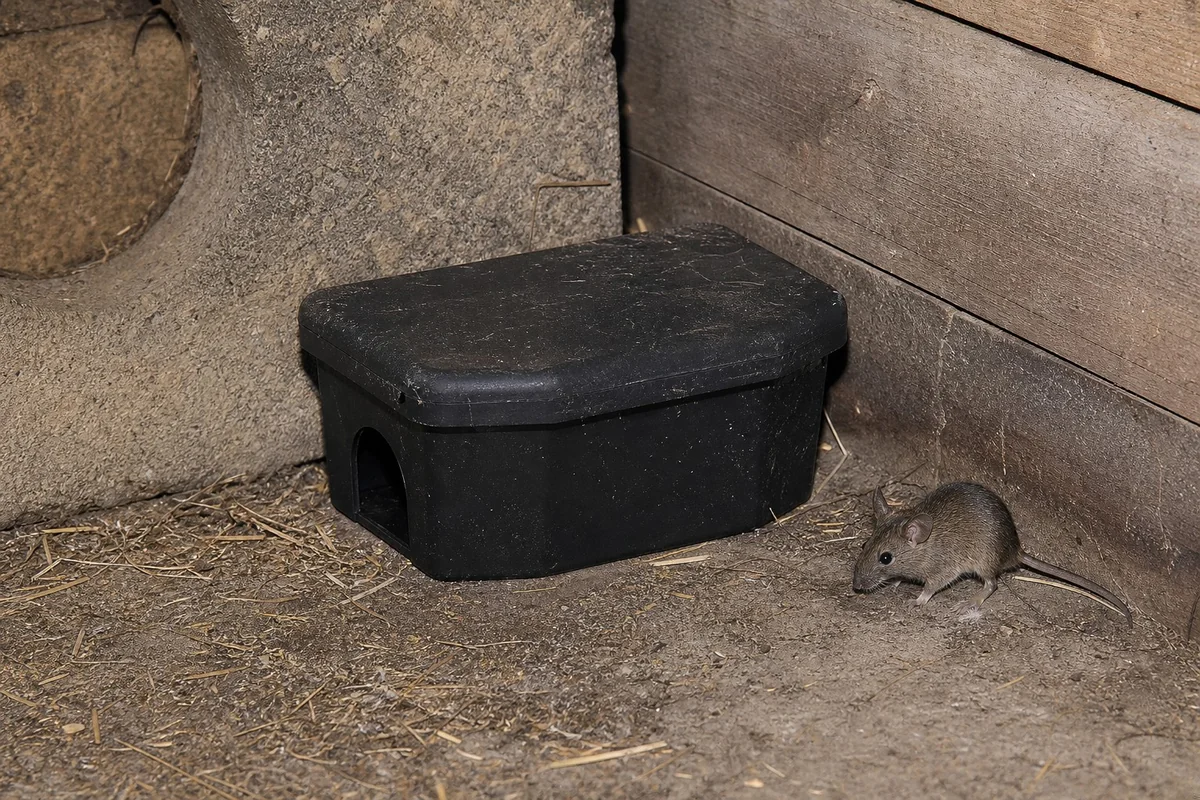
A bait block is a pressed, weather-resistant cake of grain and rodenticide, usually about an ounce, often with ridges for gnawing and a hole through the middle. The hole lets you slide blocks onto the metal rods inside a bait station, so a rat has to eat the bait where it is instead of carrying it off and dropping it where a dog or child could find it.
What does rat bait look like? Most blocks are small, often colored squares or chunks, which helps you spot bait that has been dragged out of a station. Blocks hold up better in damp places than loose pellets or meal, which is why they are the usual choice for outdoor stations, crawl spaces and barns.
If you are choosing between blocks, trap baits and ready-to-use stations, our guide to the best bait for mice and rats compares them all.
Identify your needs and get personalized recommendations
Ongoing baiting around farm buildings.
Antidote and deterrents matter most.
Rats survived anticoagulant baiting.
A modest population around outbuildings.
Who Can Use Bait Blocks
Rodenticides are regulated pesticides, and the label is the law. The EPA's page on restrictions on rodenticide products says products for the consumer market are ready-to-use bait stations, while blocks, pellets and paste for professionals and agricultural users come in larger containers and are not meant for consumer stores. It also requires tamper-resistant stations wherever children, pets or wildlife could reach the bait and for all above-ground outdoor use.
In practice, that means a pail of loose blocks is for farms, agricultural buildings and professionals, and several listings say so outright. Brodifacoum and the other second-generation anticoagulants are not registered for consumer products at all. The rat and mouse poison bait section covers consumer stations for homes.
How We Selected These Bait Blocks
We compared blocks on active ingredient, whether an antidote exists, station fit, weather resistance, safety features such as bittering agents and what buyers report about how readily rats eat them. Our sources were manufacturer listings and label details stated in them, Amazon's review digests, EPA and UC IPM guidance; we did not test the products.
We left out blocks whose listings do not name the active ingredient, such as Just One Bite II, and bulk pails far larger than most properties need. Blocks already picked in our other bait guides are named in passing rather than repeated. Four blocks made the list, starting with the first-generation option buyers rate most highly for quality.
JT Eaton Apple Bait Blocks: Best Overall
The JT Eaton 709-AP pail holds 144 one-ounce apple-flavored blocks of diphacinone at 0.005%, a first-generation anticoagulant. The maker lists it for farm and agricultural areas outdoors and for attics, garages and basements indoors, in bait stations.
- Each block has a center hole for station rods.
- The resealable pail is tamper-evident for storage.
- Buyers find it effective on both rats and mice, easy to use, and say rodents take the apple flavor well; tight stations keep other animals out.
- Diphacinone needs multiple feedings, per the maker, so it does not kill immediately.
Choose it for stations around barns, sheds and foundations where the label covers your use.

JT Eaton Apple Bait Blocks 9 lb
Best for: First-generation baiting around barns and foundations
- ✓First-generation anticoagulant; vitamin K1 antidote exists
- ✓Center hole fits station rods
- ✓Effective on rats and mice, per buyers
- −Needs multiple feedings, per the maker
- −Other animals can reach loose blocks; use tight stations
Specifications (3)
- Item Form
- Tablets
- Item Weight
- 9 pounds
- Unit Count
- 144 Count
Kaput Mouse Blocks: Best Warfarin Blocks
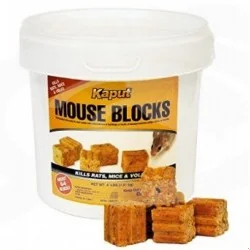
Kaput Mouse Blocks are a 4-pound pail of warfarin blocks at 0.025%, labeled for rats, mice and voles, inside buildings or within 50 feet of structures. Warfarin is the oldest and slowest of the anticoagulants.
- The maker advises keeping fresh bait out for 10 to 15 days, since rodents must feed repeatedly.
- The blocks fit bait stations and stay intact in busy areas, per the maker.
- The listing names the states where it may be sold and used.
- Buyers of Kaput's warfarin line find it effective on voles; value feedback is mixed.
Pick it where a slow, repeated-feeding bait fits, such as outbuildings with a steady, modest rat population. A 22-pound pail of the same blocks is sold for large properties.
Kaput Mouse Blocks Warfarin 4 lb
Best for: Outbuildings where a slow, repeated-feeding bait fits
- ✓First-generation anticoagulant; vitamin K1 antidote exists
- ✓Blocks stay intact in stations, per the maker
- ✓Labeled for rats, mice and voles
- −Needs 10 to 15 days of fresh bait, per the maker
- −Sold only in listed states
Specifications (3)
- Active Ingredients
- Warfarin (0.025%)
- Item Form
- Blocks
- Target Species
- Rats, Mice, & Voles
JT Eaton Top Gun All-Weather Blocks: Best Bromethalin Blocks
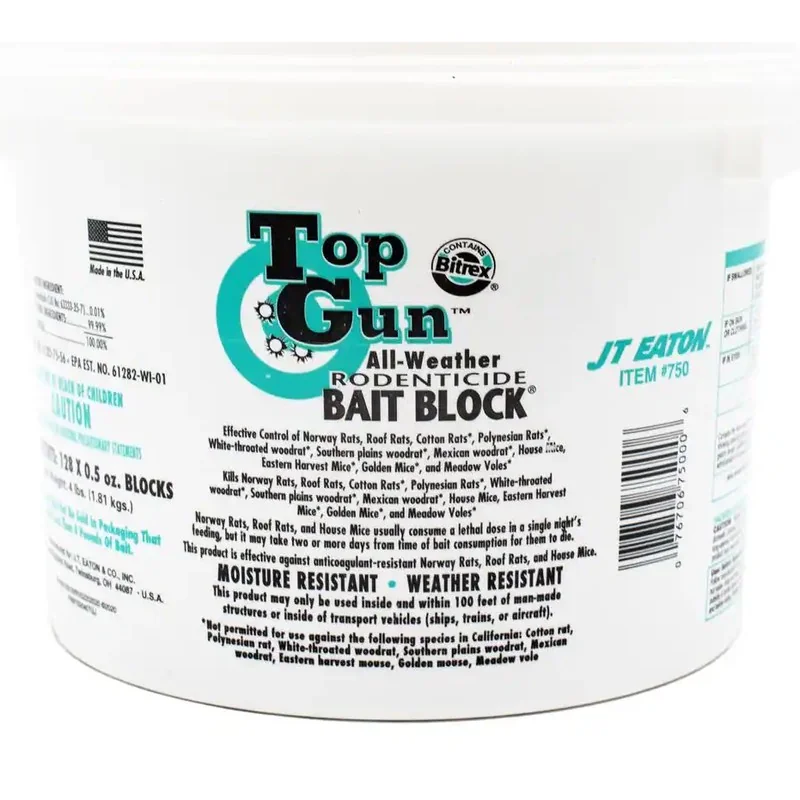
JT Eaton Top Gun is a 4-pound pail of all-weather blocks with bromethalin at 0.01%, a nerve poison rather than an anticoagulant. The maker says the blocks include a bittering agent to deter accidental ingestion by children or pets.
- The maker describes stop-feed action, with rodents dying an average of 1 to 2 days after a lethal dose.
- It is listed for bait stations outdoors in farm and agricultural areas and indoors in attics, garages and basements.
- Buyers find it easy and clean to use and say it slides onto station rods; many find the blocks small.
- Effectiveness and palatability feedback are mixed, from complete control to rodents ignoring it.
Choose it where anticoagulants have not worked and a bittering agent adds a margin of safety. Bromethalin has no antidote, and UC IPM notes secondary exposure in animals that eat poisoned rodents can occur.
JT Eaton Top Gun All-Weather Blocks
Best for: Anticoagulant failures where extra ingestion safety helps
- ✓Bittering agent deters children and pets, per the maker
- ✓Slides onto station rods, per buyers
- ✓Not an anticoagulant
- −Blocks are small, per buyers
- −No antidote for bromethalin
Specifications (2)
- Item Form
- Tablets
- Unit Count
- 128 Count
Tomcat Bromethalin Bait Chunx: Best for Farms
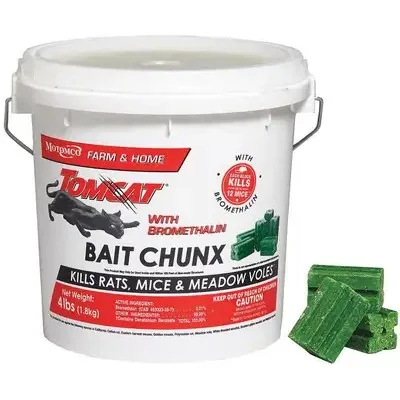
Tomcat Bromethalin Bait Chunx are a 4-pound pail of blocks labeled for agricultural use within 100 feet of man-made structures. The maker says Norway rats, roof rats and house mice stop feeding after consuming a toxic dose.
- Bait stations are mandatory for outdoor, above-ground use, per the listing.
- The maker lists one-ounce blocks and states how many mice and rats a given amount of bait can kill in no-choice lab testing.
- Buyers report no further signs of rats or mice after use; palatability feedback is mixed.
- Buyers say squirrels and even raccoons go for it, so stations must keep them out.
Pick it for farm buildings where the agricultural label applies. Outside that use, choose a consumer bait station instead.
Tomcat Bromethalin Bait Chunx 4 lb
Best for: Farm buildings under an agricultural label
- ✓Buyers report no further signs of rodents
- ✓Labeled for Norway rats, roof rats and house mice
- ✓Stop-feeding action, per the maker
- −Agricultural use only, per the listing
- −Squirrels and raccoons take it, per buyers
Specifications (1)
- Active Ingredients
- Bromethalin
- JT Eaton Apple Bait Blocks wins for: first-generation baiting around barns and foundations
- Kaput Mouse Blocks wins for: slow warfarin baiting in outbuildings
- JT Eaton Top Gun All-Weather Blocks wins for: bromethalin with a bittering agent
- Tomcat Bromethalin Bait Chunx wins for: farm buildings under an agricultural label
Whichever you choose, the way you place blocks decides whether they work.
How to Use Rat Poison Blocks
- Read the label first for where, by whom and how much bait may be used, and how far from structures.
- Seal entry points into the house before baiting outside, so poisoned rats do not come indoors to die, as UC IPM advises.
- Mount blocks on rods inside tamper-resistant stations, so they cannot be dragged out.
- Place stations on runways along walls, near burrows and between shelter and food, and fasten raised stations so they cannot fall.
- Check and refill every few days at first; UC IPM notes rats may take several days to weeks to start feeding in a new station.
- Collect dead rats daily with a plastic bag turned inside out over your hand, and remove all uneaten bait when activity stops.
Are Bait Boxes Effective for Rats?
Yes, when they are placed on runways and given time. A bait box protects the bait from weather and keeps children, pets and wildlife away, and the enclosed space suits rats' preference for sheltered feeding spots. UC IPM requires tamper-resistant stations wherever non-target animals could reach the bait.
For a heavy infestation, more stations in more places work better than piling more bait into a few. Use traps alongside the stations, especially near the house, and call a professional if activity does not drop after several weeks.
Common Questions About Rat Bait Blocks
How many bait blocks should go in each station?
How many bait blocks should go in each station?
The label sets the amount and spacing, and you should follow it exactly. In practice, start with a few blocks on the rods, check every few days, and add more only where feeding is heavy. Overfilling wastes bait and lets crumbs fall out.
Why are rats not eating the bait blocks?
Why are rats not eating the bait blocks?
Usually because the station is new, off their runway or surrounded by easier food. Rats may take days to weeks to enter a new station. Move stations against walls near burrows, remove other food such as spilled feed, and try a different flavor or active ingredient if blocks stay untouched.
Can bait blocks be used in the rain?
Can bait blocks be used in the rain?
Blocks hold up to damp better than loose bait, and all-weather formulas are made for it, but they still belong inside a station that keeps rain off. Replace blocks that turn soft or moldy.
Is brodifacoum bait available to homeowners?
Is brodifacoum bait available to homeowners?
No. Brodifacoum is a second-generation anticoagulant, and the EPA no longer registers second-generation anticoagulants for consumer products. They are limited to professionals and certain agricultural uses, and California restricts most anticoagulant uses further.
Which One Should You Buy?
For most farms and properties that bait outdoors, JT Eaton's apple blocks are the pick. Diphacinone is a first-generation anticoagulant with an antidote, buyers find the blocks effective, and the center hole keeps them on station rods where rats must eat them.
Choose Kaput warfarin blocks for slow, steady baiting in outbuildings, JT Eaton Top Gun when anticoagulants have failed and a bittering agent adds safety, and Tomcat Bait Chunx for farm buildings under its agricultural label. For a home without farm use, skip bulk blocks and use a consumer ready-to-use station instead.
Before you order, check the label for who may use it and where, and count how many stations your runways need.
Related Articles
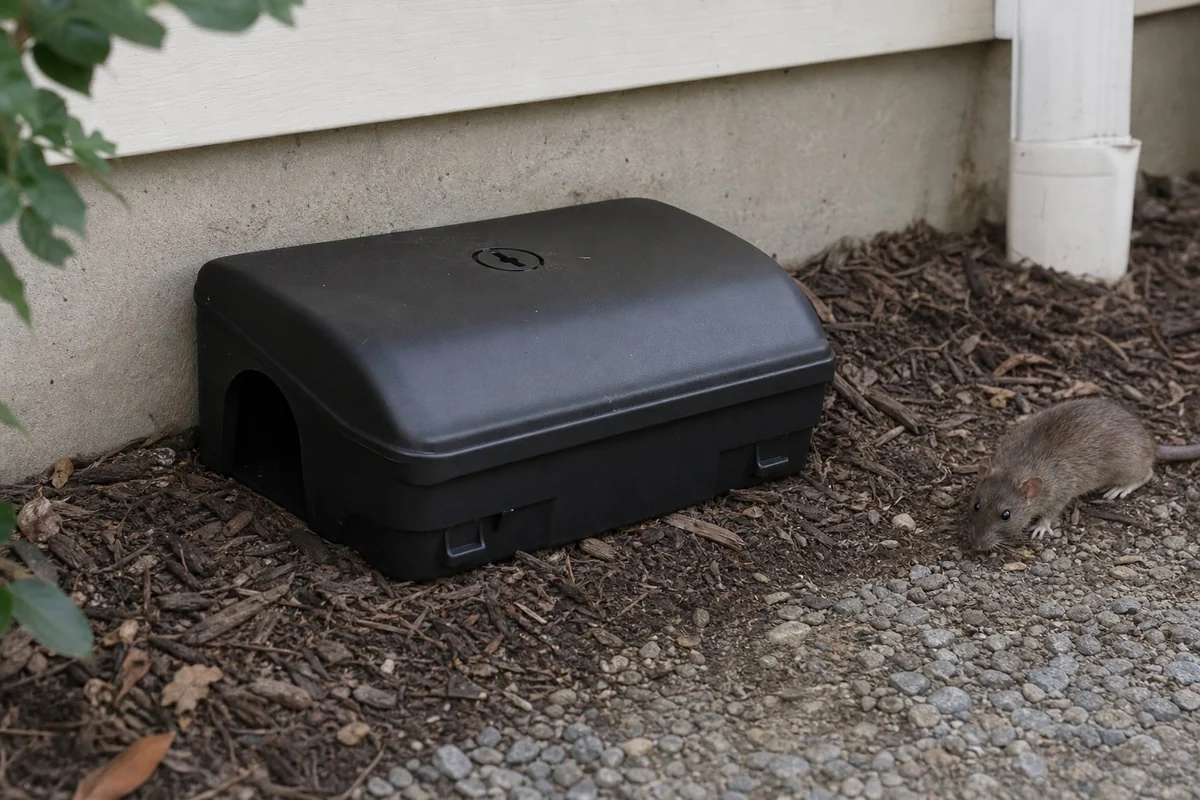
Best Rat Bait Stations: Lockable Boxes for Bait or Traps
The best rat bait stations: Tomcat Outpost, Mice&Co, Exterminators Choice, a clear-lid K DERDISCOUNT, Victor XL and Qualirey, plus station rules and placement.
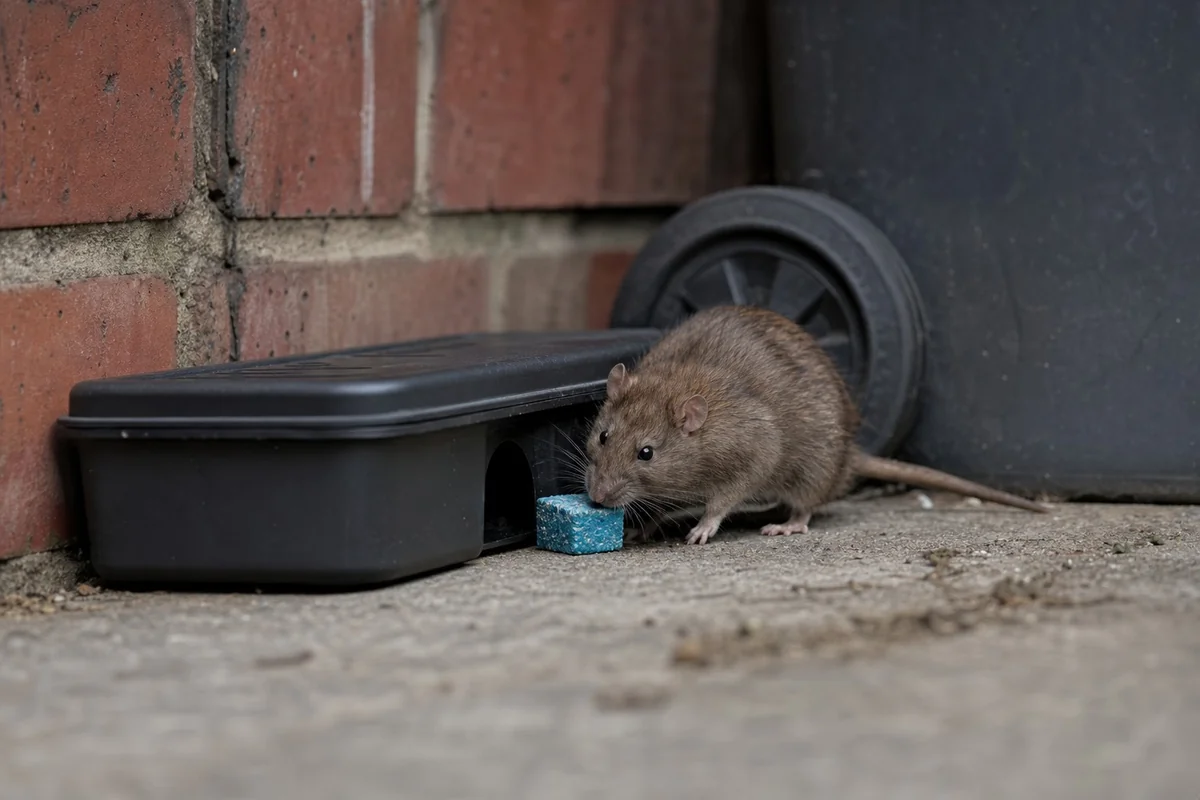
Best Rat Bait: Blocks, Bromethalin, Birth Control and Trap Gel
Best rat bait: JT Eaton diphacinone blocks, Victor bromethalin blocks, Kaput rodent and tick blocks, Evolve birth control bait and Tomcat trap gel, plus label rules.
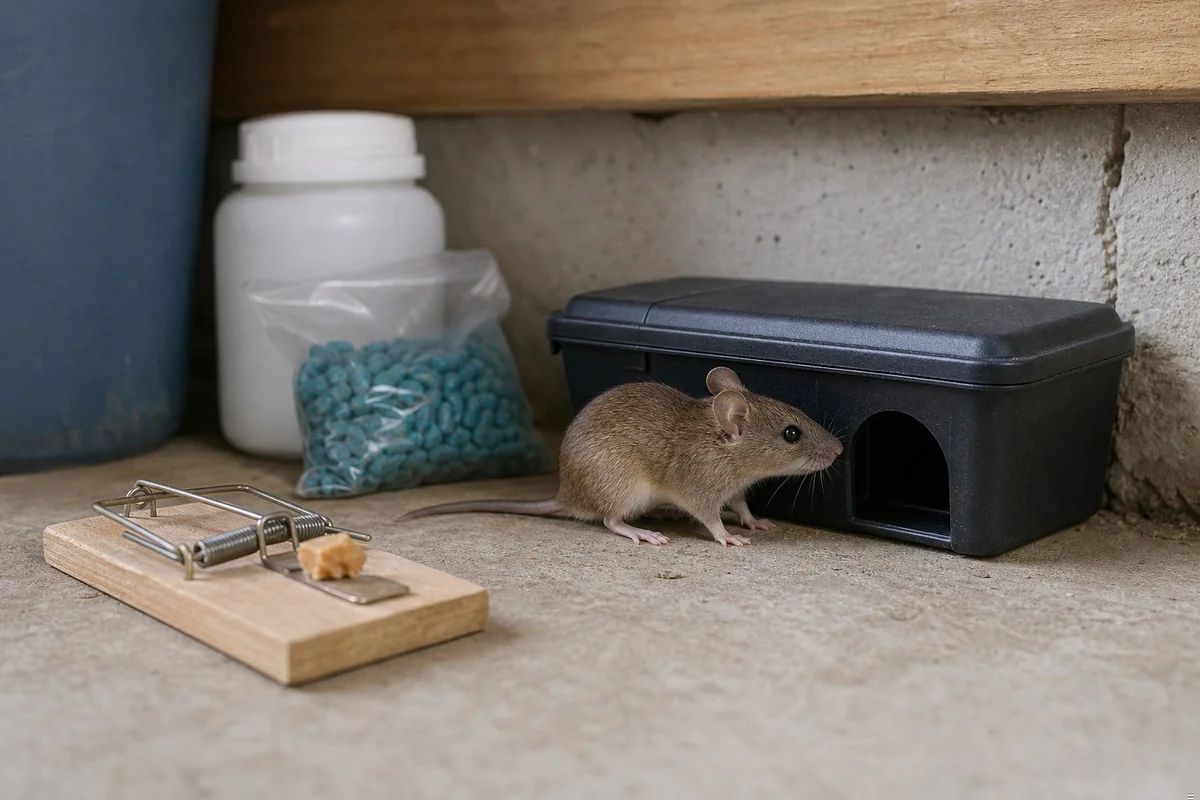
Best Bait for Mice and Rats: Trap Baits, Poison and Stations
Best bait for mice and rats: food baits for traps, a ready-to-use d-Con station for homes, lockable bait stations and farm bait blocks, plus what the rules allow.
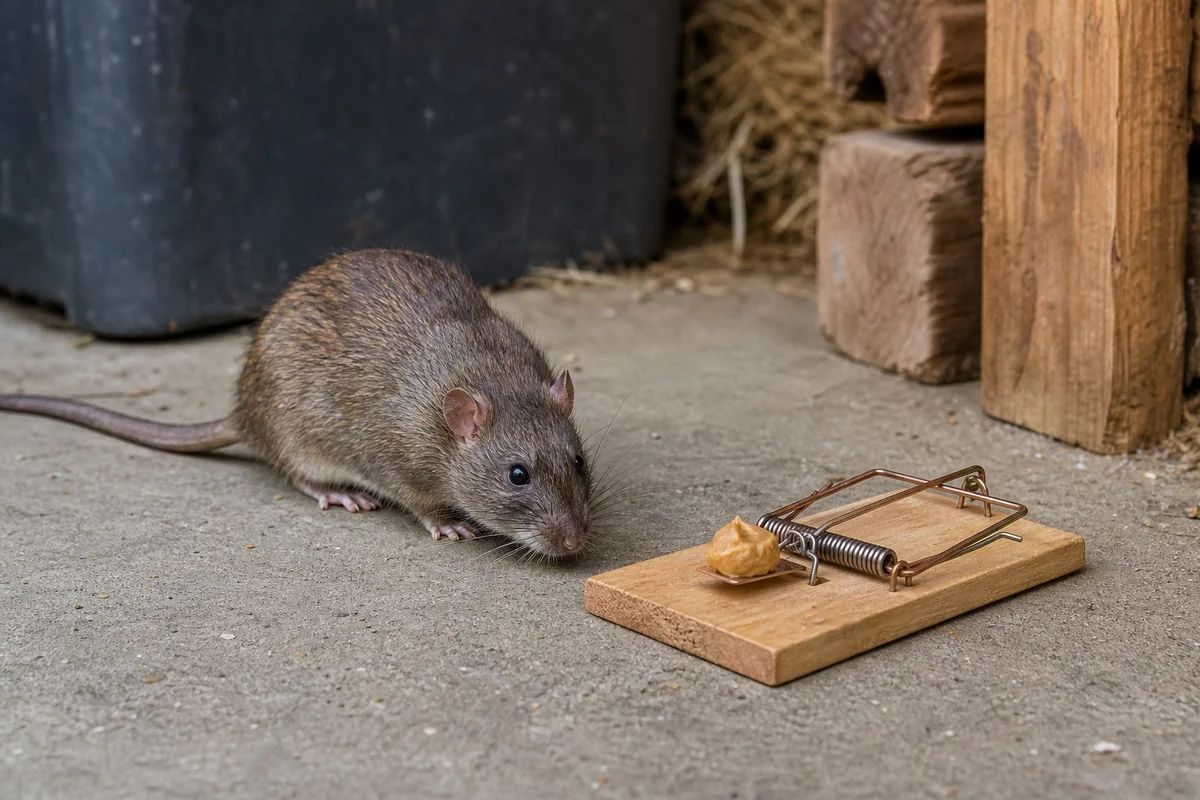
Best Bait for Rat Traps: What Works and How to Use It
The best bait for rat traps: why familiar food wins, peanut butter, nuts, bacon, fruit and feed compared, how to bait a trap, and the best rat trap bait outdoors.