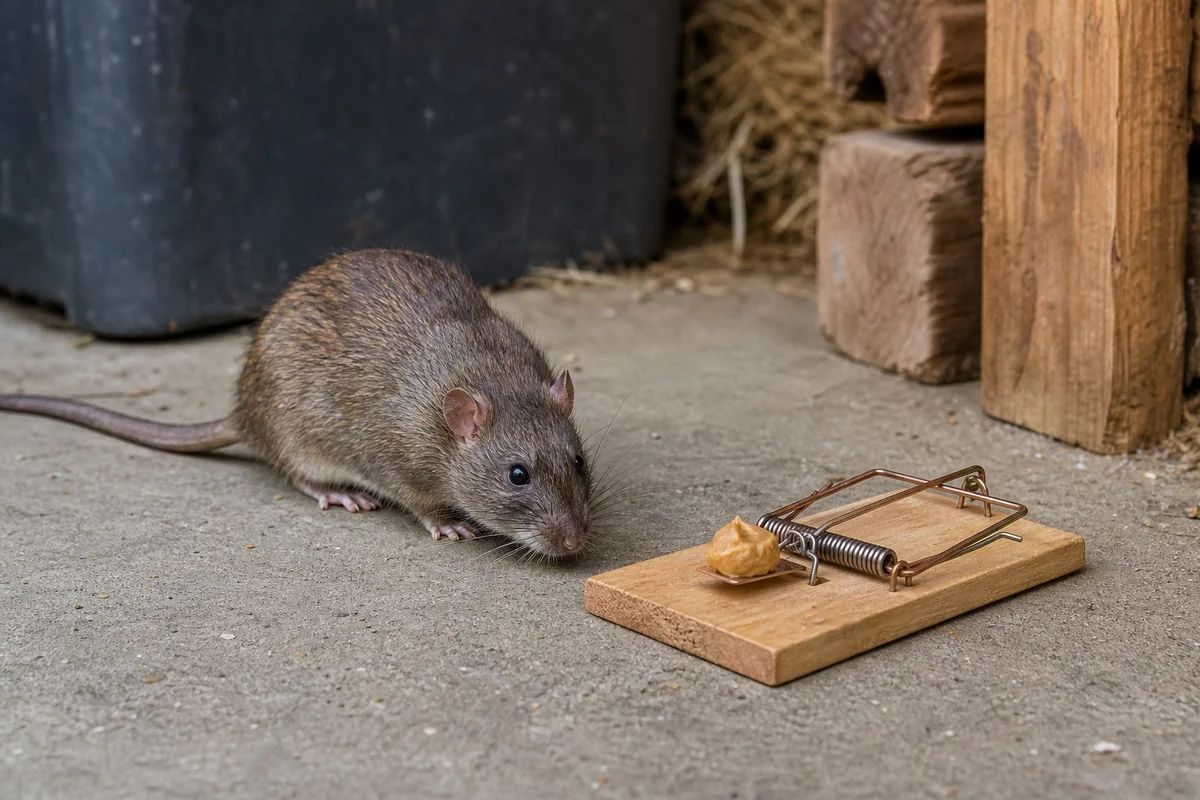

Best Bait for Rat Traps: What Works and How to Use It
The best bait for rat traps: why familiar food wins, peanut butter, nuts, bacon, fruit and feed compared, how to bait a trap, and the best rat trap bait outdoors.
The best bait for a rat trap is the food rats are already eating where you trap, used in a pea-sized amount. Peanut butter, nuts, bacon, dried fruit and dry pet food are the reliable all-rounders, and dry baits work best tied to the trigger. Matching bait to the rats' current diet matters more than any single “magic” bait.
Why Familiar Food Makes the Best Rat Bait
Rats are cautious eaters. UC IPM's rat pest guide notes that they quickly detect and avoid new objects and new foods, which is why a strange bait on a strange trap is often ignored for days. A food the rats already know removes one of those two warning signs.
Look at what is being raided: bird seed, pet food, chicken feed, fallen fruit, nuts from a tree, garbage. A little of that same food on the trigger looks like more of what is safe to eat. If you cannot tell what they are eating, strong-smelling fat and protein are the next best choice.
This guide covers food baits for traps. For poison baits, blocks and bait stations, see our guide to the best bait for mice and rats.
Rat Trap Baits Compared
The same guide lists nuts, dried fruit, bacon and dry pet food as attractive trap baits, along with soft baits like peanut butter, and UGA's extension guidance adds cooked chicken, noting cheese is not needed. The table compares the common choices.
| Bait | Why It Works | Best Use | Drawback |
|---|---|---|---|
| Peanut butter | Strong smell, sticks to the trigger | Indoors, pre-baiting | Rats can lick it off; dries out in heat |
| Nuts and seeds | Familiar food, tie-able | Tied to the trigger indoors or out | Loose nuts get carried off |
| Bacon and cooked meat | Strong smell, high protein | Norway rats, cold weather | Spoils fast; draws pets and wildlife |
| Dried fruit | Sweet, keeps well | Roof rats, fruit-tree yards | Weaker smell than meat |
| Dry pet food | Familiar where pets are fed | Garages, kitchens, feed rooms | Loose kibble falls off; tie or glue it |
| Grain or chicken feed | What coop and barn rats already eat | Coops, barns, feed sheds | Loose; needs a bait cup or binding |
The species changes the choice too. UC IPM says Norway rats prefer cereal grains, meats, fish, nuts and some fruits, while roof rats often feed in fruit trees and landscaping. Around citrus or avocado trees, dried fruit or the fruit itself is a natural bait; around a feed shed, grain is.
How to Bait a Rat Trap
How much bait and where it sits decide whether the rat triggers the trap or eats and leaves.
- Use a pea-sized amount: UC IPM stresses a small amount; a big blob lets a rat eat from the edge.
- Put it at the back of the cup: the rat has to reach over the strike bar and put weight on the trigger.
- Tie dry baits on: fasten a nut, a piece of dried fruit or bacon to the trigger with thread or fine wire, so the rat must tug at it.
- Set the trigger light: a trigger that springs easily catches a rat that is only nibbling.
- Keep the bait the same: pre-bait the unset trap for a few nights with the exact bait you will use when it is set.
- Wear gloves: handle bait and traps with gloves, which also keeps your scent off them.
How to set a snap rat trap once it is baited? Most plastic rat traps set by pressing the top down until it clicks; place the trap at a right angle to the wall with the trigger end almost touching it, on the rats' runway, and set it only after the unset trap has been visited for a few nights.
Best Rat Trap Bait for Outdoors
Outdoor bait has to cope with weather, ants, slugs and every other hungry animal in the yard. Firm baits tied to the trigger hold up better than soft ones, and nuts or dried fruit last longer than meat.
- Weather: peanut butter dries and crusts in sun; nuts and dried fruit tied on keep longer.
- Non-targets: bacon and meat draw dogs, cats, raccoons and birds, so use them only in covered traps or trap boxes.
- Timing: bait and set traps at dusk and close them in the morning, since rats feed at night and most birds by day.
- Competition: pick up fallen fruit and spilled seed, so the trap is the easiest meal.
Are rats attracted to bird feeders? Yes. Spilled seed under a feeder is one of the most common reasons rats settle in a yard, so add a baffle or tray, clean up spills and use the same seed as bait in traps nearby. The rat and mouse poison bait section covers outdoor baiting with stations.
Common Rat Trap Bait Mistakes
When traps stay empty while rats are clearly around, the bait is often the reason. These are the mistakes that come up most.
- Too much bait → rats eat from the edge; use a pea-sized amount at the back of the cup.
- Loose dry bait → it gets carried off; tie or glue it to the trigger.
- Switching bait when you set the trap → new food looks suspicious; keep it the same.
- Old, crusted bait → it stops smelling; refresh it every few days.
- Cheese → not needed and dries hard; use richer foods.
- Food left out nearby → the bait loses; remove competing food first.
Common Questions About Rat Trap Bait
How often should I check rat traps?
How often should I check rat traps?
Every morning. Rats feed mostly at night, so overnight catches should be removed early, before they smell or attract pets and flies. Refresh the bait at the same time if it is crusted, wet or gone.
How long does bait stay good on a trap?
How long does bait stay good on a trap?
Peanut butter and meat lose their smell within a few days, faster in heat; nuts and dried fruit last longer. Replace bait whenever it looks dry, crusted, moldy or covered in ants, and at least every few days on traps that have not fired.
Should I use poison bait in a rat trap?
Should I use poison bait in a rat trap?
No. A snap trap needs only food to lure the rat onto the trigger, and poison on a trap adds risk to pets and children for no benefit. Keep poison, if you use it at all, inside a labeled bait station, and keep trap bait to ordinary food.
What if rats eat the bait but the trap does not go off?
What if rats eat the bait but the trap does not go off?
The bait is too big, too loose or too far forward, or the trigger is too stiff. Use a pea-sized amount at the back of the cup, tie dry bait to the trigger with thread, and set the trap to its most sensitive setting.
Key Takeaways
The best rat trap bait is whatever the rats already trust: the seed, feed, fruit or pet food they are raiding, or strong-smelling peanut butter, nuts and bacon when you cannot tell. A pea-sized amount at the back of the cup, tied on when it is dry, makes the rat work the trigger instead of eating and leaving.
Keep the bait identical from the first unset night to the night you set the trap, refresh it every few days, and remove competing food around it. Outdoors, favor firm baits that last, and keep meat inside covered traps away from pets and wildlife.
Tonight, find what the rats have been eating and put a little of it on your unset traps.
Related Articles
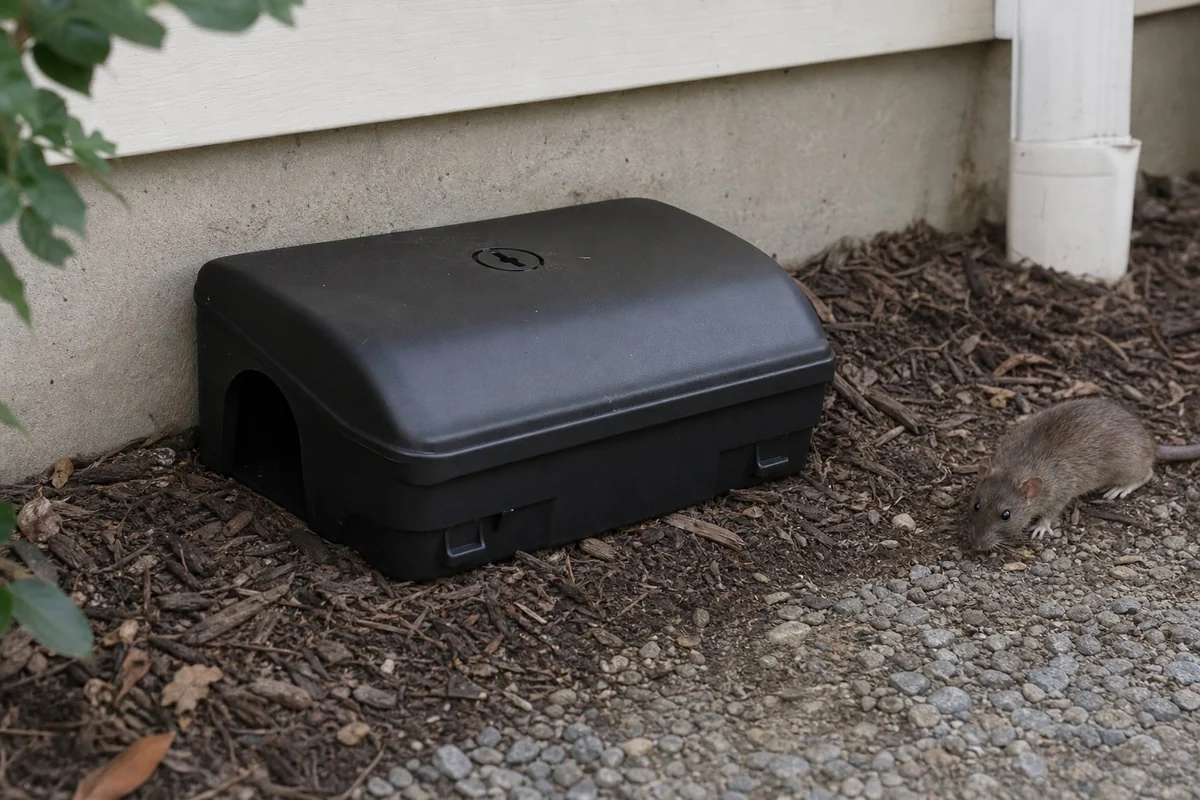
Best Rat Bait Stations: Lockable Boxes for Bait or Traps
The best rat bait stations: Tomcat Outpost, Mice&Co, Exterminators Choice, a clear-lid K DERDISCOUNT, Victor XL and Qualirey, plus station rules and placement.
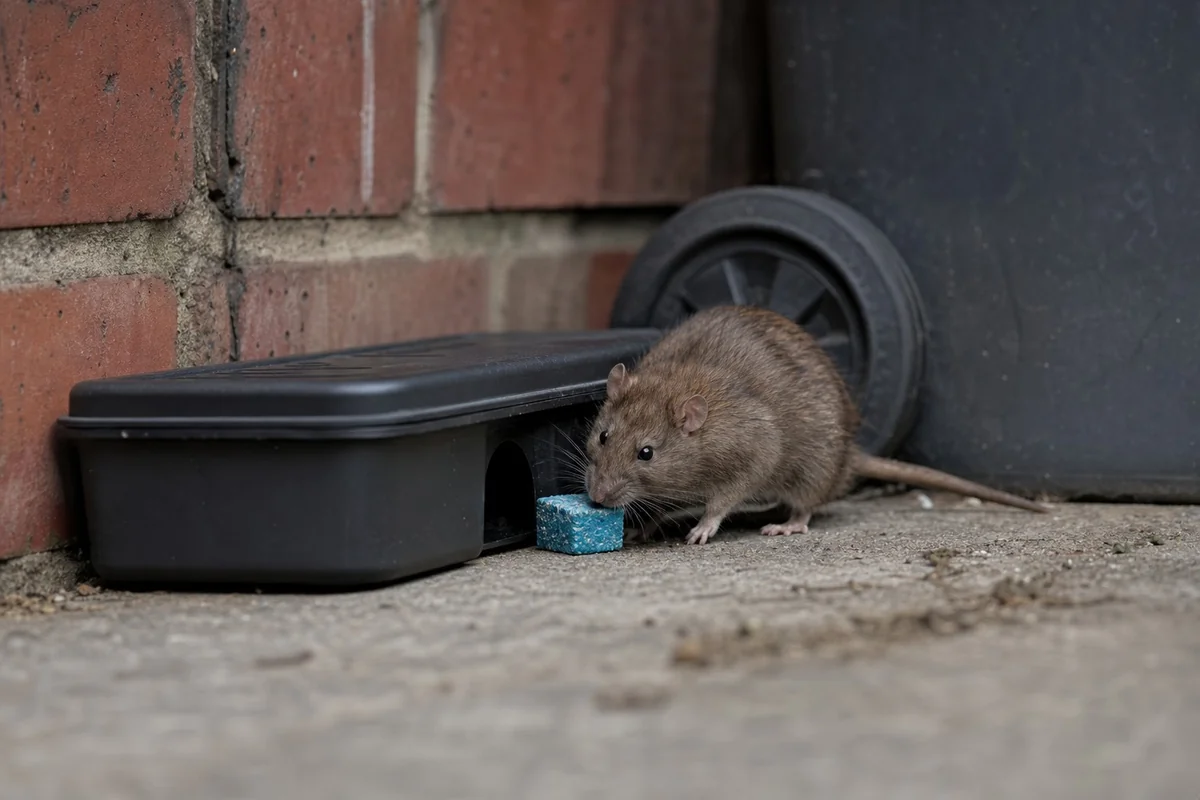
Best Rat Bait: Blocks, Bromethalin, Birth Control and Trap Gel
Best rat bait: JT Eaton diphacinone blocks, Victor bromethalin blocks, Kaput rodent and tick blocks, Evolve birth control bait and Tomcat trap gel, plus label rules.
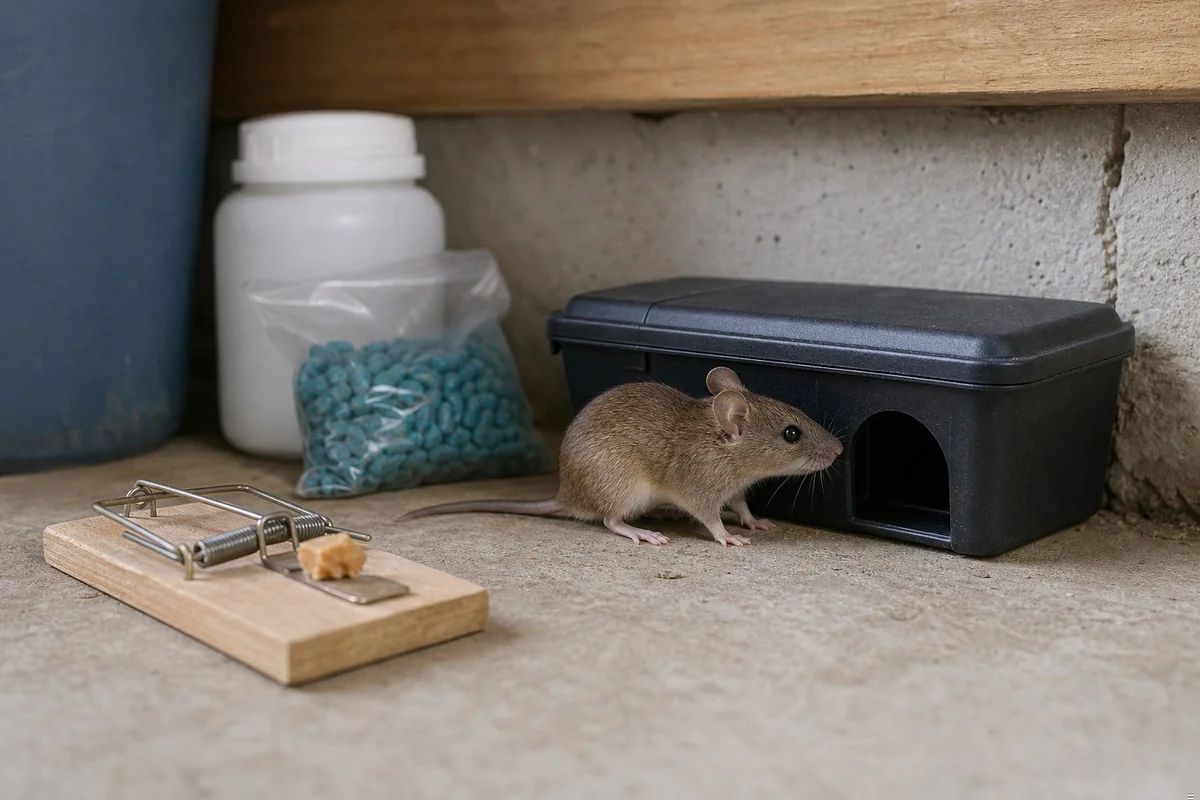
Best Bait for Mice and Rats: Trap Baits, Poison and Stations
Best bait for mice and rats: food baits for traps, a ready-to-use d-Con station for homes, lockable bait stations and farm bait blocks, plus what the rules allow.
Best Mouse Poison Bait: Safer Ready-to-Use Stations
Best mouse poison bait for homes: Tomcat and d-Con ready-to-use stations, a value Tomcat kit and a lockable Victor station, plus what the rules allow and pet safety.