 Pest Pro Reviews Editorial Team • • 11 min read •
Best Bait for Mice and Rats: Trap Baits, Poison and Stations
Best bait for mice and rats: food baits for traps, a ready-to-use d-Con station for homes, lockable bait stations and farm bait blocks, plus what the rules allow.
The best bait for mice and rats depends on what you are baiting. For traps, peanut butter, nuts and the food rodents already eat work best. For poison, homeowners should use a ready-to-use bait station such as the d-Con Refillable Mouse Bait Station. Lockable Tomcat and Qualirey stations and first-generation anticoagulant blocks from Kaput and JT Eaton suit farms and outbuildings.
- Under EPA rules, rodent poison for the consumer market comes only as ready-to-use bait stations; loose pellets and second-generation anticoagulants are not sold to homeowners.
- Most 4-pound bags and pails of bait are registered for professionals and agricultural users, so the label, not the listing, decides whether you may use them.
- Indoors, traps beat poison: poisoned rodents often die inside walls, and every rodent bait is toxic to dogs and cats.
Trap Bait or Poison Bait: Which Do You Need?
“Bait” means two different things in rodent control. Trap bait is ordinary food that lures a mouse or rat onto a trigger; poison bait, or rodenticide, is food mixed with a toxin that the rodent eats and dies from days later. Most people searching for the best bait need the first kind, and both are covered here.
Inside the house, traps are the better tool. UGA's extension guidance advises traps rather than poison baits indoors, because poisoned rodents do not die immediately; they usually crawl into a wall or behind an appliance, die and smell. Traps also let you see and remove every catch, and our guide to the best bait for rat traps goes deeper on trap baits.
Poison has a place: large outdoor populations, farms and barns, and spaces you cannot trap well. For the full plan, from traps to repellents, see our overview of mouse and rat control.
Identify your needs and get personalized recommendations
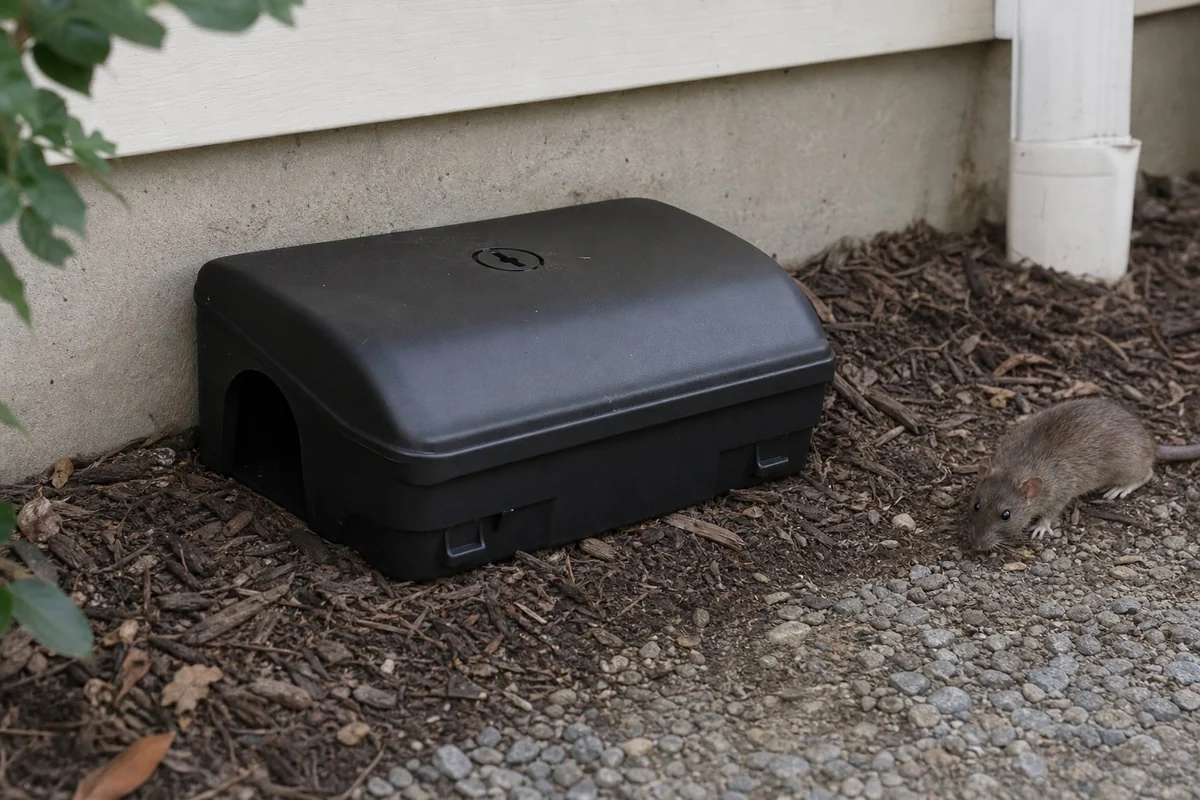
A homeowner who wants a poison option after traps.
Safety around non-targets comes first.
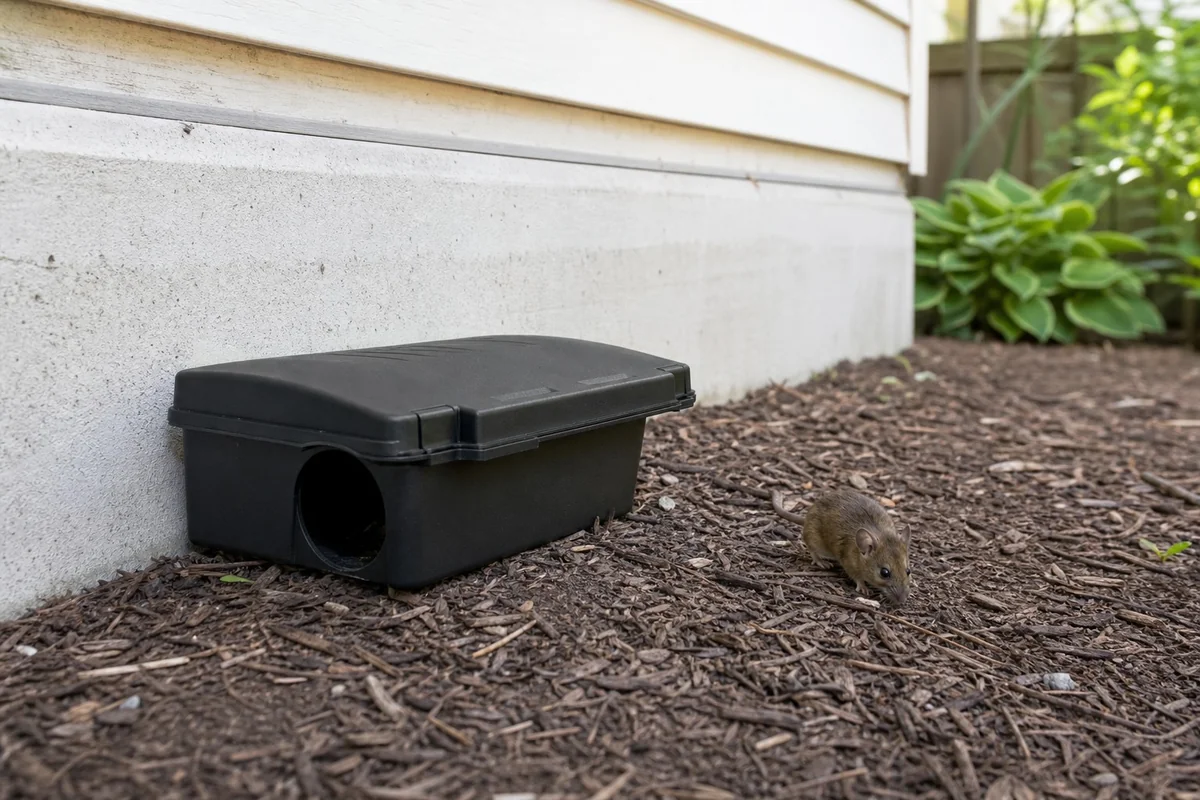
Many stations around outbuildings.
Many stations along a long foundation.
What the Rules Say About Rodent Poison
Rodenticides are regulated pesticides, and the label is the law. According to the EPA's page on restrictions on rodenticide products, products for the consumer market are ready-to-use bait stations, second-generation anticoagulants are no longer registered for consumer products, and pelleted baits are no longer permitted in consumer products.
The same page says blocks, pellets and paste for professionals and agricultural users come in larger containers, at least 4 pounds for first-generation anticoagulants and bromethalin, and are not meant for consumer stores. Several 4-pound pails sold online say “for agricultural use and professional applicators” or “agricultural/rural use only” in their listings. Tamper-resistant bait stations are required wherever children, pets or wildlife could reach bait and for all above-ground outdoor use.
State rules can be stricter. UC IPM notes that California currently prohibits most uses of first- and second-generation anticoagulant rodenticides, and several bait labels list the states where they may be sold. The rat and mouse poison bait section covers each product type in more detail.
Rodent Poison Types Compared
Every rodenticide works on one of a few active ingredients, and they differ in how many feedings they need, whether an antidote exists and how much risk they pose to pets and wildlife that eat a poisoned rodent.
| Active Ingredient Type | Examples | How It Works | Who Can Use It |
|---|---|---|---|
| First-generation anticoagulant | Warfarin, diphacinone, chlorophacinone | Stops blood clotting after several feedings; vitamin K1 is the antidote | Consumer stations and professional or farm blocks |
| Second-generation anticoagulant | Brodifacoum, bromadiolone, difethialone | Lethal dose in one feeding; highest risk to pets and wildlife that eat poisoned rodents | Professionals only |
| Bromethalin | Bromethalin blocks and packs | Nerve poison; rodents may feed over one to several days | Consumer stations and professional or farm blocks |
| Cholecalciferol | Vitamin D3 baits | Disrupts calcium balance; rodents may feed over one to several days | Consumer stations |
UC IPM warns that all rodent baits are toxic to dogs and cats, that a dead rat can contain several lethal doses, and that even one dead rodent may be enough to poison a pet. The picks below start with the one product here built for the consumer market.
Best Ready-to-Use Bait Station for Homes
A ready-to-use station comes loaded and sealed, so the bait never has to be handled or placed loose. It is the format EPA rules allow for the consumer market, and it is the only poison format worth considering inside a home.
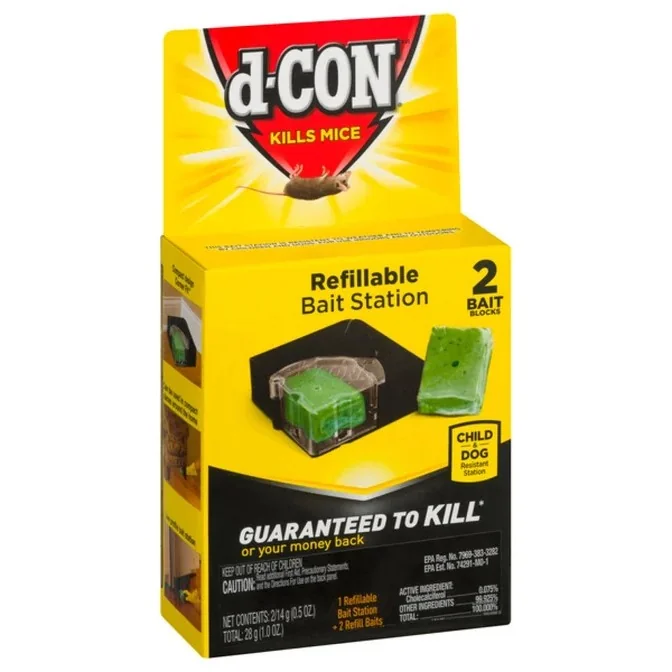
d-Con Refillable Mouse Bait Station: Best for Homes
The d-Con Refillable Mouse Bait Station is a compact station with 18 bait refills, made for mice. Its bait uses cholecalciferol, and the maker says the formula contains no neurotoxins or anticoagulants.
- The maker says the station resists tampering by children and dogs and is weatherproof for indoor or outdoor use.
- You can see the bait through the station, so you can tell whether mice are feeding without opening it.
- The maker advises moving the station if there are no chew marks on the bait after a few days.
- Buyers of d-Con's stations, in a digest pooled across the product line, find them easy to use, but effectiveness feedback is mixed and value feedback mostly negative.
Choose it for a mouse problem in a garage, attic or basement where traps have not finished the job. Keep it where pets cannot reach it, since all rodent baits are toxic to dogs and cats.
d-Con Refillable Mouse Bait Station
Best for: Mice in homes, garages and attics where traps fell short
- ✓Ready-to-use station; bait never handled loose
- ✓Bait visible without opening
- ✓Comes with 18 refills
- −Mixed effectiveness feedback across d-Con's stations
- −Toxic to pets; keep out of their reach
Specifications (3)
- Active Ingredients
- Cholecalciferol
- Item Form
- Soft Bait
- Target Species
- Mouse
Best Refillable Bait Stations
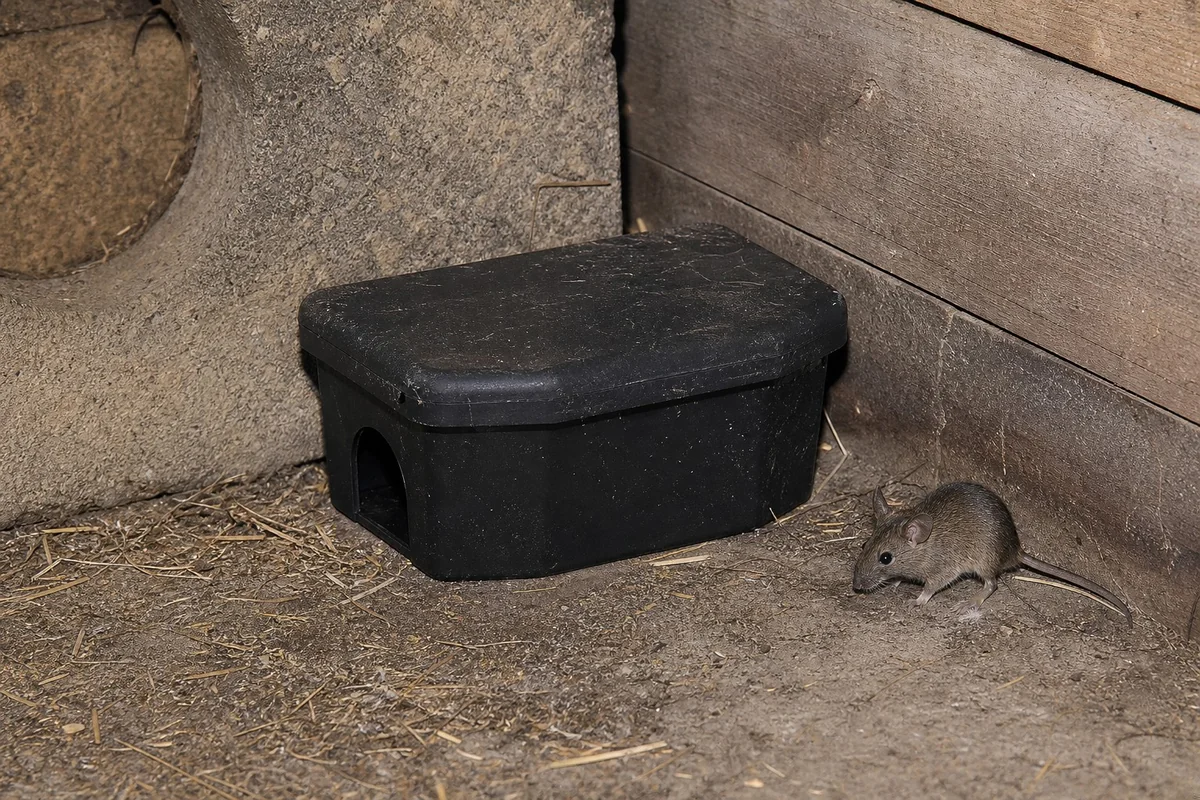
An empty lockable station is a protective box: it keeps bait or a trap away from children, pets and wildlife, and keeps bait dry. It holds labeled bait where your use allows it, or a snap trap where you would rather not use poison. For more choices, see our guide to the best rat bait stations.
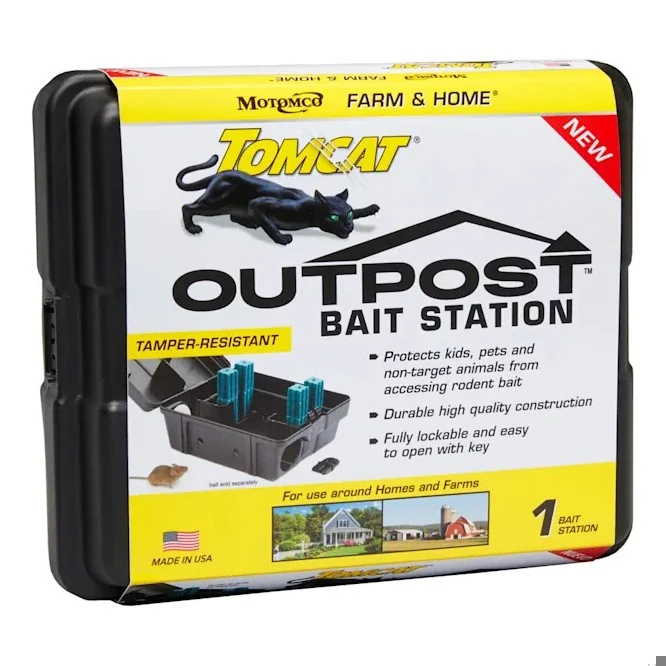
Tomcat Outpost Bait Station: Best Lockable Station
The Tomcat Outpost set holds 6 lockable plastic stations, each 8.5 x 7 x 5 inches, that mount vertically or horizontally. The maker says it meets the EPA Tier 1 standard for tamper resistance.
- Each station holds up to 8 one-ounce bait blocks on rods, or one Tomcat Rat Snap Trap, per the maker.
- A single key locks every station, and a removable tray makes cleaning easier.
- Buyers find it effective, sturdy and child- and pet-resistant; some find it hard to open.
- Bait is not included, which buyers mention often.
Pick it for barns, sheds and foundations where you need secure stations that last. Fitted with a snap trap instead of bait, it is also a pet-safe trap box for home use.
Tomcat Outpost Bait Station 6-Pack
Best for: Secure stations for barns, sheds and foundations
- ✓Meets EPA Tier 1 tamper resistance, per the maker
- ✓Holds bait blocks or a Tomcat Rat Snap Trap
- ✓One key locks all six
- −Bait not included
- −Some buyers find it hard to open
Specifications (4)
- Product Dimensions
- 8.5"L x 7"W x 5"H
- Number of Pieces
- 6
- Material
- Plastic
- Target Species
- Mouse, Rat
Qualirey Rat Bait Stations: Best Value Multi-Pack
The Qualirey 12-pack contains lockable plastic stations, each about 9.84 x 7.48 x 3.94 inches, with a key for every station. Buyers find them sturdy, easy to load and good value.
- The maker says the stations install vertically or horizontally and lock with an included key.
- Buyers say the lid locks automatically when closed and that each station comes with its own key.
- Several buyers note there are no assembly instructions.
- Unlike the Tomcat, the maker does not state a tamper-resistance rating.
Choose it when you need many stations around a large property. Where children or pets roam, prefer a station whose maker states a tamper-resistance standard.

Qualirey Rat Bait Stations 12-Pack
Best for: Many stations around a large property on a budget
- ✓Twelve stations with keys
- ✓Lid locks when closed, per buyers
- ✓Buyers find it sturdy and easy to load
- −No tamper-resistance rating stated
- −No assembly instructions, per buyers
Specifications (3)
- Number of Pieces
- 12
- Material
- Plastic
- Color
- Black
Best Anticoagulant Bait Blocks for Farms and Outbuildings
First-generation anticoagulants such as warfarin and diphacinone need several feedings to kill, which makes them slower but gives a pet that eats a little a better chance, since vitamin K1 is the antidote. These blocks come in bulk containers aimed at farms, agricultural buildings and professionals, and always go inside tamper-resistant stations. For rat-specific choices, see our guide to the best rat bait.
Kaput Mouse Blocks: Best Warfarin Bait
Kaput Mouse Blocks are a 4-pound pail of warfarin bait blocks at 0.025%, labeled for rats, mice and voles, for use inside buildings or within 50 feet of structures.
- The maker says the blocks stay intact in high-traffic areas and fit bait stations.
- The maker advises keeping fresh bait out for 10 to 15 days, since warfarin needs repeated feeding.
- The listing names the states where it may be sold and used.
- Buyers of Kaput's warfarin line, in a pooled digest, find it effective on voles; value feedback is mixed.
Choose it for barns, sheds and outbuildings where a slow, repeated-feeding bait fits and the label covers your use and state.
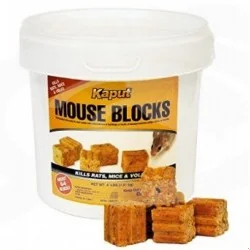
Kaput Mouse Blocks Warfarin 4 lb
Best for: Outbuildings where a slow, repeated-feeding bait fits
- ✓First-generation anticoagulant; vitamin K1 antidote exists
- ✓Blocks stay intact in stations, per the maker
- ✓Labeled for rats, mice and voles
- −Needs 10 to 15 days of fresh bait, per the maker
- −Sold only in listed states
Specifications (3)
- Active Ingredients
- Warfarin (0.025%)
- Item Form
- Blocks
- Target Species
- Rats, Mice, & Voles
JT Eaton Apple Bait Blocks: Best for Large Properties
The JT Eaton 709-AP pail holds 144 one-ounce apple-flavored bait blocks of diphacinone at 0.005%, a first-generation anticoagulant. The maker calls it a professional-size pail for large properties and pest control programs.
- Each block has a center hole for mounting on the rods of most standard tamper-resistant stations.
- The maker says diphacinone kills after multiple feedings and carries less secondary poisoning risk than second-generation baits.
- The pail is tamper-evident and resealable for storage.
- Buyers find it effective on mice and rats and say rodents take to the apple flavor.
Pick it for farms and large properties with many stations, where the label covers your use. It is far more bait than a typical home will ever need.
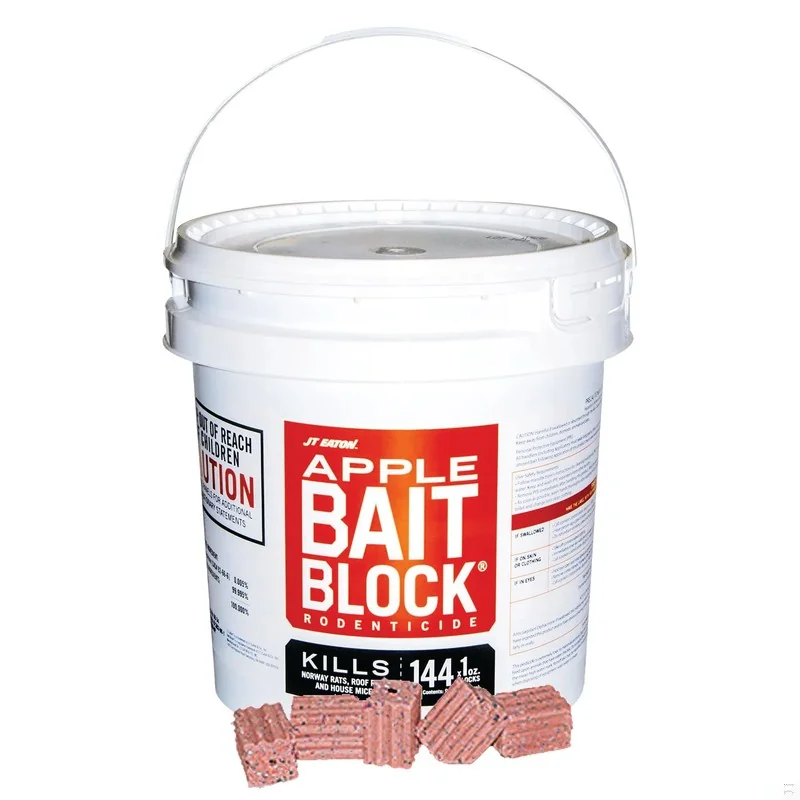
JT Eaton Apple Bait Blocks 9 lb
Best for: Large farm and property baiting programs
- ✓Center hole fits standard station rods
- ✓Buyers say rodents take to the apple flavor
- ✓Tamper-evident resealable pail
- −Professional-size quantity; far more than a home needs
- −Check the label covers your use
Specifications (3)
- Item Weight
- 9 pounds
- Unit Count
- 144 Count
- Item Form
- Tablets
Best Food Baits for Mouse and Rat Traps
For traps, the best bait is the one rodents are already eating, because familiar food raises no suspicion. Beyond that, strong-smelling fat and protein work best: UGA lists peanut butter, bacon and cooked chicken, noting cheese is not necessary, and UC IPM adds nuts, dried fruit and dry pet food for rats.
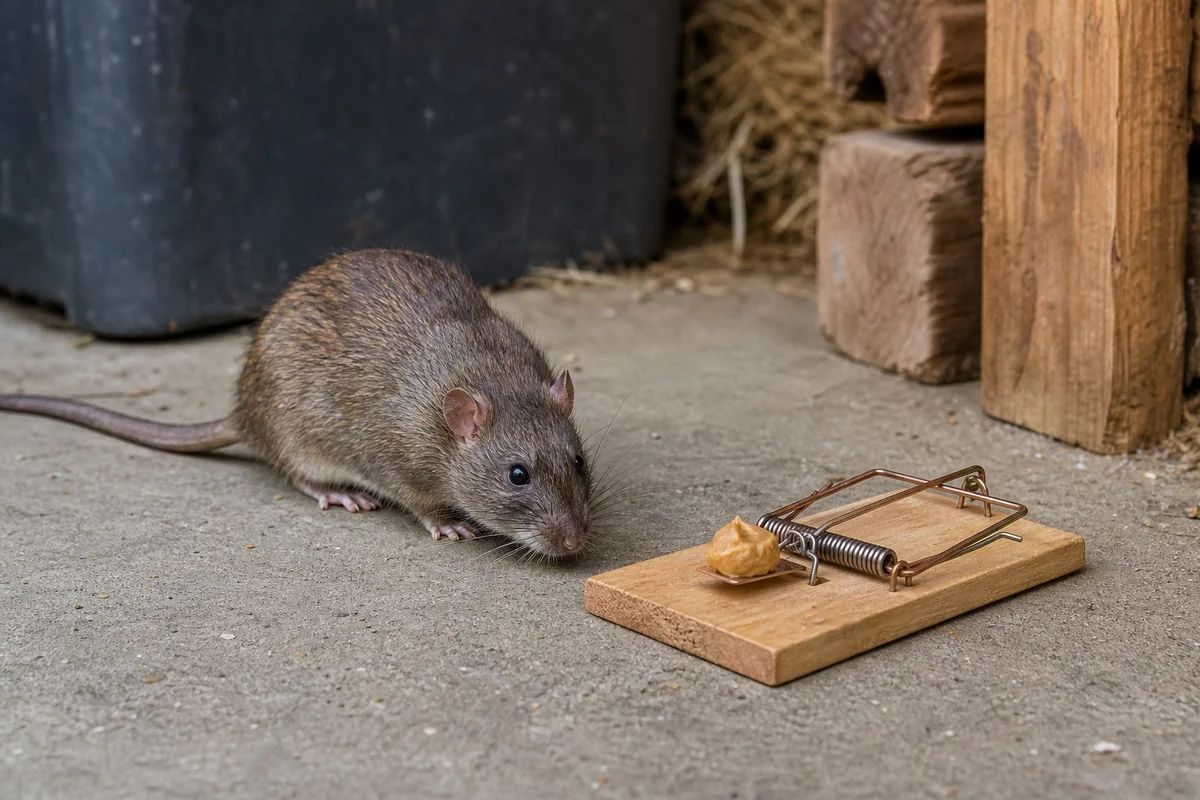
- Peanut butter: sticks to the trigger and smells strong; use a pea-sized amount.
- Nuts and seeds: tie a nut to the trigger with thread so the rodent has to tug it.
- Bacon and cooked meat: strong-smelling and good for rats, but spoil faster.
- Nesting material for mice: UC IPM notes a ball of cotton or dental floss can bait mouse traps, especially for females building nests.
What bait is irresistible to mice? Usually whatever they are already stealing, in a tiny amount. A large blob lets a mouse eat from the edge without setting the trap off; for poison baits for mice, see our guide to mouse poison bait.
How to Use Rodent Bait Safely
If you do use poison, follow the label exactly and add the precautions UC IPM gives. Rodents may take several days to weeks to start feeding in a new station, so do not move stations every day.
- Stations on runways: place them along walls, near burrows and harborage, and fasten elevated stations so they cannot fall where children or pets find them.
- Seal before baiting outside: UC IPM advises closing entry points first so poisoned rats do not come indoors to die.
- Collect carcasses daily: pick them up with a plastic bag turned inside out over your hand, seal it and put it in the trash.
- Clear up afterward: remove and dispose of uneaten bait when the job is done, and take old anticoagulant products to a household hazardous waste facility.
How to Choose the Right Bait
Start with where the rodents are and who else could reach the bait.
- Inside the house: traps baited with peanut butter or nuts; poison only as a ready-to-use station like the d-Con, out of pets' reach.
- Garage, shed or foundation: a Tomcat Outpost or Qualirey station, holding a snap trap or bait your label allows.
- Farm buildings and barns: Kaput warfarin or JT Eaton diphacinone blocks inside tamper-resistant stations.
- Pets, children or wildlife around: lockable stations with a stated tamper-resistance standard, or traps instead of poison.
- California and some other states: check state rules first; many anticoagulant uses are prohibited.
Common Questions About Mouse and Rat Bait
What is the best bait for catching rats and mice?
What is the best bait for catching rats and mice?
For traps, a pea-sized amount of peanut butter, a tied-on nut or the food rodents are already eating works best; mice also go for cotton or dental floss as nesting material. Familiar food matters more than any particular flavor, and cheese is not needed.
How long does rodent poison take to work?
How long does rodent poison take to work?
Days, not hours. First-generation anticoagulants need several feedings, and UC IPM notes rodents may feed on bromethalin and cholecalciferol baits over one to several days. Rodents may also take days to weeks to start feeding in a new station, so judge results over a couple of weeks.
What should I do if my dog eats rat poison?
What should I do if my dog eats rat poison?
Call your vet or an animal poison control line immediately, even if the dog seems fine, and have the package or the active ingredient name ready. Anticoagulant poisoning has an antidote, vitamin K1, but treatment for other ingredients differs, so the ingredient matters.
Can I put rat poison inside my house?
Can I put rat poison inside my house?
Only as a ready-to-use or tamper-resistant station placed exactly as the label allows, and even then traps are the better choice indoors. Poisoned rodents often die in walls and under floors, where you cannot reach the smell, and pets can find dying rodents.
How do I get rid of mice and rats as fast as possible?
How do I get rid of mice and rats as fast as possible?
Combine many traps with food removal on the same day.:
- Set rat traps 10 to 20 feet apart and mouse traps closer, on every runway.
- Pre-bait rat traps unset for a few nights.
- Seal food away so the bait is the best meal.
- Seal gaps once catches slow.
Which One Should You Buy?
- d-Con Refillable Mouse Bait Station wins for: mice in homes, garages and attics
- Tomcat Outpost Bait Station wins for: secure, lockable stations with bait or a trap
- Qualirey Rat Bait Stations wins for: many stations on a budget
- Kaput Mouse Blocks wins for: warfarin bait in outbuildings
- JT Eaton Apple Bait Blocks wins for: large farm and property programs
For most homes, the best bait is food on a trap, and the best poison option is a ready-to-use station like the d-Con, the format EPA rules allow for consumers. Choose the Tomcat Outpost for secure stations that can hold either bait or a snap trap, and the Qualirey pack when you need many of them.
On farms and around outbuildings, Kaput warfarin and JT Eaton diphacinone blocks are first-generation baits for tamper-resistant stations, where your label and state allow them. Before you buy any poison, read the label for where and by whom it may be used, then place it in stations along the rodents' runways.