 Pest Pro Reviews Editorial Team • • 9 min read •
Best Rat Bait: Blocks, Bromethalin, Birth Control and Trap Gel
Best rat bait: JT Eaton diphacinone blocks, Victor bromethalin blocks, Kaput rodent and tick blocks, Evolve birth control bait and Tomcat trap gel, plus label rules.
The best rat bait depends on the job. JT Eaton's apple-flavored diphacinone blocks are the first-generation pick for farms and outbuildings, Victor Fast-Kill blocks use bromethalin, Kaput Rodent and Tick blocks also kill the ticks rats carry, SenesTech Evolve is a birth-control bait rather than a poison, and Tomcat Attractant Gel is a non-toxic bait for rat traps.
- Most rat poison sold in 4-pound bags and pails is registered for professionals and agricultural users, so read the label before buying.
- First-generation anticoagulants need several feedings but have an antidote; bromethalin has no antidote and can reach predators that eat poisoned rats.
- Every rat poison must go in a tamper-resistant station wherever children, pets or wildlife could reach it.
Should You Use Rat Poison or Traps?
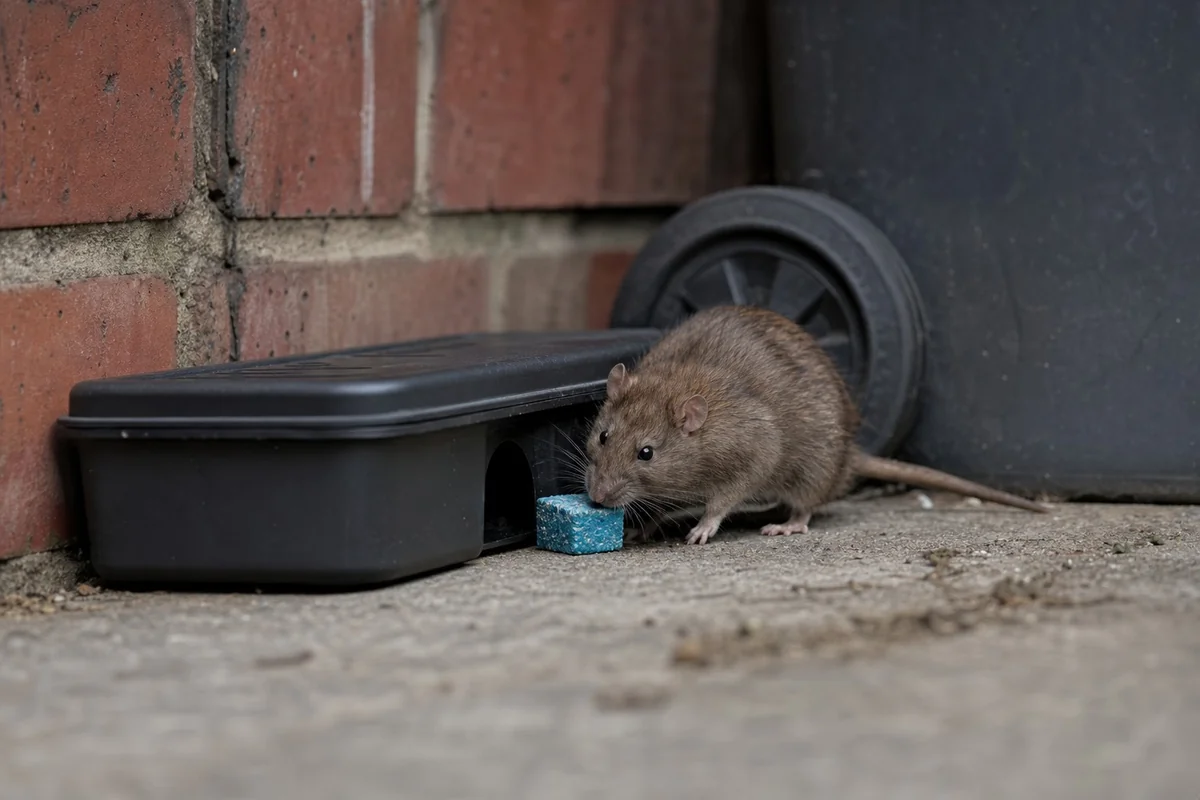
Inside a home, traps are usually the better choice. A rat-size snap trap kills instantly, you remove every rat you catch, and nothing toxic sits where children and pets live. Poisoned rats do not die right away, and they often crawl into walls, under floors or back to their burrows before they die.
Rat bait earns its place outdoors and around outbuildings: large populations along a foundation, rats coming in from neighboring properties, barns and feed sheds where traps alone cannot keep up. Even then, bait works best alongside traps and sealing, not instead of them.
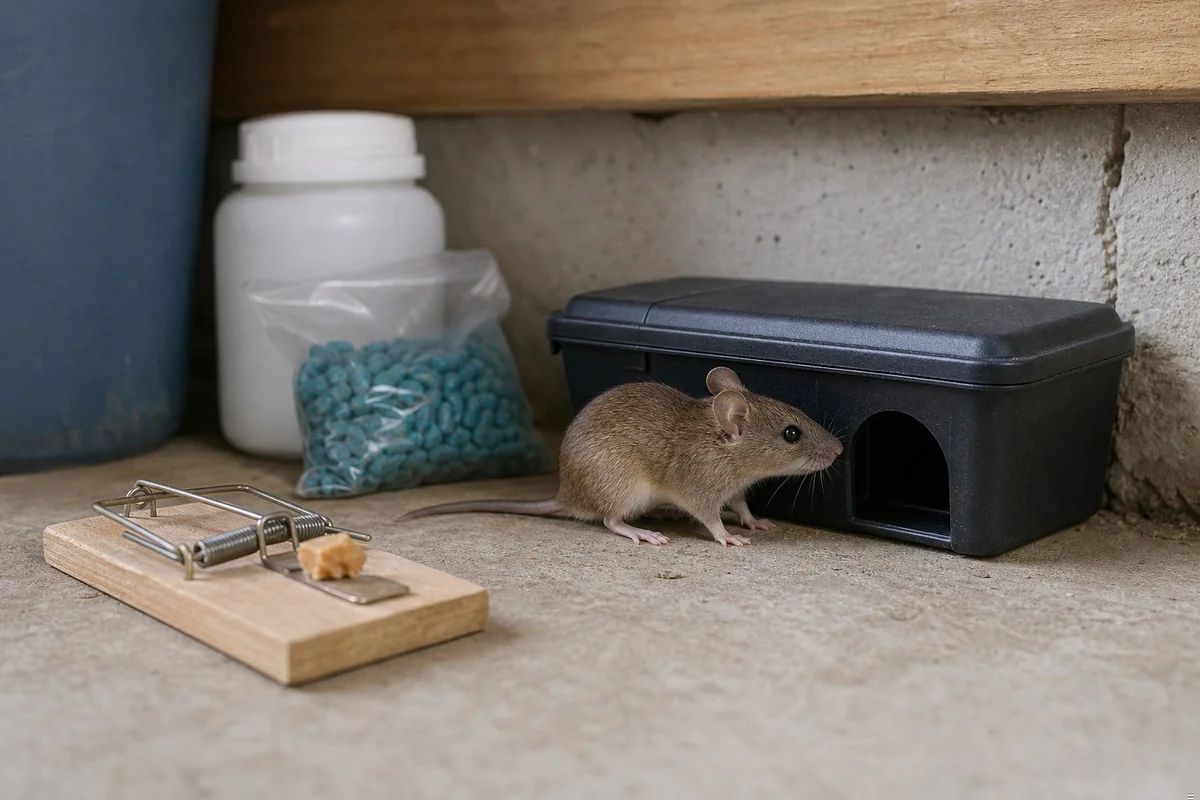
If you are still deciding between trap baits and poisons, our guide to the best bait for mice and rats compares both, including the ready-to-use stations sold for homes.
Identify your needs and get personalized recommendations
Many stations around outbuildings.
No poison risk is acceptable.
Wooded or rural lot with tick concerns.
Wants bait for traps, not poison.
What to Know Before You Buy Rat Bait
Before buying any rat poison, check who it is registered for. Under the EPA's restrictions on rodenticide products, homeowners' rodenticides come as ready-to-use bait stations, and loose blocks or pellets in bulk containers are meant for professionals and agricultural users rather than consumer stores. Wherever children, pets or wildlife could reach bait, and for any above-ground use outdoors, the bait has to sit in a tamper-resistant station.
UC IPM's rat pest guide adds that California prohibits most uses of anticoagulant rodenticides, that all rodent baits are toxic to dogs and cats, and that a dead rat can contain several lethal doses. Several products below list the states where they may or may not be sold.
Rat baits fall into a few groups. First-generation anticoagulants such as warfarin and diphacinone need several feedings and have an antidote, vitamin K1; bromethalin is a nerve poison with no antidote; and fertility-control baits do not kill at all. The rat and mouse poison bait section covers bait blocks and stations in more detail.
How We Selected These Rat Baits
Each bait here was judged on its active ingredient and whether an antidote exists, how its label says it must be used, the risk to animals that eat a poisoned rat, its form and fit in stations, and how readily buyers say rats take it. We worked from manufacturer listings and the label details they quote, Amazon's review digests and EPA and UC IPM guidance; none of the products were tested.
We left out baits whose listings do not state the active ingredient, including Just One Bite II, since you cannot judge risk without it. Second-generation anticoagulants were excluded too, because they are not registered for consumer use and pose the highest risk to pets and wildlife. The first pick is the bait with the lowest secondary-poisoning risk among the anticoagulants here.
JT Eaton Apple Bait Blocks: Best First-Generation Rat Bait
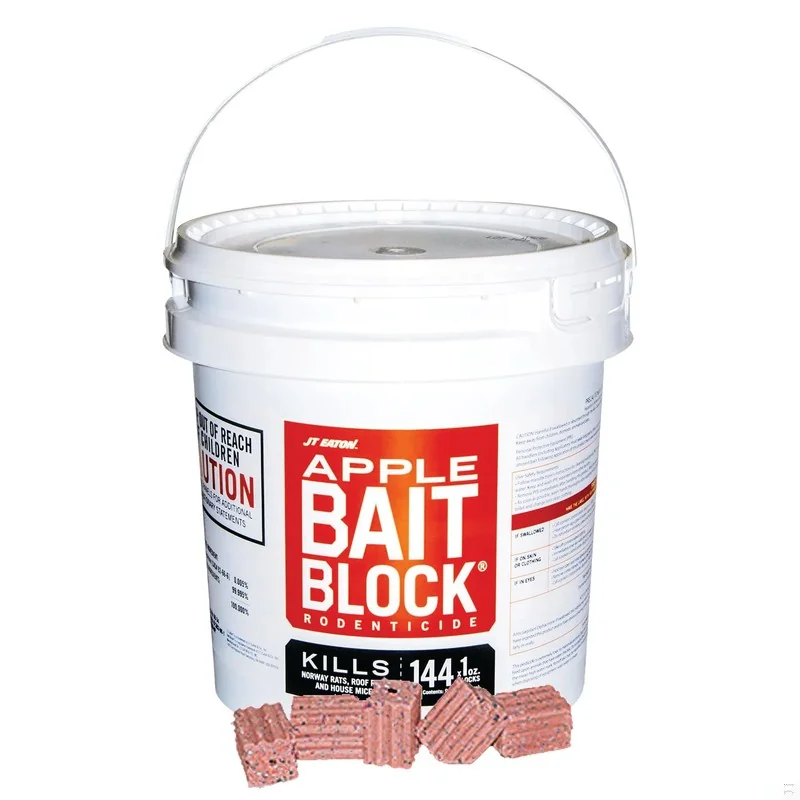
JT Eaton's 709-AP is a pail of 144 apple-flavored diphacinone blocks, one ounce each, with diphacinone at 0.005%. Diphacinone is a first-generation anticoagulant, and the maker pitches the pail at large properties and pest control programs.
- Each block has a center hole for mounting on the rods of most standard tamper-resistant stations.
- The maker says diphacinone kills after multiple feedings and carries less secondary poisoning risk than second-generation baits.
- The pail is tamper-evident and resealable for storage between applications.
- Buyers find it effective on mice and rats and say rodents take to the apple flavor.
This is the bait for a farm or a big property running many stations, where its label covers your use. A single house would struggle to use a fraction of the pail before it goes stale.
JT Eaton Apple Bait Blocks 9 lb
Best for: First-generation baiting on farms and large properties
- ✓Center hole fits standard station rods
- ✓Buyers say rodents take to the apple flavor
- ✓Tamper-evident resealable pail
- −Professional-size quantity; far more than a home needs
- −Check the label covers your use
Specifications (3)
- Item Weight
- 9 pounds
- Unit Count
- 144 Count
- Item Form
- Tablets
Victor Fast-Kill Bait Blocks II: Best Bromethalin Bait
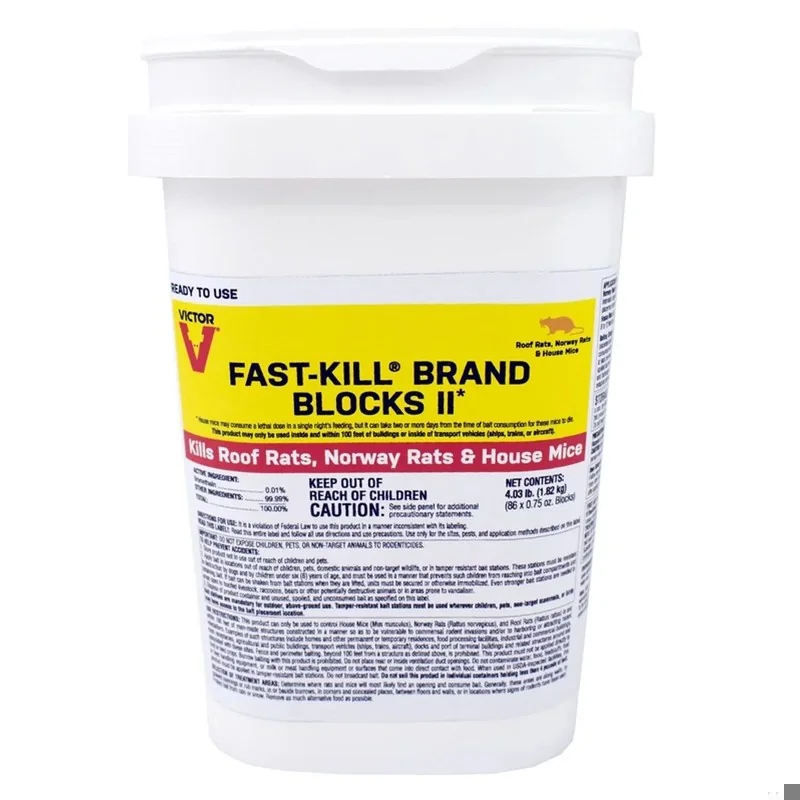
Victor Fast-Kill Bait Blocks II come as 86 blocks in a 4-pound bag, with bromethalin as the active ingredient. The maker lists them for roof rats, Norway rats and house mice, indoors and outdoors, in any Victor refillable bait station.
- The maker describes a palatable formula that keeps rodents feeding until they eat a lethal dose.
- Bromethalin is not an anticoagulant, so vitamin K1 does not work as an antidote.
- UC IPM notes new evidence that secondary exposure to bromethalin can occur in pets and wildlife that eat poisoned rodents.
- Buyers find it effective, sometimes within a couple of days; several warn against using it if you have pets.
Pick it for outdoor stations where first-generation baits have not worked, only where the label covers your use. Keep it well away from dogs and cats.
Victor Fast-Kill Bait Blocks II
Best for: Outdoor stations where anticoagulant baits failed
- ✓Not an anticoagulant; a different mode of action
- ✓Buyers report results within days
- ✓86 blocks per bag
- −No antidote; secondary exposure possible, per UC IPM
- −Buyers warn against use around pets
Specifications (2)
- Active Ingredients
- Bromethalin
- Item Form
- Blox
Kaput Rodent and Tick Bait Blocks: Best for Tick Control Too
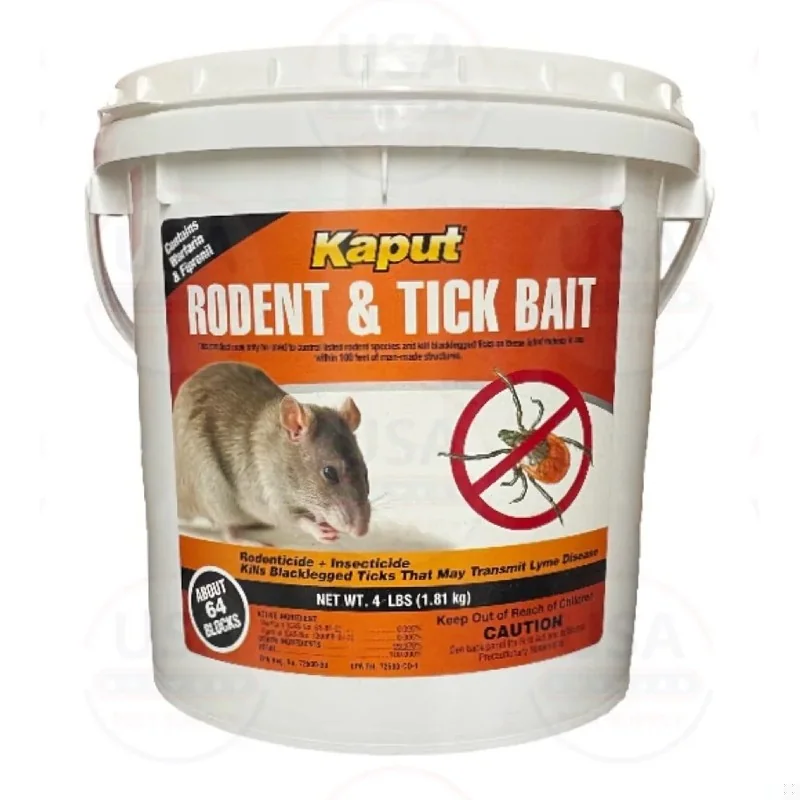
Kaput Rodent and Tick Bait Blocks combine warfarin, a first-generation anticoagulant, with fipronil, an insecticide that kills the blacklegged ticks rodents carry. The 4-pound pail is aimed at properties where rodents bring ticks close to the house.
- The listing gives warfarin at 0.0025% and fipronil at 0.005%.
- The maker says the blocks fit standard bait stations and suit sheds, garages, homes and farms.
- Buyers report rats and mice gone within days to weeks; value and durability feedback is mixed, with blocks breaking easily.
- Like any warfarin bait, it needs repeated feeding, so keep stations stocked.
Choose it for wooded lots and rural properties where tick-borne illness is a concern as well as rats. If ticks are not an issue, a plain first-generation bait does the rodent job.
Kaput Rodent & Tick Bait Blocks
Best for: Properties where rats bring ticks close to the house
- ✓Kills ticks rodents carry, per the maker
- ✓First-generation anticoagulant
- ✓Fits standard bait stations
- −Blocks break easily, per some buyers
- −Mixed value-for-money feedback
Specifications (3)
- Active Ingredients
- Warfarin (0.0025 %), Firpronil (0.005%)
- Item Form
- Blocks
- Item Weight
- 4 pounds
SenesTech Evolve: Best Non-Poison Rat Bait
SenesTech Evolve Rat Birth Control is a soft bait that reduces rat breeding rather than killing rats. The maker says it is not a poison and carries no risk of secondary poisoning. It is sold as a FIFRA 25(b) minimum-risk pesticide, a category the EPA exempts from registration and says it does not review.
- The 1.5-pound pail holds about 21 soft bait sausages; a 6-pound pail is also sold.
- The maker advises placing pieces in tamper-resistant stations near rat activity and keeping a continuous supply.
- The maker expects a noticeable drop in activity over months, not days, and suggests using it with traps for faster results.
- Buyers say rats eat it readily and value its safety for wildlife and pets; value-for-money feedback is mostly negative.
- The listing says it is not sold in Indiana, South Carolina, Tennessee, Pennsylvania or Wisconsin.
Pick it for properties with pets, wildlife or raptors where you want no poison at all and can be patient. It will not remove rats already causing damage, so trap those.
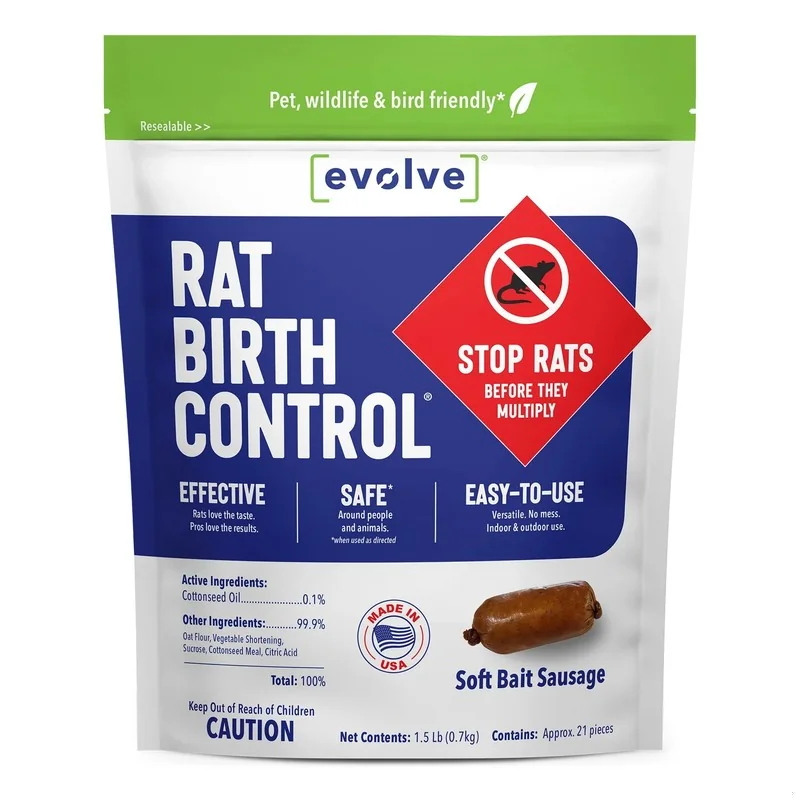
SenesTech Evolve Rat Birth Control 1.5 lb
Best for: No-poison, long-term control around pets and wildlife
- ✓No secondary poisoning, per the maker
- ✓Buyers say rats eat it readily
- ✓Not a poison, per the maker
- −Works over months and does not kill existing rats
- −Buyers say it is expensive
Specifications (3)
- Item Form
- Oil Based Soft Bait
- Item Weight
- 1.5 pounds
- Target Species
- Rats
Tomcat Attractant Gel: Best Non-Toxic Bait for Rat Traps
Tomcat Attractant Gel is a ready-to-use bait for mechanical traps, not a poison. The maker says it attracts both mice and rats, is non-toxic to children and pets, and works as an alternative to cheese or peanut butter in any snap trap.
- The 1-ounce bottle has a no-mess spout for applying gel to a trigger or bait cup.
- Buyers are split on how well it draws rodents, from impressed to unconvinced.
- Buyers say it dries out quickly, and some report bottles only partly full.
Choose it if you want a clean, ready-made trap bait. Apply it fresh when you set traps, and fall back on peanut butter or the food rats are already eating if catches stay low.
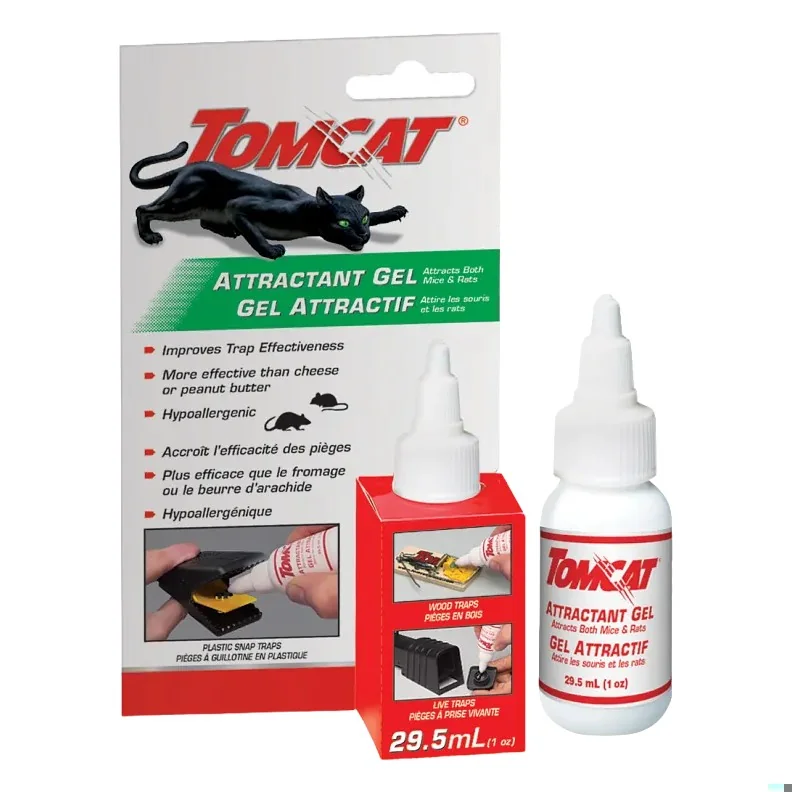
Tomcat Attractant Gel
Best for: Baiting rat traps without poison
- ✓Non-toxic to children and pets, per the maker
- ✓No-mess bottle spout
- ✓Works with any mechanical trap
- −Dries out quickly, per buyers
- −Mixed results on drawing rodents
Specifications (2)
- Unit Count
- 1 Fluid Ounces
- Style
- Attractant Gel
- JT Eaton Apple Bait Blocks wins for: first-generation baiting on farms and large properties
- Victor Fast-Kill Bait Blocks II wins for: outdoor stations where anticoagulants failed
- Kaput Rodent and Tick Bait Blocks wins for: rats and ticks together
- SenesTech Evolve wins for: no-poison, long-term population control
- Tomcat Attractant Gel wins for: non-toxic bait for rat traps
Choosing well comes down to where the bait goes and who else might find it.
How to Choose and Use Rat Bait
- Inside the house: traps baited with gel, peanut butter or nuts; poison only as a consumer ready-to-use station.
- Barns and outbuildings: JT Eaton or Kaput blocks in tamper-resistant stations, where the label covers your use.
- Anticoagulants not working: Victor bromethalin blocks, with extra care around pets.
- Pets, wildlife or raptors nearby: Evolve, or traps instead of poison.
- Heavy infestations: stations along every runway plus traps, rather than more bait in fewer places.
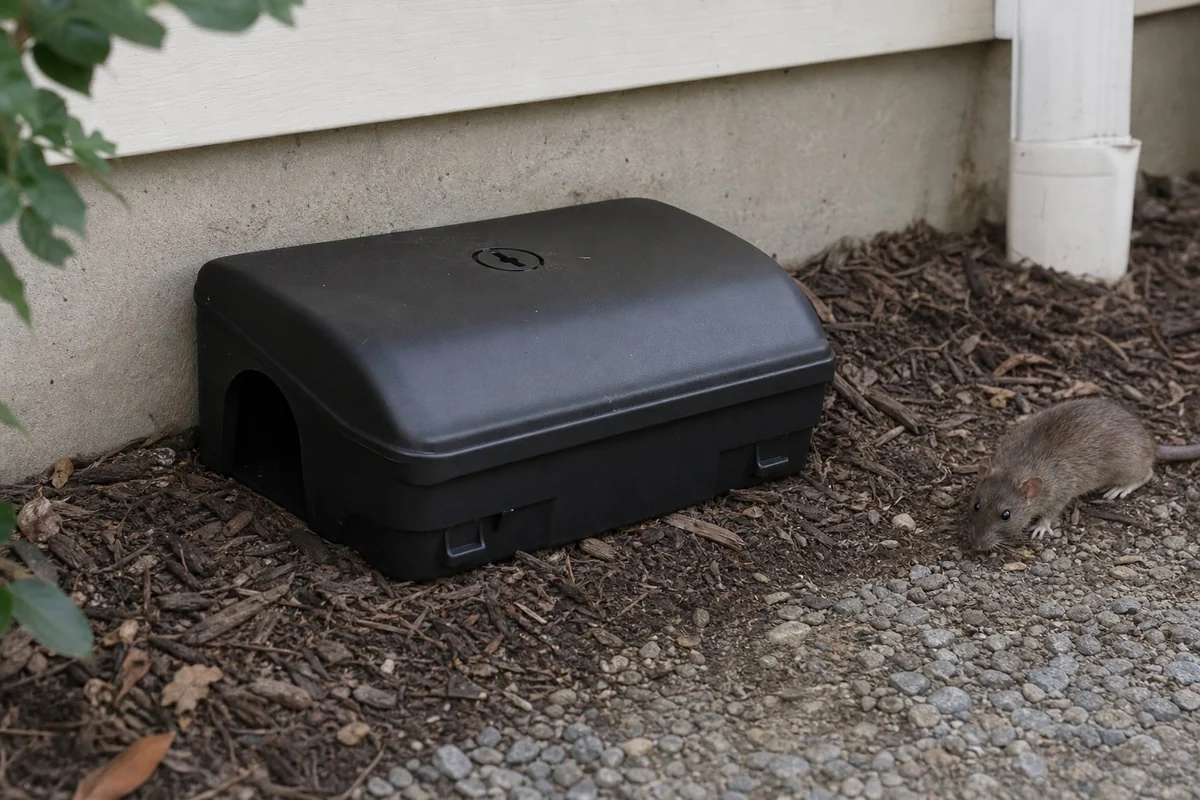
Place stations along walls, near burrows and between shelter and food, and fasten raised stations so they cannot fall. UC IPM notes rats may take several days to weeks to start feeding in new stations, so give them time before moving them. Seal entry points before baiting outside, so poisoned rats do not come indoors to die.
How often should you check rat traps and stations? Traps every morning, since rats feed at night and a catch should not sit for a day. Bait stations every few days at first, then weekly once you know where rats are feeding, collecting any dead rats you find each time.
Common Questions About Rat Bait
What is the fastest killing rat bait?
What is the fastest killing rat bait?
No rat poison kills instantly. Single-feeding baits still take days, rodents may feed on bromethalin over one to several days, and first-generation anticoagulants need several feedings. If speed matters, a rat-size snap trap is far faster than any bait.
What should I do with leftover rat bait?
What should I do with leftover rat bait?
Remove all uneaten bait when rat activity stops, and store any unopened bait in its original, tightly closed container, locked away from children and pets. UC IPM advises taking old anticoagulant products you no longer use to a household hazardous waste facility rather than throwing them in the trash.
How much bait should I put in each station?
How much bait should I put in each station?
Follow the label, which sets the amount per station and spacing. In practice, start with a few blocks per station, check every few days, and refill where feeding is heavy. Remove all uneaten bait when activity stops.
Can I make homemade rat bait?
Can I make homemade rat bait?
Homemade poison mixes are not registered pesticides, and many popular recipes have no reliable evidence behind them. For trapping, homemade food baits such as peanut butter with seeds work well; for poisoning, use a registered product exactly as its label directs.
Which One Should You Buy?
For rat baiting on farms and large properties, JT Eaton's apple diphacinone blocks are the pick. As a first-generation anticoagulant, diphacinone carries less secondary poisoning risk than second-generation baits and has an antidote, and the blocks mount on standard station rods.
Choose Victor Fast-Kill blocks for outdoor stations where anticoagulants have failed, Kaput Rodent and Tick blocks when ticks are a concern too, SenesTech Evolve when you want no poison and can wait months, and Tomcat Attractant Gel to bait traps inside the house. In a typical home, traps should do most of the work.
Before you buy, read the label for who may use it and where, and plan where every station will sit.
Related Articles
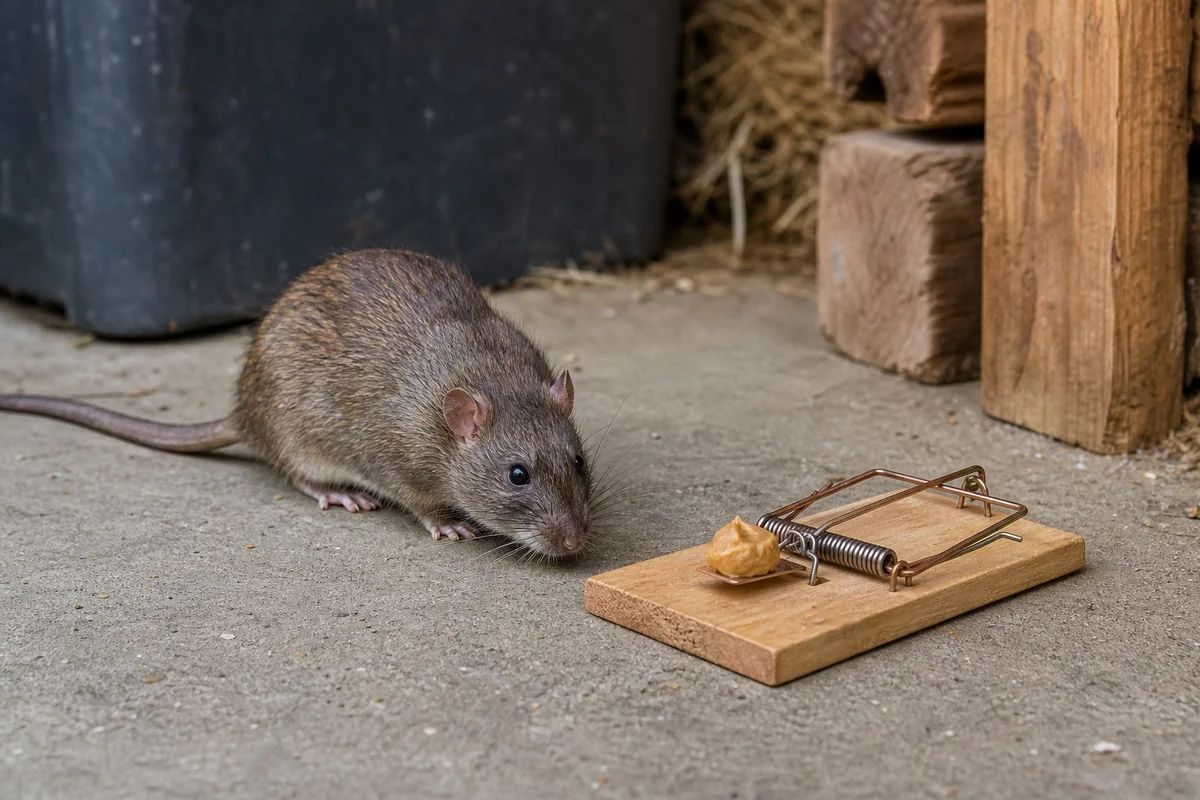
Best Bait for Rat Traps: What Works and How to Use It
The best bait for rat traps: why familiar food wins, peanut butter, nuts, bacon, fruit and feed compared, how to bait a trap, and the best rat trap bait outdoors.
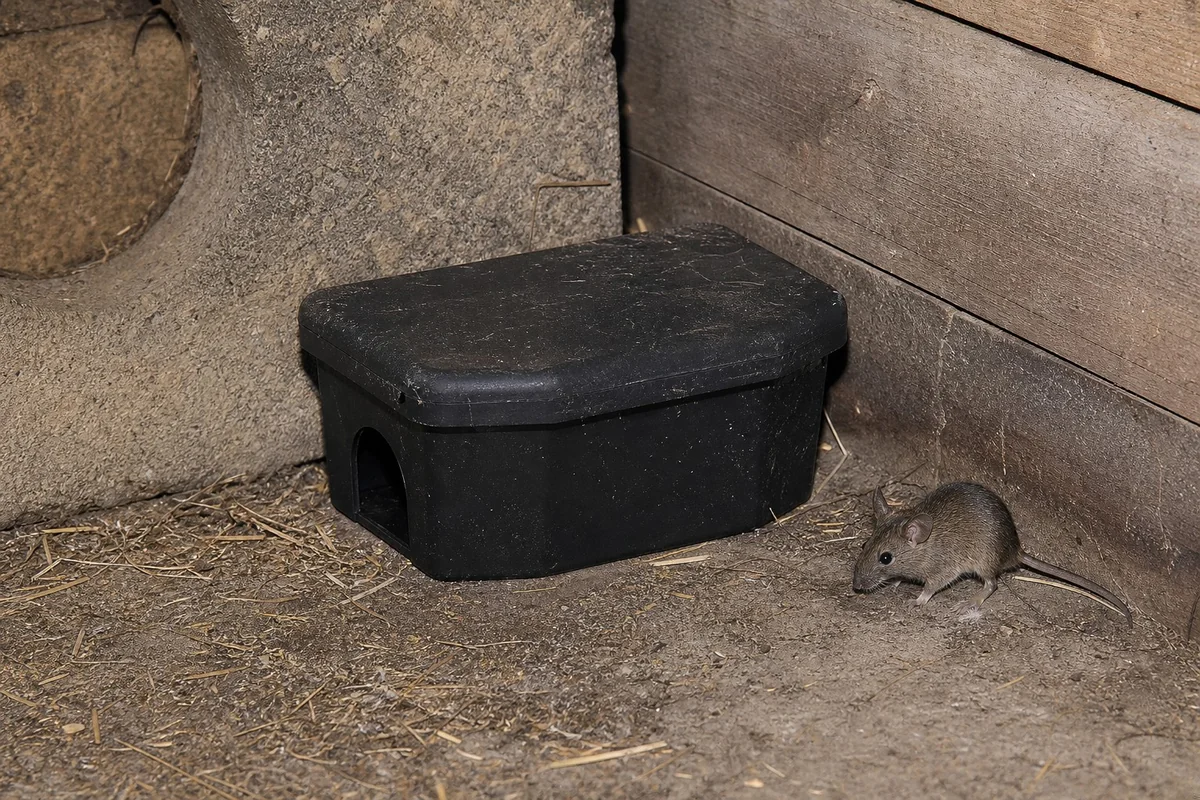
Best Rat Bait Blocks for Stations, Farms and Outbuildings
The best rat bait blocks: JT Eaton diphacinone, Kaput warfarin, JT Eaton Top Gun bromethalin and Tomcat Bait Chunx, plus who may use them and how to place them.
Best Bait for Mice and Rats: Trap Baits, Poison and Stations
Best bait for mice and rats: food baits for traps, a ready-to-use d-Con station for homes, lockable bait stations and farm bait blocks, plus what the rules allow.
Best Rat Bait Stations: Lockable Boxes for Bait or Traps
The best rat bait stations: Tomcat Outpost, Mice&Co, Exterminators Choice, a clear-lid K DERDISCOUNT, Victor XL and Qualirey, plus station rules and placement.