
Rat Infestation Signs: What to Look For in Your Home
Learn how to identify rat infestation signs in your home, including droppings, noises, property damage, and odors. Discover the key symptoms, how to distinguish rats from mice, and what steps to take if you suspect a rat problem - all in this 2026 homeowner's guide.
What Defines a Rat Infestation?
Rat infestation signs go beyond the occasional rodent sighting. A true infestation means there’s ongoing activity, evidence of nesting, and continual presence - often hidden from daily view. Homeowners and renters who misjudge the severity can waste weeks using the wrong solutions, only to see the problem get worse.
Difference Between Occasional Rats and Infestation
Seeing a single rat, especially in a garage or yard, doesn’t always mean your home is infested. Rats explore new areas for food or shelter, and a lone sighting could simply be a scout. An infestation, on the other hand, involves regular noises, multiple droppings, gnawed materials, and clear nesting sites - proof that rats are living and breeding inside.
Misidentifying a full infestation as a random visit is a common mistake. People often set a few traps and call it done, only to find more damage weeks later. That’s why recognizing the difference early is crucial for choosing the right approach and saving money on pest control.
Common Rat Species Found Indoors
In most homes, you’ll encounter either Norway rats or roof rats. Norway rats (brown rats) are stockier, with blunt noses and shorter tails, and they prefer burrowing in basements or lower levels. Roof rats (black rats) are slimmer, with pointed noses and longer tails, and they often nest in attics or high spaces.
Species matters because each leaves different clues. Norway rats chew larger holes and leave droppings that are capsule-shaped and blunt, while roof rat droppings are slightly smaller with pointed ends. This information helps pinpoint where to focus your inspection and which control methods will work best.
For more on species differences and long-term strategies, see our Rat Control guide.
Physical Evidence: Droppings, Tracks, and Smears
Physical evidence is the gold standard for confirming a rat problem. Droppings, footprints, tail marks, and greasy rubs provide hard proof of regular rat activity - often before you ever see the animals themselves.
Identifying Rat Droppings vs Other Pests
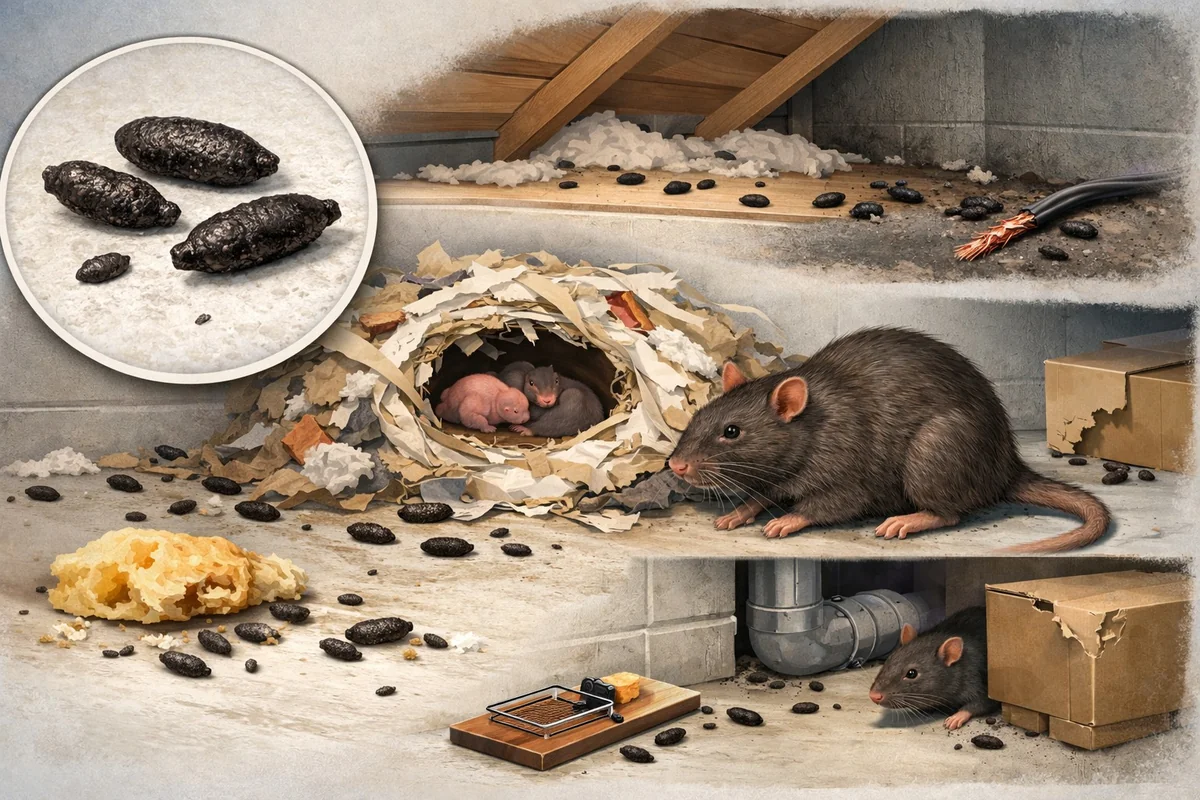
Rat droppings are a reliable indicator. They are 1/2 to 3/4 inch long, spindle-shaped, and have blunt ends. Mice droppings are smaller - about 1/8 inch, with pointed tips. Squirrel droppings are similar in size to rats but usually lighter in color and more likely found outdoors.
Fresh rat droppings are dark, shiny, and slightly soft. Old droppings turn grayish, dry out, and may crumble when pressed. If you find fresh droppings, that means rats are currently active in the area.
Footprints and Tail Marks in Dusty Areas
In undisturbed sections of basements, attics, or crawlspaces, you may spot tiny footprints and tail drag marks. Rats have four toes on the front feet and five on the back, leaving distinctive tracks. Their tails leave a thin line through dust or flour.
If you’re unsure whether a route is active, sprinkle a light dusting of flour or talcum powder and check the next day. New tracks mean rats are traveling that path regularly.
Grease Smears Along Walls and Entry Points
Rats tend to travel along the same paths, hugging walls for safety. Their oily fur rubs against surfaces, leaving dark, greasy streaks - especially near entry holes and along baseboards. Heavy infestations make these smears obvious, but even faint marks can tip you off to new or growing problems.
These marks are most noticeable on painted surfaces or light-colored wood. If you spot a cluster of rub marks along with fresh droppings, you’re almost certainly dealing with an active infestation.
Noises and Activity Patterns: When Rats Are Most Active
Rats are secretive, but their movements often give them away - especially at night. If you’re hearing odd sounds after dark, it’s worth paying close attention to their patterns and timing.
Common Sounds: Scratching, Gnawing, and Squeaking
Nighttime scratching in walls, attics, or under floors is a classic sign. Rats gnaw at wood, wires, and plastic to file down their teeth, creating a repetitive grinding or chattering noise. Squeaking is less common but may occur if rats are fighting or the population is large.
If you hear movement in the ceiling or behind appliances, especially after midnight, rats are likely the culprit. The volume and frequency of these noises often increase as the infestation grows.
Time of Day: Nocturnal Behavior and Exceptions
Rats are mostly nocturnal - active from dusk until dawn. If you spot a rat during the day, that usually means the nest is overcrowded or their hiding places have been disturbed. Daytime activity is a red flag, signaling a large, established infestation that needs immediate attention.
Keep in mind, rats may shift their schedules if food becomes scarce or if you startle the colony with cleaning or repairs.
For those ready to tackle an active infestation, see our Best Rat Traps and Baits 2026 guide for effective options and placement advice.
| Item | ★Difficulty Level | ★Time to Detect | ★Reliability | Required Tools | Best For | Limitation |
|---|---|---|---|---|---|---|
| Droppings Identification | Easy | Under 30 minutes (typical room inspection) | High | None | Quick spot checks in kitchens, pantries, and attics | May be confused with droppings of other pests |
| Gnaw Marks & Damage Inspection | Medium | 30-60 minutes (whole home scan) | Moderate | Flashlight, basic toolkit (optional for access) | Detecting ongoing infestations or structural issues | Damage may be old or caused by other rodents |
| Nocturnal Activity Monitoring (Sounds/Sightings) | Medium | Varies (requires night observation, usually 1-2 nights) | High | Patience, optional audio recorder | Confirming active infestations in walls or ceilings | Requires night-time observation; may be missed if rats are quiet |
| Nesting Material & Track Identification | Medium | 45-90 minutes (includes moving items/looking behind objects) | Moderate | Gloves, flashlight | Finding rat nests in hidden areas (basements, behind appliances) | Nests may be well-hidden or mistaken for bird nests |
| Odor Detection (Ammonia Smell) | Easy | Immediate (upon entering affected area) | Low | None | Early warning in enclosed spaces with poor ventilation | Odor may be subtle; not all infestations produce noticeable smell |
Damage to Property: Chewing, Nesting, and Food Contamination
Rats cause more damage than most people realize. The signs they leave behind - chewed wires, torn insulation, and contaminated food - aren’t just annoying. They can be dangerous and costly if left unchecked.
Chew Marks on Wood, Plastic, and Wires
Rats gnaw continuously to keep their teeth from overgrowing. Watch for irregular, rough-edged holes at least 2 inches across in wood, plastic bins, or drywall. Smaller, neater holes usually point to mice.
One of the biggest dangers is chewed electrical wiring, which can spark fires. If you uncover wire damage near rat evidence, act fast - this is a situation where calling an electrician and a pest control pro is smart.
Nesting Materials and Locations
Rats shred paper, insulation, and fabric to build nests. They prefer hidden, warm spots - inside wall voids, under appliances, in attics, or among cluttered storage. A nest is usually a loose ball of soft material, sometimes mixed with droppings or food scraps.
Finding a nest confirms active breeding is taking place. At that point, simple trapping probably won’t be enough - you’ll need a full-scale removal plan.
Food Packages and Stored Goods
Gnawed food packaging, scattered grains, or grease-stained containers are telltale rat signs. Rats often chew into sealed bags, boxes, or even plastic bins to reach food. They contaminate much more than they actually eat, leaving droppings and urine behind.
Inspect kitchens, pantries, and stored pet food closely. If you see evidence here, you’ve likely got more than a passing visitor.
Odor and Health Risks: Recognizing Hidden Infestations
Even if you don’t see or hear rats, persistent odors or health issues can reveal a hidden problem. These signs are easy to overlook but have serious implications for your family’s safety.
Ammonia-Like Smell from Urine Trails
Large rat infestations produce a strong, musky ammonia odor - especially in enclosed, poorly ventilated areas like cabinets, crawlspaces, or attics. The smell comes from urine and droppings accumulating over time.
This odor can linger for weeks even after the rats are gone. Cleaning and disinfecting contaminated areas is non-negotiable if you want to fully reclaim your home.
Allergy and Disease Risks from Rat Presence
Rat droppings, urine, and fur can trigger allergies and asthma, especially in kids. Even dried waste can become airborne dust, irritating sensitive lungs.
Rats also spread serious diseases, including leptospirosis, hantavirus, and salmonella. These can be transmitted through contact with contaminated surfaces or food. Thorough cleaning and disinfection are just as important as removing the rats themselves.
Entry Points and Access Routes: How Rats Get Inside
Understanding how rats enter is key to both identifying and preventing infestations. Rats are agile and can fit through surprisingly small gaps - much smaller than most homeowners expect.
Common Exterior Entry Points
Rats can squeeze through any hole 1/2 inch or larger. Check for gaps around pipes, vents, foundations, and under doors. Damaged vent screens, missing door sweeps, and cracked siding are all prime entry points.
Regular inspection of your home’s exterior - especially after weather events or repairs - can prevent future infestations. Sealing these gaps with steel mesh or expanding foam is one of the most effective long-term defenses.
Signs of Active Entry: Rub Marks and Droppings
Fresh droppings and greasy rub marks at entry holes are a clear sign of regular rat traffic. If you see chewed openings or gnawed materials around these areas, rats are not just getting inside - they’re using these routes often.
Monitoring entry points over several days can help you figure out if the infestation is ongoing or if previous control efforts have worked.
Comparing Rat vs Mouse Infestation Signs
Not every rodent problem is a rat problem. Mice and rats require different removal strategies - misidentification wastes time and money on traps or baits that won’t work.
Size and Shape of Droppings and Gnaw Marks
Rat droppings are 1/2–3/4 inch long and blunt at the ends. Mouse droppings are much smaller (about 1/8 inch) and pointed. Rat gnaw marks are larger and rougher, while mouse damage tends to be finer and more localized.
Correct identification is critical. Using mouse traps on a rat colony almost always fails, and vice versa.
Behavioral Differences: Noise, Nesting, and Food Preferences
Rats are bolder, travel farther, and build larger, more insulated nests than mice. They’re also more likely to be heard in walls and ceilings, thanks to their size and strength.
Mice usually nest close to food sources and can survive on smaller crumbs. Understanding these differences helps you target your inspection and choose the right DIY control strategy.
What to Do If You Suspect a Rat Infestation
If you’ve seen more than one sign - droppings, noises, damage - it’s time to confirm the extent of the problem and act. Here’s an expert-backed process for tackling it head-on.
DIY Inspection Checklist for Homeowners
- Start in attics, basements, and crawlspaces - shine a flashlight into corners and behind stored boxes.
- Inspect kitchens, pantries, and under appliances for droppings, chew marks, and food debris.
- Check exterior walls for entry points, focusing on vents, pipes, and gaps under doors.
- Wear gloves and use your phone camera to document what you find - photos help track progress and provide evidence if you need to contact property management.
A thorough inspection saves money and ensures you buy the right traps or baits the first time.
When to Try DIY vs Call a Professional
Small, localized infestations with limited damage can often be handled with store-bought traps and exclusion - especially if you act quickly. For severe cases - multiple nests, chewed wires, or repeated problems - professional help is the safest bet.
DIY removal can miss hidden nests or entry points, leading to recurring issues. Health hazards from droppings and urine are another reason to call in experts if the infestation is advanced.
Frequently Asked Questions About Rat Infestation Signs
❓ Frequently Asked Questions
What are the most common signs of a rat infestation in a home?
What are the most common signs of a rat infestation in a home?
Common signs of a rat infestation include droppings, gnawed wires or food packaging, greasy rub marks along walls, scratching noises at night, and nests made from shredded materials. Recognizing these early can help prevent property damage. For example, small black droppings near food sources often indicate rat activity.
How do I check for rats in my home?
How do I check for rats in my home?
To check for rats in your home:
- Look for droppings, especially in kitchens and pantries
- Inspect for gnaw marks on wires and food containers
- Listen for scratching or scampering sounds in walls at night
- Search for nests made from paper or fabric
- Examine baseboards and corners for greasy rub marks
Using a flashlight helps spot evidence in dark areas.
What is the difference between rat and mouse infestations?
What is the difference between rat and mouse infestations?
Rat infestations typically involve larger droppings (up to ¾ inch), louder noises, and bigger gnaw marks than mice. Rats tend to leave greasy streaks along high-traffic routes and build nests in hidden areas. Mice are more likely to inhabit upper cabinets and leave smaller droppings (⅛ inch).
How often should I inspect my home for rat infestation signs?
How often should I inspect my home for rat infestation signs?
It's recommended to inspect your home for rat infestation signs at least once a month, especially in attics, basements, and kitchens. More frequent checks are important if you live in older homes or near wooded areas. Early detection helps prevent serious property damage and health risks.
Why do I need to address a rat infestation quickly?
Why do I need to address a rat infestation quickly?
A rat infestation should be addressed quickly because rats can cause electrical fires by chewing wires, contaminate food, and spread diseases through droppings and urine. Delaying action may result in costly repairs and increased health risks, making prompt removal essential for household safety.
What should I look for when choosing a rat removal service?
What should I look for when choosing a rat removal service?
When choosing a rat removal service, consider these key factors:
- Licensing and insurance: ensures professionalism and safety
- Experience with rodent control: proven track record
- Humane removal methods: minimizes harm
- Warranty or follow-up: guarantees results
Request references and compare at least 2-3 providers for best outcomes.
How can I prevent rats from entering my home?
How can I prevent rats from entering my home?
To prevent rats from entering your home:
- Seal cracks and gaps larger than ¼ inch in walls and foundations
- Store food in airtight containers
- Keep outdoor trash bins tightly closed
- Trim vegetation away from exterior walls
- Remove clutter from attics and garages
Regular maintenance is key to long-term prevention.
Key Takeaways for Identifying Rat Infestations
Rat infestations show up in layers: fresh droppings, gnaw marks, and greasy rubs are the most reliable clues. Nighttime noises and ammonia odors support the evidence but need confirmation from physical signs. When you see several overlapping symptoms, there’s little doubt - rats are present.
Document every sign, seal entry points, and pick the right removal methods for your situation. Keep monitoring after treatment; if fresh signs appear, escalate your approach or contact a professional. Acting early makes all the difference - rat populations can explode in just a few weeks.
If you’re not sure or face persistent issues, don’t hesitate to seek professional help. Protect your home, your health, and your peace of mind by staying vigilant and informed.
Related Articles

Best Rat Traps and Baits 2026: Top Picks for Every Infestation
Find the best rat traps and baits of 2026 for fast, safe, and affordable DIY rat control. Compare top snap, electric, live-catch, poison, and natural products to eliminate rats from your home.

Best Rodent-Proofing Materials and Products 2026: Steel Wool, Mesh, Kits, and More
Find the best rodent-proofing materials, products, and exclusion kits for 2026. Compare steel wool, mesh, sealants, vent covers, and natural deterrents to keep your home rodent-free with expert DIY recommendations.

Guide to Identifying Household Pests: Spot, Compare, and Act on Common Pest Signs in 2026
Learn how to identify household pests quickly and accurately with our 2026 step-by-step pest identification guide. Spot common pest signs, compare DIY and professional methods, and take control of your home without costly exterminators.

Complete Guide to Pest Prevention in Homes: Stop Pests in 2026
Protect your home in 2026 with this complete pest prevention guide. Discover proven DIY methods, room-by-room tips, safe solutions for families, and expert advice to stop pests before they start.