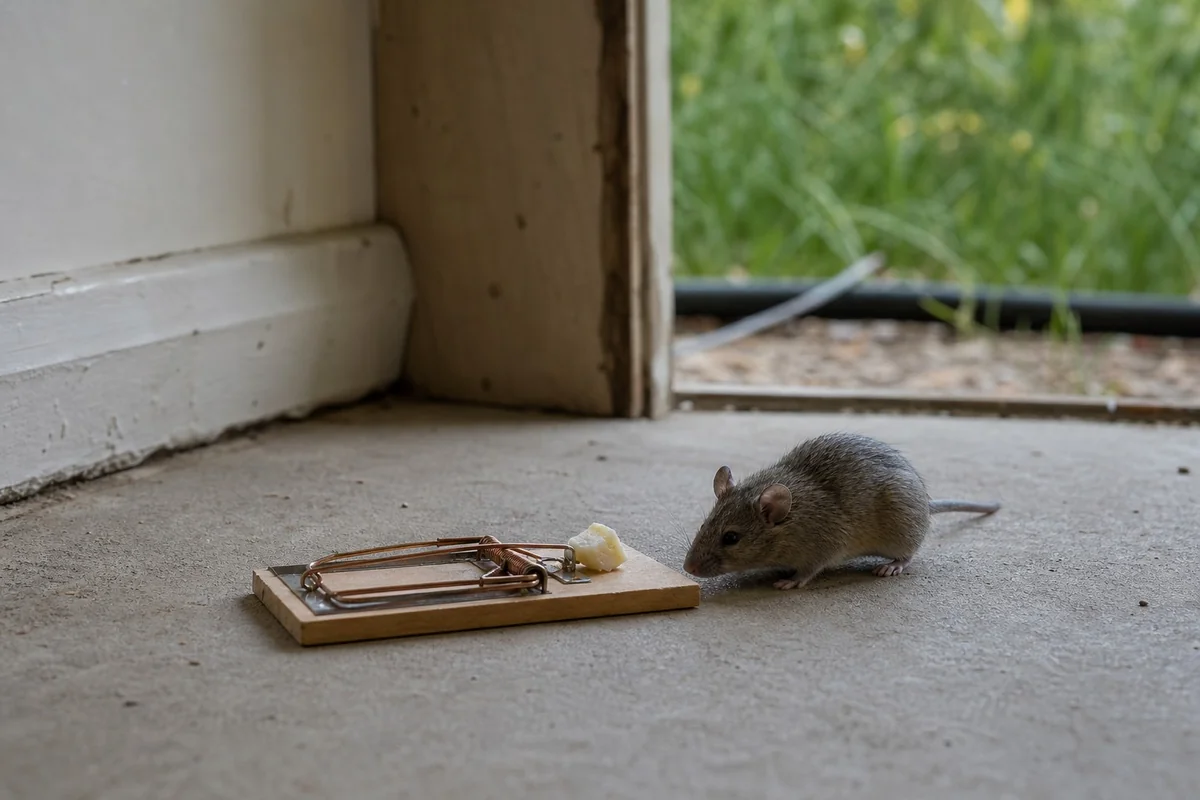

Are Rat Traps Loud? What You Will Hear and Why
Are rat traps loud? How snap, covered, electronic, live and glue traps sound, what noise after the snap means, and how to keep trap noise away from bedrooms.
Rat traps are loud for a moment. A rat snap trap fires with a sharp crack you can often hear from the next room in a quiet house at night, while electronic traps work almost silently. The longer noise usually comes from a rat that was caught badly and drags or rattles the trap, which is a sign of a placement problem rather than a loud trap.
How Loud Each Type of Rat Trap Is
Trap noise comes from two things: the mechanism firing, and the animal afterward. The table compares the common types on both, in plain terms rather than decibel figures, which makers do not publish.
| Trap Type | Sound When It Fires | Sound Afterward | Best Spot If Noise Bothers You |
|---|---|---|---|
| Wooden snap trap | Sharp crack of a metal bar on wood | Usually silent after a clean kill | Basement, garage, crawl space |
| Plastic snap trap | Loud plastic snap | Usually silent after a clean kill | Away from bedrooms |
| Covered tunnel trap | A duller, muffled snap inside the housing | Usually silent after a clean kill | Living areas where a softer sound helps |
| Electronic trap | Little or none | Silent; a light signals the catch | Bedrooms, kitchens, apartments |
| Live cage trap | A metal clank as the door drops | Rattling and scratching as the rat moves | Outbuildings, checked at first light |
| Glue board | None | Squealing and struggling, sometimes for hours | Not recommended for rats |
For the traps behind those types, see our guide to the best rat traps for the home; the rat traps section covers attic, yard and coop setups.
Why Rat Snap Traps Make Such a Sharp Sound
A rat snap trap needs a much stronger spring than a mouse trap to kill a large animal outright. All that stored force is released in an instant when the trigger moves, so the bar or jaws hit the base hard, and the trap body itself can jump against the floor. Wooden traps sound sharpest because the bar strikes bare wood; plastic traps give a hollower snap.
The snap is loudest when the trap fires empty. With a rat in the jaws, the body takes part of the blow. Is a rat trap loud in the house? In a quiet home at night, yes: a trap behind the refrigerator or in the ceiling above a bedroom can wake light sleepers, and many owners find out about a catch that way.
Covered tunnel traps dull the sound somewhat because the jaws close inside a plastic housing. Fastening a trap to a board or the floor also helps, since UC IPM notes that securing a trap to the surface focuses the force of the snap, and a trap that cannot jump makes less clatter.
Noise After the Snap Means Something Went Wrong
A rat snap trap set correctly kills quickly, and the room goes quiet. If you hear thumping, dragging or squealing after the snap, the trap probably caught a leg, a tail or a snout instead of the head. That happens with traps set parallel to the wall, traps that are not fastened down and, most often, mouse traps used on rats, whose spring is too weak to kill a rat.
Those sounds matter for two reasons. The rat is suffering, so it should be dealt with promptly, and a rat that pulls free becomes very hard to trap again. If you hear struggling, put on thick gloves, check the trap, and next time use rat-size traps set at a right angle to the wall with the trigger end almost touching it.
Glue boards are the noisiest option in this sense: a stuck rat can squeal and thrash for hours. That is one reason UC IPM does not recommend them for nonprofessional use and the CDC advises against them altogether.
Will the Noise Scare Other Rats Away?
Not for long. Rats are wary of anything new, but they get used to repeated sounds. UC IPM's house mouse guide notes that rodents are easily frightened by strange noises but quickly become accustomed to regularly repeated sounds, and that there is little evidence any sound device drives established mice or rats out of buildings.
Will loud noise scare rats away, then? Only briefly, so noise is not a control method, and ultrasonic plug-in units do not solve the problem either. What does scare rats off a trap is a bad experience at that trap, such as an escape, which is why pre-baiting and correct setting matter more than the sound.
How to Keep Trap Noise Down
You cannot make a snap trap silent, but you can choose where you hear it and make sure you only hear it once.
- Use electronic traps near bedrooms: they kill in a closed chamber with little sound and signal the catch with a light.
- Use covered traps in living areas: the housing muffles the snap.
- Fasten snap traps down: a trap screwed or wired to a board cannot jump and rattle.
- Set rat-size traps correctly: clean kills stay quiet; badly set traps lead to thumping and dragging.
- Put the loudest traps in the basement, garage and attic: where a crack at night bothers no one.
Common Questions About Rat Trap Noise
Will my neighbors hear a rat trap in an apartment?
Will my neighbors hear a rat trap in an apartment?
Usually not through a wall, though a trap fired against a shared wall or a hollow floor carries farther than one on a concrete slab. If you share walls or have downstairs neighbors, use electronic or covered traps indoors and fasten snap traps to a board so they cannot jump.
Can a rat trap hurt a person?
Can a rat trap hurt a person?
Yes. A rat snap trap's spring is strong enough to bruise or break a finger if it fires while you set it. Set traps with your fingers clear of the jaws, use traps that set by a lever or by pressing the top, and keep open traps where children cannot reach them.
Why did I hear a snap but find the trap empty?
Why did I hear a snap but find the trap empty?
Usually the trap fired from a brush of the body or tail rather than a step on the trigger, or a mouse set it off. Check that the trap is a rat-size trap set at a right angle to the wall, and use a pea-sized amount of bait so the rat must reach onto the trigger.
Do electronic rat traps make any noise?
Do electronic rat traps make any noise?
Very little. They kill with a shock inside a closed chamber, so there is no snap; at most you may hear a faint click or the rat entering. They signal a catch with a blinking light, which makes them the usual choice for bedrooms and apartments.
Key Takeaways
Rat snap traps make a single sharp crack when they fire, loud enough to hear from the next room at night, and covered traps muffle it somewhat. Electronic traps are almost silent. Ongoing thumping, dragging or squealing is not normal trap noise; it means the rat was caught badly, or that a glue board or live cage is doing what those traps do.
If noise is your concern, match the trap to the room: electronic or covered traps in living spaces, open snap traps in the basement, garage and attic, all fastened down and set at right angles to the wall. Do not count on sound of any kind to drive rats out; they get used to it quickly.
Tonight, put your loudest traps where nobody sleeps, and the quiet ones where they do.
Related Articles
Do Rat Traps Work? Why Rats Avoid Them and How to Fix It
Rat traps work when they respect a rat's caution. Why rats avoid traps, how each trap type performs, whether glue traps and bait boxes work,, how to judge results.
Best Rat Traps for a Chicken Coop: Covered, Hen-Safe Picks
The best rat traps for a chicken coop: UCatch and TRATPER covered traps, a low Filpestco tunnel, a boxed Tomcat and a live cage, plus how to trap safely around hens.

Best Rat Traps for the Home: Snap, Covered, Electric and Live
The best rat traps for the home: Tomcat and Tougher Than Tom snap traps, TRATPER and UCatch covered traps, the Rat Zapper and a live cage, plus how to set them.
Are Rat Traps Humane? How Each Method Compares
Are rat traps humane? How snap, electronic, live, glue and poison methods compare on suffering, why live traps fall short, and how to set traps so they kill cleanly.