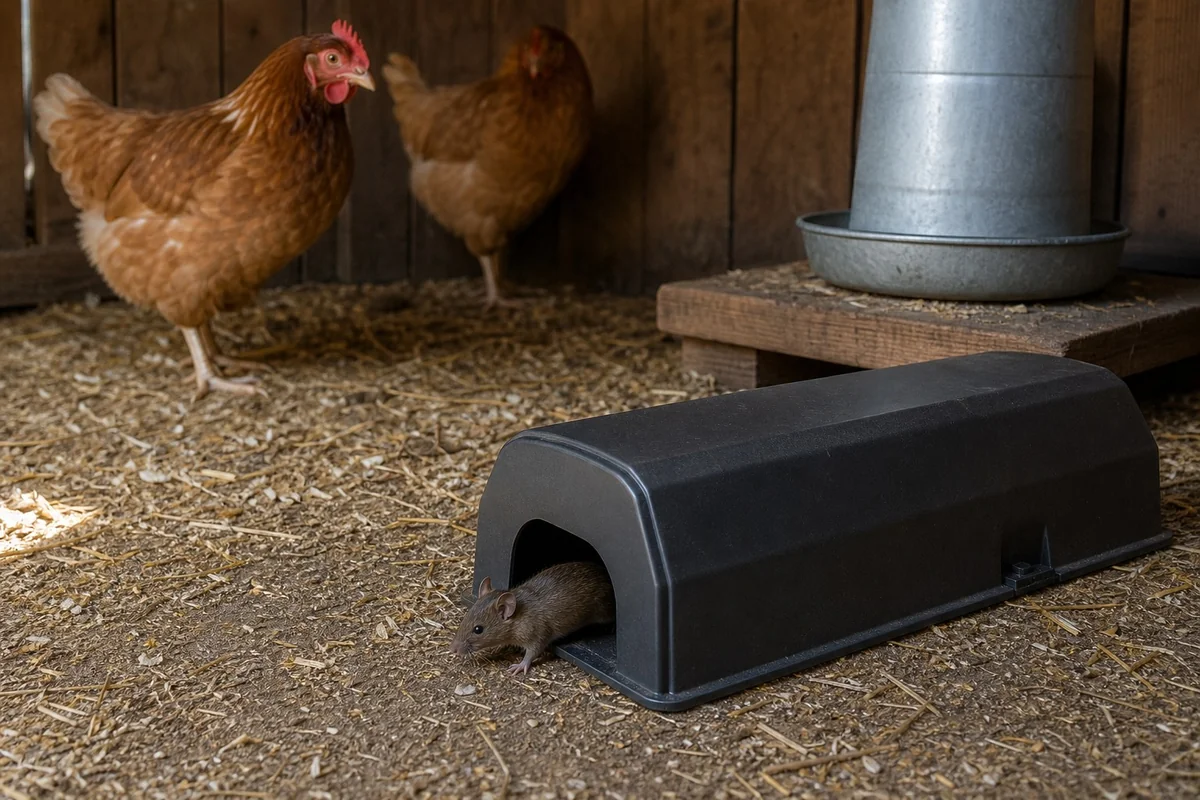
 Pest Pro Reviews Editorial Team • • 11 min read •
Best Rat Traps for a Chicken Coop: Covered, Hen-Safe Picks
The best rat traps for a chicken coop: UCatch and TRATPER covered traps, a low Filpestco tunnel, a boxed Tomcat and a live cage, plus how to trap safely around hens.
The best rat trap for a chicken coop is a covered dual-entry snap trap that hens cannot reach into, led by the UCatch, which buyers single out for safety around chickens. The TRATPER suits bigger rats, the Filpestco fits low spots under the coop, a boxed Tomcat is the budget option, and the Anyhall cage is the no-kill choice.
- Coops need covered traps or boxed traps, set after the hens go to roost and checked before they come out.
- Poison does not belong near a flock, because chickens peck at dying rodents and predators eat them too.
- Traps only clear the rats you have; locked-away feed and hardware cloth keep new ones from moving in.
Why Rats Come to Chicken Coops
A coop offers rats everything at once: spilled feed, eggs, water and warm bedding. The rats you see around coops are usually Norway rats, the heavy burrowing species, which UC IPM's rat pest guide says prefer cereal grains and dig burrows along foundations and under rubbish and woodpiles. A coop floor sitting on soil is an ideal roof over a burrow.
They are more than a nuisance. The same guide notes rats can carry and transmit diseases to people, pets and livestock, including poultry, and they contaminate feed with droppings and urine. Large rats also take eggs and can attack chicks.
Signs to look for are holes along the coop base or run fence, feed disappearing overnight, droppings near the feeder, gnawed wood and broken eggs. Those spots are where traps go; for traps around the rest of the property, see our guide to the best rat traps for the home.
Identify your needs and get personalized recommendations
A small coop and run where hens can reach a trap.
Heavy rats with burrows along the base.
Rats run in the low gap under the coop.
Many runways where hens never go.
How to Trap Rats Without Harming Chickens
The safest plan uses timing as well as equipment. Rats feed mostly at night, while hens roost at dusk and stay on the perch until morning, so a trap set after lockup and closed or picked up before release meets rats, not chickens. UC IPM also notes that trapping at night cuts down on birds finding the traps.
- Covered traps only: the jaws sit inside a tunnel, so a hen cannot get her head or toes to them.
- Boxed open traps: set an open rat trap inside a lidded box with rat-size holes at ground level on two opposite ends.
- Outside the coop first: set traps along the outside walls, the run fence and burrow entrances before trapping inside.
- Fastened down: screw or wire traps to a board so a curious hen or a rat cannot drag them.
- No glue and no loose poison: glue boards catch birds and poison passes to anything that eats a dying rat.
Our rat traps section has separate guides for the yard and attic if the rats are also around the house.
How We Selected These Coop Traps
We compared traps on whether the jaws are enclosed or can be boxed, how they hold up outdoors, how easy they are to empty quickly in the morning and what buyers report about catches and safety around chickens and pets. Our sources were manufacturer specifications and bullets, Amazon listings and Amazon's review digests, plus UC IPM guidance; we did not test the traps. Safety around the flock counted most.
We left out the Kat Sense tunnel traps, which buyers say are too small for rats, and the Kat Sense 6-pack and Victor wooden traps, whose buyers report traps that will not stay set. Two lightweight live cages, from Pivmuth and Wanqueen, drew mostly negative durability feedback, and the Rugged Ranch Ratinator multi-catch cage drew mixed reports on catches and a door that trapped animals can open. A bait station was excluded because it is built to hold poison.
Five traps made the list, starting with the one buyers trust most around chickens.
UCatch Dual-Entry Rat Trap: Best Overall for Coops
Chicken keepers come up again and again in UCatch's buyer feedback: owners say this two-entrance tunnel trap is much safer around their hens than an open snap trap. That is why it leads the list, ahead of traps with stronger reputations for sheer catching power.
- The pack holds 2 traps made of ABS plastic.
- The maker describes setting it by inserting bait and pressing the lever down, so your hands stay away from the jaws.
- Buyers find it easy to empty without touching the catch, which helps on a rushed morning before letting hens out.
- Some buyers report it lasting several months outside; others had units break after first use.
- Buyers say the entry and bait cup are too narrow for very large rats.
Choose it for coops and runs where hens could reach a trap, and where the rats are average size. If big Norway rats are digging under the coop, the TRATPER gives them more room.
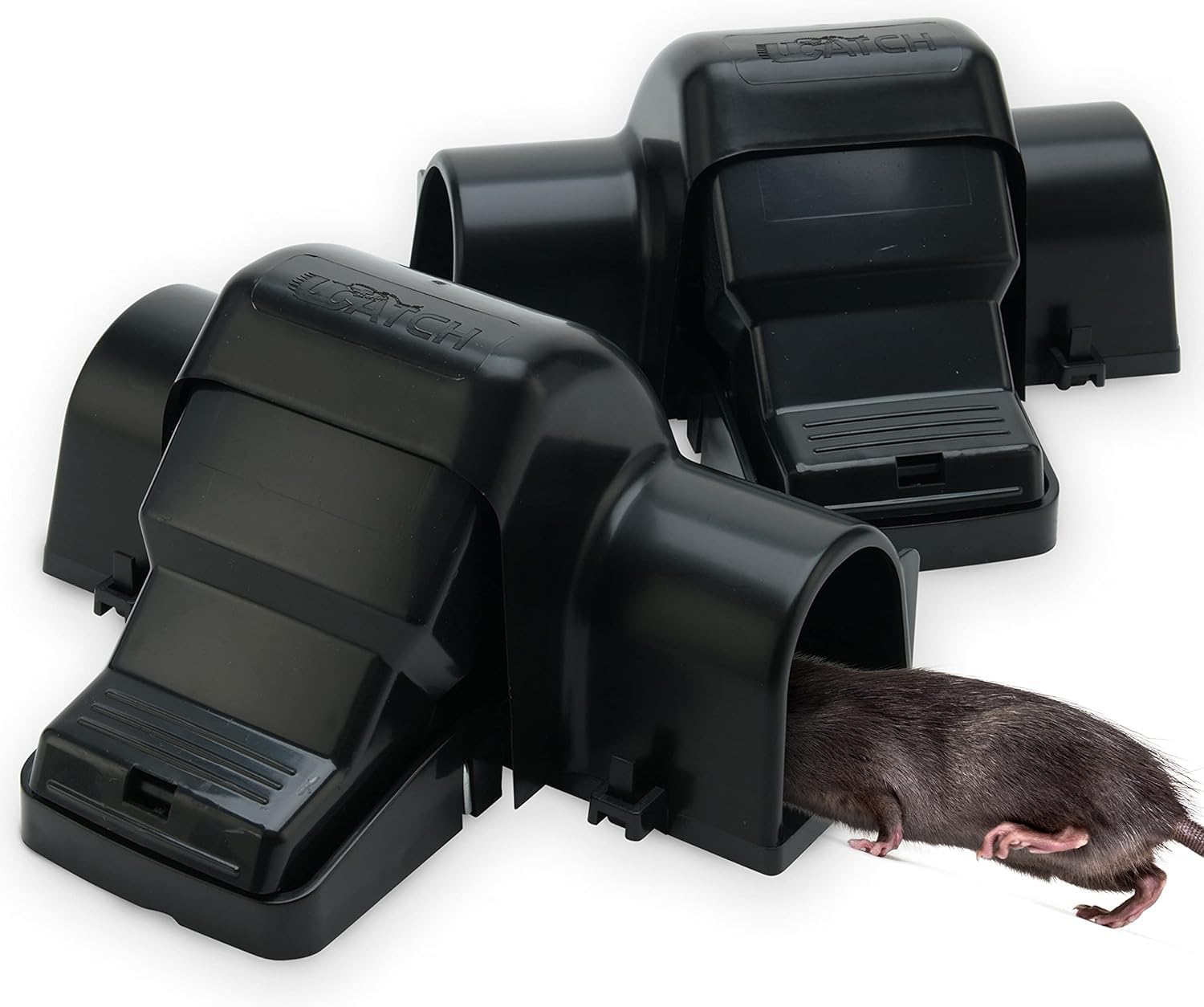
UCatch Dual-Entry Rat Trap
Best for: Coops and runs where hens could reach a trap
- ✓Buyers say it is much safer around pets and chickens
- ✓Easy no-touch disposal
- −Buyers say the entry is too narrow for very large rats
- −Mixed durability feedback
Specifications (3)
- Material
- Premium ABS plastic
- Unit Count
- 2 Count
- Target Species
- Rat, Mouse, Chipmunk, Squirrel
TRATPER Rat Traps: Best for Large Coop Rats
The TRATPER 2-Pack is a dual-entry covered snap trap with the mechanism inside the tunnel, listed for indoor and outdoor placement. It is the roomier covered pick, which suits the heavy Norway rats that burrow under coops and feed sheds.
- Each trap measures about 6 x 5 x 8 inches, and the maker describes an added weight-bearing tunnel.
- The maker says the enclosed tunnel keeps children and pets away from the trapping mechanism.
- Buyers report quick catches, easy setting and strong jaws, and find it safe around people and pets.
- Some buyers report poor-quality units, so test each trap on arrival.
Pick it for burrows along the coop foundation, the feed shed and the run fence. Set it tight against the wall with an entrance lined up with the rats' path.

TRATPER Rat Traps 2-Pack
Best for: Large rats burrowing under the coop
- ✓Mechanism enclosed in the tunnel
- ✓Buyers report quick catches
- ✓Strong jaws, per buyers
- −Some buyers report poor-quality units
Specifications (3)
- Target Species
- Rat, Chipmunk, Large Mouse, Large Mice
- Unit Count
- 2 Count
- Product Dimensions
- 6"L x 5"W x 8"H
Filpestco Tunnel Snap Trap: Best Low-Profile Coop Trap
The Filpestco 4-count is a covered tunnel snap trap in ABS plastic with an interlocking-tooth jaw inside. At about 4 inches tall, it slides under raised coops and nesting boxes, where rats often run.
- Each trap measures 8 x 5.6 x 4 inches, and the maker says it is sized for large rats.
- The maker describes one-touch setting and one-touch disposal.
- Buyers say it is safe around pets like dogs and chickens and easy to bait, set and clean.
- Catch-rate feedback is mixed, including bait taken without the trap firing.
Choose it for the gap under a raised coop and along low runs. Press a pea-sized amount of bait firmly into the cup so the rat has to work at the trigger.

Filpestco Tunnel Snap Trap 4-Count
Best for: Low gaps under raised coops and nesting boxes
- ✓Lowest covered pick at about 4 inches tall
- ✓One-touch setting and disposal, per the maker
- ✓Buyers say it is safe around dogs
- −Mixed catch-rate feedback, including bait taken without firing
- −Mixed durability feedback
Specifications (3)
- Product Dimensions
- 8"L x 5.6"W x 4"H
- Material
- Acrylonitrile Butadiene Styrene (ABS)
- Unit Count
- 4 Count
Tomcat Rat Snap Trap: Best Budget Trap for a Trap Box
The Tomcat Rat Snap Trap is an open plastic rat trap that its maker lists for indoor or covered outdoor use, including farms and barns. Its jaws are exposed, so around chickens it belongs inside a lidded box or a locked feed shed.
- Each trap measures 8.63 x 3 x 5 inches, model 0361710, narrow enough to fit a simple trap box.
- The maker says to set it perpendicular to a wall where rats travel, and it sets by hand or foot.
- The removable bait cup lets you pre-bait and service the trap without setting it.
- Buyers find it very effective, often on the first night; durability feedback is mostly negative.
Pick it if you need many traps along a long run fence or in a feed shed hens never enter. Build a box from scrap wood with a hole at each end; UGA's extension guide describes holes about 3 inches across for rat stations, small enough to keep adult hens out.
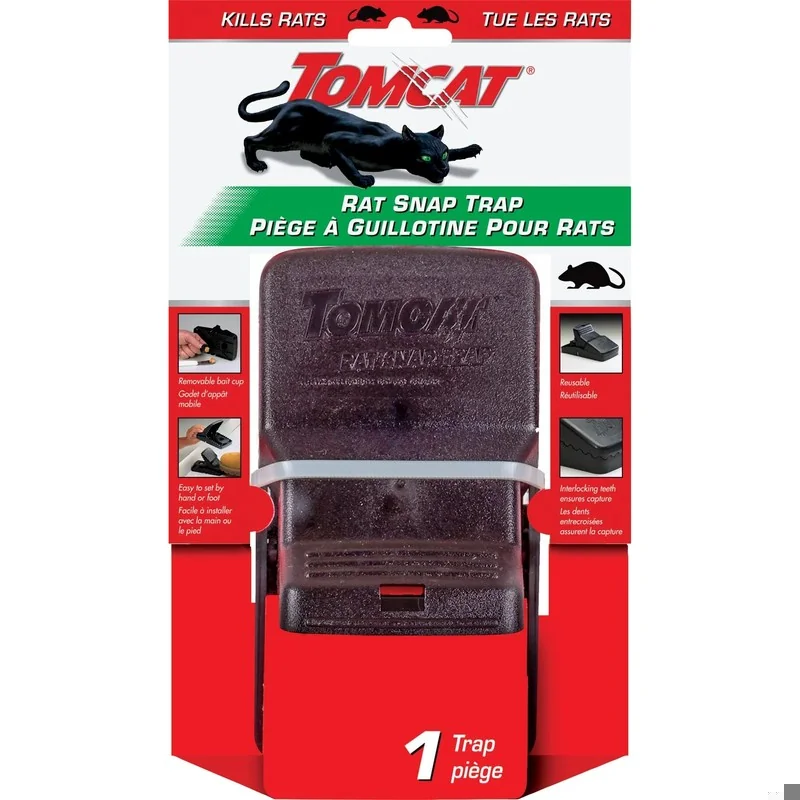
Tomcat Rat Snap Trap
Best for: Trap boxes and feed sheds on a budget
- ✓Buyers find it very effective, often the first night
- ✓Sets by hand or foot
- ✓Removable bait cup
- −Buyers report thin plastic pins and bait cups breaking
- −Exposed jaws; keep away from pets
Specifications (3)
- Target Species
- Rat
- Material
- Plastic
- Product Dimensions
- 8.63"L x 3"W x 5"H
Anyhall Live Cage Traps: Best No-Kill Option
For flock owners who will not kill rats, Anyhall's pair of iron mesh cages closes and latches behind a rat that steps on the wide pedal. Know the limits first: UC IPM does not recommend live trapping for nonprofessionals and notes that in California a trapped rat must legally be euthanized or released right where it was caught. The CDC also advises against live traps because trapped rodents urinate in fear.
- Each cage measures 12.5 x 5.5 x 4.5 inches, model 2RNB.
- The maker lists it for rats, mice, chipmunks and voles, but not large squirrels or opossums.
- Buyers rate its catch rate, quality and value highly; size feedback is mixed.
- Its small size keeps adult hens out, but a cage on the ground still needs a morning check before the flock is released.
Choose it only if local rules allow release and you can deal with a caught rat every morning. For most flocks, a covered snap trap ends the problem faster.

Anyhall Live Cage Traps 2-Pack
Best for: No-kill households that can check traps daily
- ✓Buyers rate catch rate and quality highly
- ✓Large trigger pedal
- ✓Two cages per pack
- −Release of rats is restricted in some areas; check local rules
- −Not for large squirrels or opossums, per the maker
Specifications (3)
- Material
- Iron
- Product Dimensions
- 12.5"L x 5.5"W x 4.5"H
- Unit Count
- 2 Count
- UCatch Dual-Entry Rat Trap wins for: coops where hens can reach a trap
- TRATPER Rat Traps wins for: big rats burrowing under the coop
- Filpestco Tunnel Snap Trap wins for: low gaps under raised coops
- Tomcat Rat Snap Trap wins for: trap boxes and feed sheds on a budget
- Anyhall Live Cage Traps wins for: no-kill trapping where rules allow
The best choice depends on where the rats are getting in and who else uses the space.
How to Choose a Rat Trap for Your Coop
Start with access: anything hens can reach must be covered or boxed. Then look at the rats and the spaces they use.
- Inside the run or coop: the UCatch, set after lockup and checked before release.
- Burrows along the base: the TRATPER, tight against the wall at the burrow mouth.
- Under a raised coop: the Filpestco, which slides into low gaps.
- Feed shed or long fence line: several Tomcat traps in boxes.
- No-kill flock owner: the Anyhall cage, where local rules allow.
Plan on more than one trap. UC IPM suggests rat traps about 10 to 20 feet apart along runways, so a coop with a run usually needs several.
Where to Set Traps Around the Coop
Rats follow the same routes every night, usually from a burrow or woodpile to the feeder. Set traps on those routes rather than in open ground, with an entrance lined up with the path.
- Along the outside walls: where the coop meets the ground, beside burrow holes and gnawed boards.
- Beside the feeder and waterer: where droppings collect, once the hens are shut in for the night.
- Along the run fence: especially where the wire meets the ground or has been dug under.
- In the feed shed: along the walls behind feed bins.
Pre-bait every trap unset for a few nights, because rats avoid new objects. Peanut butter, nuts and a little of the chicken feed itself all work, in pea-sized amounts.
How to Keep Rats Out After Trapping
Traps clear the rats you have; the coop decides whether more arrive. Once catches stop, close the gaps they used and remove what drew them in.
- Hardware cloth, not chicken wire: UC IPM warns that rats pass easily through lightweight chicken wire; use galvanized 1/2-inch wire cloth over vents, windows and weak spots.
- A wire apron: lay hardware cloth flat along the outside of the coop base and run, extending outward, so digging rats hit wire.
- Feed storage: keep feed in metal cans with tight lids, since rats chew through plastic.
- Feeders: bring feed in at night or use a rat-resistant treadle feeder that opens only under a hen's weight.
- Eggs and spills: collect eggs daily and rake up spilled feed.
Seal gaps larger than 1/4 inch in the coop walls and around doors with hardware cloth or sheet metal, not foam or caulk, which rats chew through.
Common Questions About Coop Rat Traps
What kills rats but is safe for chickens?
What kills rats but is safe for chickens?
A rat-size snap trap the hens cannot reach: a covered tunnel trap, or an open trap inside a lidded box with rat-size holes. Set it after the flock goes to roost and close it before release. Poisons, even in stations, are not safe around chickens because hens peck at dying rodents.
Do chickens keep rats away?
Do chickens keep rats away?
No. Chickens may chase or even eat mice, but their spilled feed, eggs and warm coop attract rats, and adult rats are too big for hens to deal with. Most rat problems start because of a flock, not despite one.
Will rats kill chickens?
Will rats kill chickens?
Large rats can kill chicks and young birds and may bite roosting hens, especially when food runs short. More often they steal eggs and feed and spread disease. If you find chicks missing or birds with bite wounds on the feet, trap at once and secure the brooder with hardware cloth.
Can I use a cat to control rats around the coop?
Can I use a cat to control rats around the coop?
A cat may catch young rats, but most cats avoid adult rats, and a cat in the run can stress or injure chicks. Treat a cat as a bonus, not a plan; traps, feed storage and hardware cloth do the real work.
Which One Should You Buy?
For most backyard flocks, the UCatch Dual-Entry Rat Trap is the one to buy. Buyers single it out for safety around chickens, and its hands-free disposal makes the morning check quick before you let the hens out.
Choose the TRATPER if large rats are burrowing under the coop, the Filpestco for the low gap under a raised coop, Tomcat traps in boxes for a feed shed or long fence on a budget, and the Anyhall cage only if your local rules allow release and you can check it every morning. Whatever you choose, set traps after lockup and check them before release.
This evening, after the hens go to roost, put pre-baited, unset traps beside the burrows and the feeder.
Related Articles
Best Outdoor Rat Traps: Covered and Pet-Safe Picks
The best outdoor rat traps: UCatch and TRATPER covered snap traps for yards with pets, the Tomcat for sheltered spots, a live cage, and where to place them.
Best Rat Traps for the Attic: Snap, Covered and Electric Picks
The best rat traps for the attic: Tomcat snap traps in numbers, TRATPER and Filpestco covered traps, UCatch for roof rats and the Rat Zapper, plus where to set them.

Best Rat Traps for the Home: Snap, Covered, Electric and Live
The best rat traps for the home: Tomcat and Tougher Than Tom snap traps, TRATPER and UCatch covered traps, the Rat Zapper and a live cage, plus how to set them.
Are Rat Traps Loud? What You Will Hear and Why
Are rat traps loud? How snap, covered, electronic, live and glue traps sound, what noise after the snap means, and how to keep trap noise away from bedrooms.