
Do Rat Traps Work? Why Rats Avoid Them and How to Fix It
Rat traps work when they respect a rat's caution. Why rats avoid traps, how each trap type performs, whether glue traps and bait boxes work,, how to judge results.
Rat traps do work, and rat-size snap traps are the most effective way to trap rats, but rats are harder to catch than mice because they avoid anything new in their territory. Traps succeed when they sit on the rats' routes, are pre-baited unset for a few nights and are used in numbers; most failures come from skipping one of those steps.
Why Rats Avoid Traps
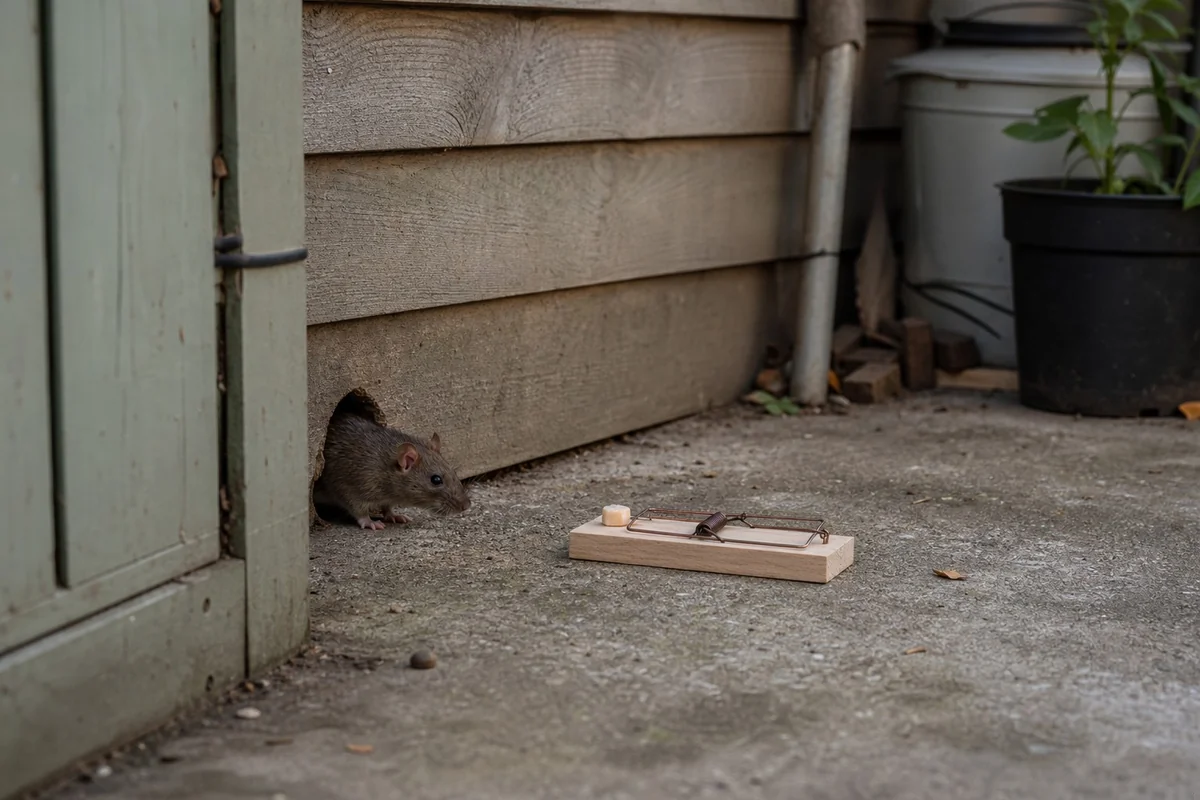
Rats are cautious by nature. UC IPM's rat pest guide notes that they constantly explore and memorize their surroundings, then quickly detect and avoid new objects and new foods. A trap that appears overnight on a familiar route is exactly that kind of new object, so rats often walk around it for several days, sometimes weeks.
This fear of new things is called neophobia, and the same guide says it is thought to be stronger in roof rats, the slim climbers with tails longer than their bodies, than in the heavier Norway rats that burrow. So a trap that catches nothing in the first week is normal behavior from a rat, not proof the trap is useless.
The bigger problem is trap shyness. UC IPM warns that a rat that sets off a trap without being caught becomes very difficult to trap again. That is why people who set traps on day one, catch nothing and see sprung empty traps often conclude rat traps “don't work”; for traps that give you the best chance on the first try, see our guide to the best rat traps for the home.
What Makes a Rat Trap Work
The trap itself matters less than people expect. UC IPM states that finding the best locations to set traps may be more important than the type of trap used. A good trap in the open catches nothing, while a basic trap on a busy runway catches rats.
- Placement: along walls, behind objects and in dark corners where you find droppings and rub marks, between the rats' shelter and their food.
- Angle: at a right angle to the wall with the trigger end nearly touching it, so a rat running along the wall crosses the trigger; traps set parallel go in back-to-back pairs.
- Pre-baiting: baited but unset until the bait has been taken several times, then set all at once.
- Numbers: rat traps about 10 to 20 feet apart along runways, and a dozen or more for a heavily infested home.
- Trap size: a rat-size trap with a strong spring, since a rat can pull free of a mouse trap.
The table below matches the usual signs of failure to their cause and fix.
| What You See | Likely Cause | Fix |
|---|---|---|
| Rats ignore the trap | New object on their route | Leave it baited but unset for several nights |
| Bait gone, trap not sprung | Bait too big or loose, or trap not yet set | Use a pea-sized amount pressed in or tied on |
| Trap sprung, no rat | Mouse trap, weak spring or glancing hit | Use a rat-size trap set at a right angle to the wall |
| Bait taken from every trap | More rats than traps | Double the baited traps until some bait is left |
| Catches stop, droppings continue | New rats arriving or trap-shy survivors | Seal entry points and move traps to fresh signs |
How Each Type of Rat Trap Performs
Not every trap that says “rat” on the box performs the same way against a wary animal. Snap traps lead, and the rest each come with a catch. The rat traps section compares specific models for the home, attic and yard.
- Rat snap traps: UC IPM calls them the safest, most effective and most economical way to trap rats. They kill quickly when set right and can be reused.
- Covered tunnel traps: the same snap mechanism inside a housing; they work as well and are safer around pets, but some are tight for very large rats.
- Electronic traps: they work, but UC IPM notes they cost considerably more, still need pre-baiting and must be checked often.
- Live cages: they catch rats, but UC IPM does not recommend them for nonprofessionals, since the rat must then be killed or released on the spot, depending on local law.
- Glue boards: they work poorly on rats and cause suffering, as the next section explains.
Do Rat Glue Traps Work?
Poorly. UC IPM says glue boards are difficult to use and not generally recommended for nonprofessional use, and they should never be used outdoors, where wild animals get stuck. UGA's extension guidance adds that sticky traps probably will not hold a large rat, which often pulls free or drags the board away.
A rat that is held stays alive and panicking until someone kills it, and the CDC advises against glue traps because frightened rodents urinate, which raises your risk of disease. Are sticky rat traps illegal? Some countries and local areas restrict or ban glue traps, so check local rules before buying them; for most homes, a rat-size snap trap is the better tool anyway.
Do Rat Traps Work Indoors?
Yes, and indoors traps are usually the best choice. You see results each morning, you remove the rats you catch, and nothing toxic sits where children and pets live. Indoors, set rat traps behind the stove and refrigerator, along basement walls, at the back of lower cabinets and in the attic.
Poison indoors is the opposite. UGA's extension guidance notes that poisoned rodents do not die right away; they usually crawl into a wall void or behind an appliance, die there and smell awful. Traps avoid that problem completely.
Indoor traps work faster when the bait is the easiest meal in the house. Store food and pet food in sealed containers and keep garbage covered while you trap, and use covered tunnel traps in any room a dog, cat or child can reach.
How Effective Are Bait Boxes?
Bait boxes, also called bait stations, hold rodenticide inside a tamper-resistant case. They can bring down a large outdoor population, but slowly: most rodenticides are anticoagulants or nerve poisons that kill over several days, and rats need to keep feeding. You also cannot see what they catch.
Where do rats go after eating poison? Usually back to their burrow or nest, so carcasses end up in burrows, under decks or inside walls rather than next to the station. UC IPM advises sealing entry points before baiting outside, so poisoned rats do not come into the house to die.
How to Tell Whether Your Traps Are Working
Judge traps over weeks, not nights. The CDC notes that rats may take several days to approach traps, and recommends trapping until nothing is caught for a week and no new signs appear. Fresh droppings, gnawing and rub marks after that point mean rats are still there.
Watch the bait as well as the catches. If pre-bait vanishes from every trap, UC IPM advises doubling the number of baited traps until some bait is left untouched, and only then setting them all. If traps catch a few rats and then stop while signs continue, new rats are coming in, so look for gaps larger than 1/4 inch around pipes, vents and the foundation.
Common Questions About Whether Rat Traps Work
Can rats learn to steal bait from traps?
Can rats learn to steal bait from traps?
Yes, when the bait is easy to lick or pull free from the edge of the trap. Use a pea-sized amount pressed firmly into the cup, or tie dry bait such as a nut to the trigger with thread, so the rat has to tug at the trigger to eat it.
Will a mouse trap kill a rat?
Will a mouse trap kill a rat?
Rarely. A mouse trap's spring is too weak and its bar too short to kill a rat outright, so the rat is often injured and pulls free. An escaped rat becomes trap-shy and much harder to catch, so use rat-size traps from the start.
What does mouse poison do to a rat?
What does mouse poison do to a rat?
Most rodent poisons are anticoagulants that stop the blood from clotting, so the animal bleeds internally and dies over several days; others attack the nervous system. That delay is why poisoned rats die out of sight, often inside walls or burrows.
Why did my rat trap go off with nothing in it?
Why did my rat trap go off with nothing in it?
The usual causes are a rat brushing the trigger with its body or tail from the side, a trap set parallel to the wall, or a sensitive trap knocked by another animal. Set traps at a right angle to the wall with the trigger end against it, and check that the trap sits flat and steady.
When should I call a professional instead of trapping?
When should I call a professional instead of trapping?
Call one if catches stop but fresh droppings and gnawing continue after a few weeks of steady trapping, if you hear rats inside walls you cannot reach, or if you cannot find where they get in. A professional inspection usually focuses on entry points, which traps alone never fix.
Key Takeaways
Rat traps work when they work with the rat's caution: rat-size snap traps, placed at right angles on proven runways, pre-baited unset for a few nights, then set all at once. Glue boards, live cages and poison are weaker choices for most homes, especially indoors.
Give a well-placed trap a full week before you judge it, add traps when bait vanishes everywhere, and seal entry points so new rats stop replacing the ones you catch. If droppings keep appearing after a few weeks of steady trapping, a pest professional can find the entry points you have missed.
Tonight, bait your rat traps without setting them, and set them only once the bait has been taken a few times.
Related Articles
Are Rat Traps Loud? What You Will Hear and Why
Are rat traps loud? How snap, covered, electronic, live and glue traps sound, what noise after the snap means, and how to keep trap noise away from bedrooms.
Best Rat Traps for a Chicken Coop: Covered, Hen-Safe Picks
The best rat traps for a chicken coop: UCatch and TRATPER covered traps, a low Filpestco tunnel, a boxed Tomcat and a live cage, plus how to trap safely around hens.

Best Rat Traps for the Home: Snap, Covered, Electric and Live
The best rat traps for the home: Tomcat and Tougher Than Tom snap traps, TRATPER and UCatch covered traps, the Rat Zapper and a live cage, plus how to set them.
Are Rat Traps Humane? How Each Method Compares
Are rat traps humane? How snap, electronic, live, glue and poison methods compare on suffering, why live traps fall short, and how to set traps so they kill cleanly.