
How to Make a Bucket Rat Trap That Rats Cannot Escape
How to make a bucket rat trap that works on rats: why a 5-gallon bucket is too shallow, the spinning roller build, pre-baiting, best bait and handling a caught rat.
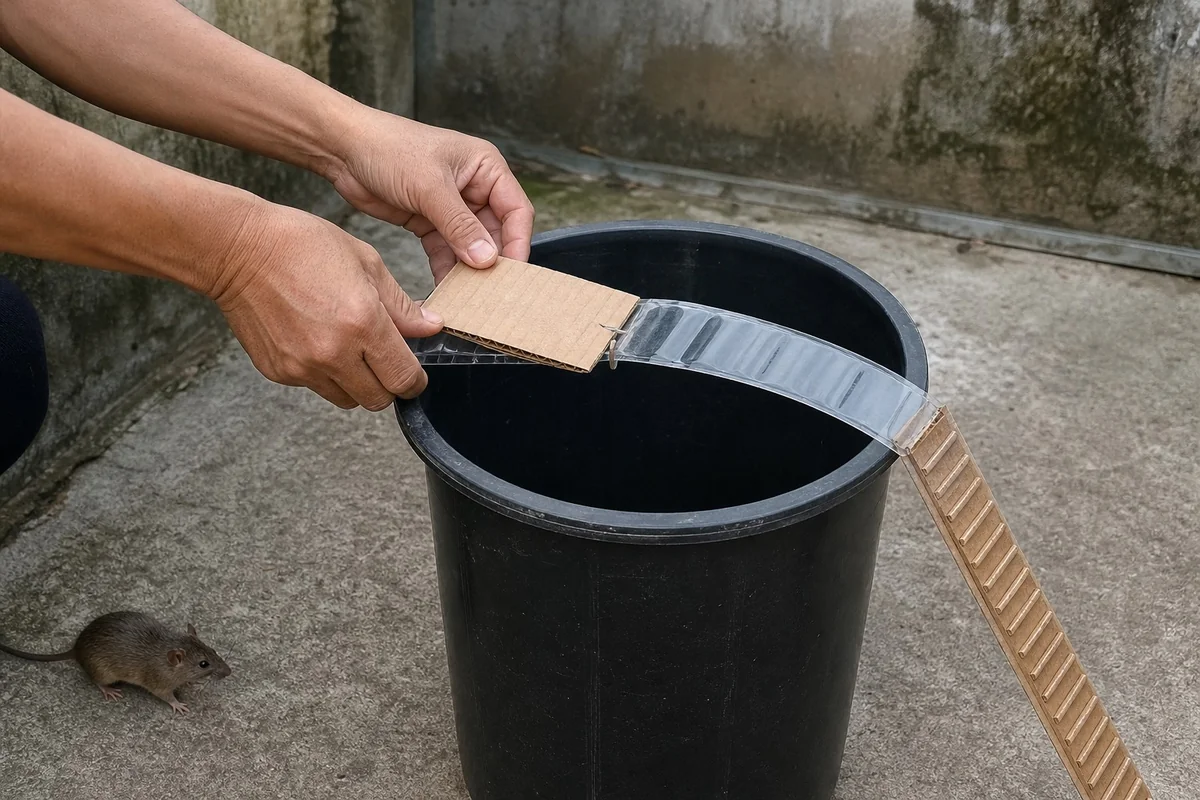
To make a bucket rat trap, mount a spinning can on a metal rod across the top of a tall, dry, smooth-sided trash can, bait the can, add a ramp, and lock the can in place for a few nights before letting it spin. A 5-gallon bucket is too shallow for rats, and the trap holds them alive, so check it every morning.
Do Bucket Traps Really Work for Rats?
They can, but less reliably than they work on mice. Rats are bigger, stronger and much warier of new objects, so many will not walk onto a strange spinning roller, and an adult rat can jump or climb out of a container that holds mice easily. A rat that escapes once is very hard to catch again.
A homemade bucket trap makes sense when you want to use what you have on hand or catch several rats without resetting traps, and when you are ready to deal with a live rat in the morning. For most rat problems, a rat-size snap trap is still the faster and more humane choice; see our guide to the best rat traps for the home.
If you do build one, build it for rats rather than copying a mouse design. That means a deeper container, a sturdier roller and a few nights of pre-baiting.
Can a Rat Jump Out of a Five-Gallon Bucket?
Yes, it can. In a measured study of rodent jumping and climbing by federal wildlife researchers, rats jumped as high as 40 cm, about 16 inches, while house mice topped out lower. A standard 5-gallon bucket is only about 14 inches deep, so a rat at the bottom can reach the rim.
Climbing is the other way out. Roof rats are agile climbers, and any rough patch, seam or handle inside the container gives a grip. A rat trap container needs smooth plastic walls and a depth well beyond a rat's jump, which in practice means a tall plastic trash can rather than a bucket.
What You Need
- A tall plastic trash can with smooth inside walls, roughly twice the depth of a 5-gallon bucket or more, clean and dry.
- A metal rod longer than the can is wide, such as a threaded rod or heavy wire, strong enough to carry a rat's weight without bending.
- A roller: an empty aluminum can or a stiff plastic bottle that spins freely on the rod.
- A drill with a bit slightly larger than the rod.
- A ramp: a scrap board wide enough for a rat to walk up comfortably, long enough to reach the rim.
- Tape for locking the roller during pre-baiting.
- Bait and gloves: peanut butter plus thick gloves for checking the trap.
How to Make a Bucket Rat Trap Step by Step
- Drill the container. Make two holes directly opposite each other a short distance below the rim, just big enough for the rod.
- Prepare the roller. Drill through the center of both ends of the can or bottle so the rod passes straight along its length.
- Mount the roller. Push the rod through one hole, through the roller and out the other side, so the roller hangs over the middle of the opening.
- Test the spin. Roll it with a finger; it should turn with almost no effort. Widen the holes in the roller if it sticks, because a stiff roller lets a rat eat and walk away.
- Bait the middle of the roller. Wearing gloves, smear a band of peanut butter around the center so the rat has to step onto the roller to reach it.
- Add the ramp. Lean the board against the outside so it reaches the rim beside one end of the roller, and set the whole trap against a wall where you see droppings or rub marks.
- Pre-bait with the roller locked. Tape the roller so it cannot turn, and leave it baited for a few nights until rats are eating from it calmly.
- Release the lock and check every morning. Remove the tape in the evening, rebait, and check the trap first thing each day with gloves on.
Quick Checklist
How to build a dry spinning-roller trap deep enough to hold a rat.
- Warning: A 5-gallon bucket is too shallow for rats
- Warning: Never reach in or lift a trapped rat; cornered rats bite
Why the Container Should Stay Dry
Most online versions fill the bucket with water so the rat drowns. UC IPM's house mouse guide states that drowning is not considered humane, and a strong swimmer like a Norway rat can struggle for a long time. A dry, deep container holds the rat alive and unhurt until you check it.
Keep the bottom bare. Bedding, bait crumbs piled in a corner or anything a rat can stand on gives it a launch point toward the rim. If you want a trap that kills rather than holds, a rat-size snap trap does that in a moment; water does not.
What Is the Best Bait for a Bucket Rat Trap?
Peanut butter is the usual choice because it sticks to a spinning surface; loose foods such as nuts or kibble fall off the moment the roller turns. UGA's extension guidance notes that rats like peanut butter, bacon, cooked chicken or anything with a strong odor, and that cheese is not needed.
For stubborn rats, press a few sunflower seeds or crushed nuts into the peanut butter so the smell is familiar and the bait is harder to lick off quickly. Keep the bait the same from the first pre-baiting night to the night you release the lock.
Refresh the bait every evening once the trap is live. A roller licked bare or coated in dried, crusted peanut butter no longer tempts a rat onto it, and a trap without fresh bait catches nothing.
What to Do With a Caught Rat
A bucket trap is a live trap, so you will face a live, frightened rat. Wear thick gloves, keep your hands out of the container, and do not try to pick the rat up; cornered rats bite. The CDC advises against live traps partly because trapped rodents urinate in fear, which raises your exposure to disease.
UC IPM does not recommend live trapping for nonprofessionals and notes that in California a trapped rat must legally be euthanized or released immediately where it was caught. Rules vary by state and city, so check yours before building the trap, and call a pest control service if you cannot deal with the rat humanely yourself. The rat traps section compares kill traps that avoid this step.
Common Mistakes With Bucket Rat Traps
Most failed bucket traps fail for the same few reasons, and each one is easy to fix before the first live night.
- A 5-gallon bucket → rats jump out; use a taller container with smooth walls.
- A roller that sticks → the rat eats and leaves; widen the holes until it spins freely.
- Setting it live on night one → wary rats avoid it or escape once and turn trap-shy; lock the roller for a few nights first.
- A narrow, wobbly ramp → rats will not use it; use a wide, steady board.
- Water in the bottom → drowning is not humane; keep it dry.
- Placing it in the open → rats travel along walls; set it against a wall on their route.
Common Questions About Bucket Rat Traps
Can one bucket trap catch more than one rat?
Can one bucket trap catch more than one rat?
It can, since the roller resets itself after each fall, but several rats in one container fight and stress each other, and the first catch can make others wary of the trap. Check it every morning and empty it each time rather than leaving catches to pile up.
Can I use a metal trash can instead of plastic?
Can I use a metal trash can instead of plastic?
Yes, if the inside is smooth. A galvanized can with ribbed walls gives a climbing rat footholds, so pick one with smooth sides or line the upper part with smooth plastic sheeting. Metal also resists gnawing better than thin plastic if a rat is left in it for hours.
Why is the bait gone but no rat in the trap?
Why is the bait gone but no rat in the trap?
Usually the roller is too stiff, the bait sits too close to the end of the roller, or the roller was still taped. Make sure it spins at a light touch, put the bait in the middle so the rat must step out onto it, and check that the tape is off.
Where should I put a bucket rat trap?
Where should I put a bucket rat trap?
Against a wall on a runway with droppings, rub marks or gnawing, with the ramp running along the wall. Garages, sheds, basements and feed rooms work well. Keep it where children and pets cannot reach it or knock it over.
Key Takeaways
A bucket rat trap works only when it is built for rats: a deep, smooth-sided, dry container well beyond a rat's jumping height, a metal rod and a roller that spins freely, and a wide ramp against a wall on the rats' route. Lock the roller for a few nights of pre-baiting so cautious rats learn the route before it becomes a trap.
Remember that every catch is a live rat that needs handling the way your local rules require, and that rats remain harder to catch this way than mice. If the trap stays empty after a week of live nights, or you would rather not deal with live rats, switch to rat-size snap traps.
Tonight, set up the container against your busiest wall, tape the roller in place, and bait it.
Related Articles
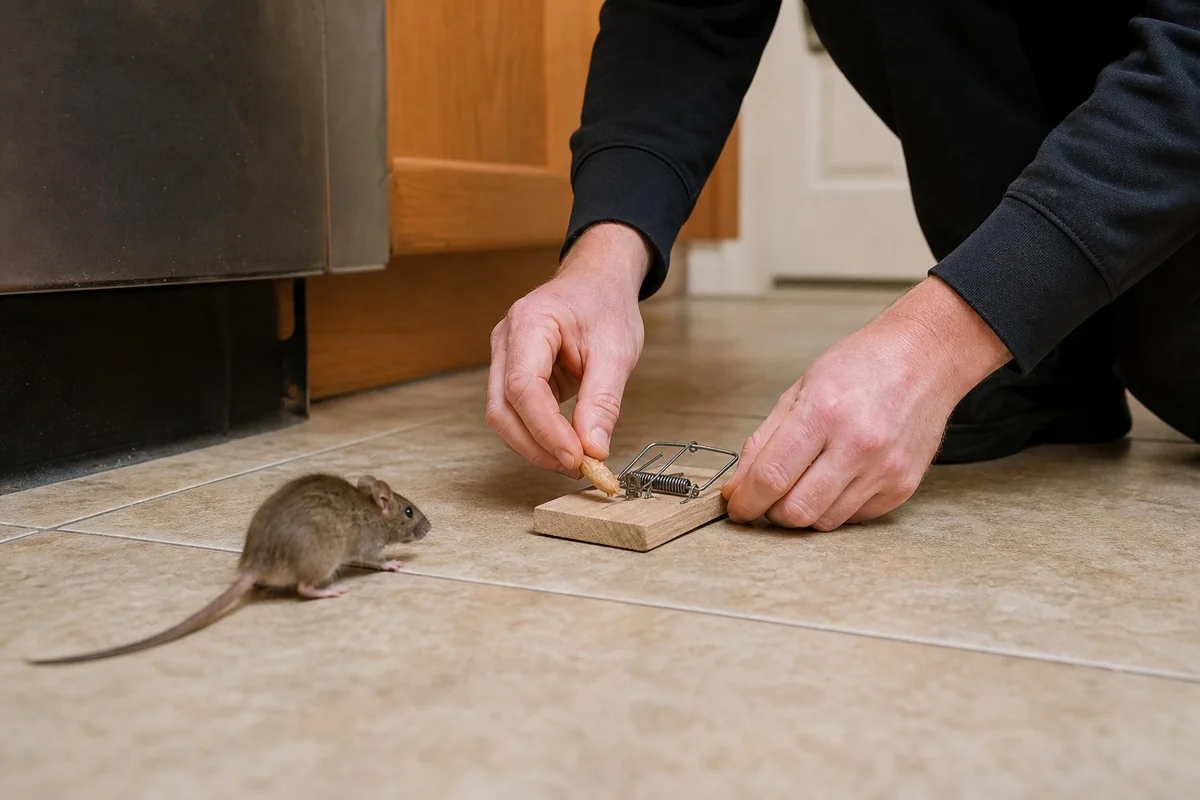
How to Trap Rats Indoors Step by Step
How to trap rats indoors: the right traps, where to place them room by room, bait that works, pre-baiting, how often to check traps and how to clean up safely.
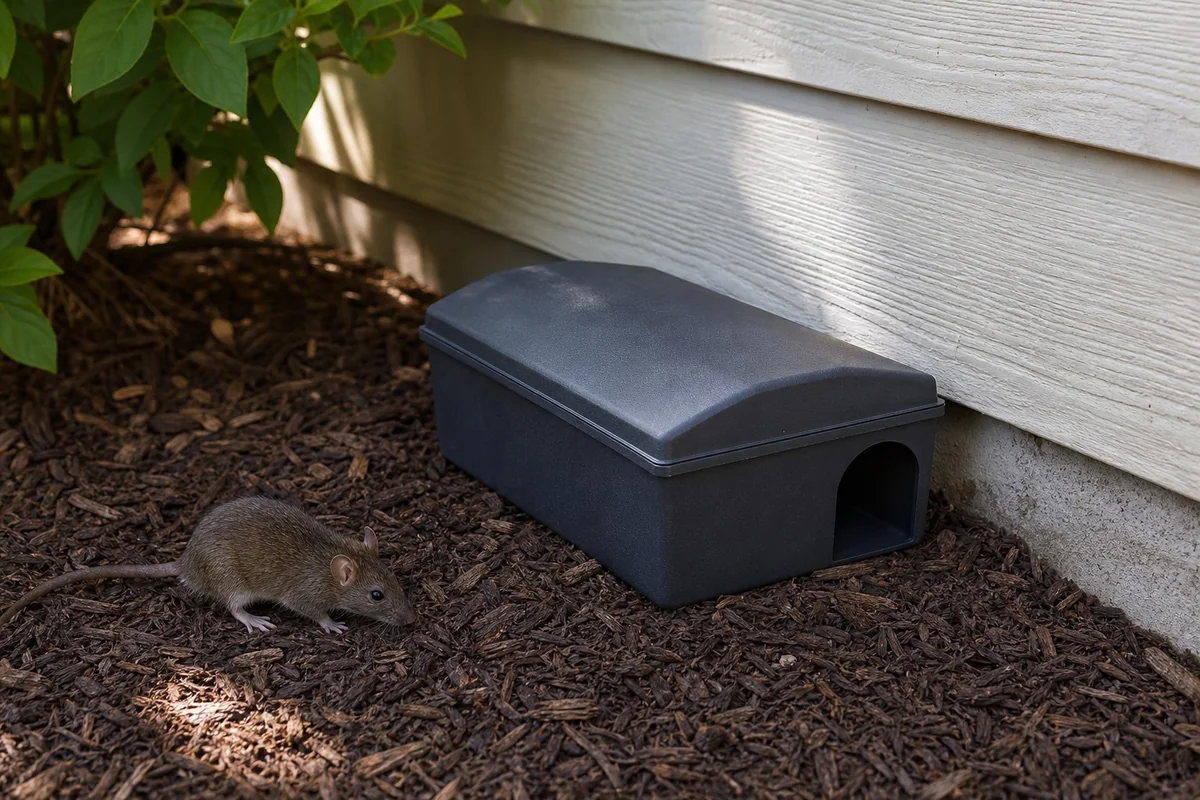
Best Outdoor Rat Traps: Covered and Pet-Safe Picks
The best outdoor rat traps: UCatch and TRATPER covered snap traps for yards with pets, the Tomcat for sheltered spots, a live cage, and where to place them.

Best Rat Traps for the Home: Snap, Covered, Electric and Live
The best rat traps for the home: Tomcat and Tougher Than Tom snap traps, TRATPER and UCatch covered traps, the Rat Zapper and a live cage, plus how to set them.
Are Rat Traps Loud? What You Will Hear and Why
Are rat traps loud? How snap, covered, electronic, live and glue traps sound, what noise after the snap means, and how to keep trap noise away from bedrooms.