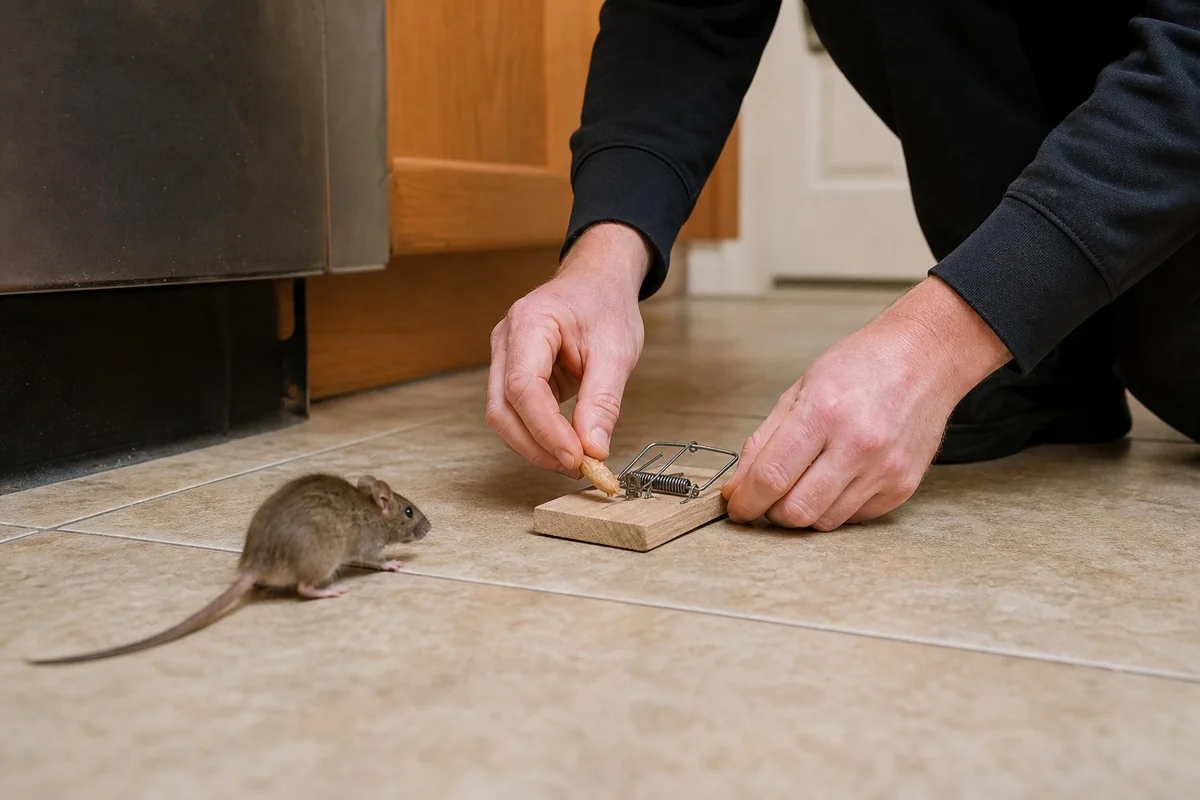

How to Trap Rats Indoors Step by Step
How to trap rats indoors: the right traps, where to place them room by room, bait that works, pre-baiting, how often to check traps and how to clean up safely.
To trap rats indoors, find their runways from droppings and rub marks, set several rat-size snap traps at right angles to the walls on those routes, leave them baited but unset for a few nights, then set them all and check every morning. Seal the gaps rats use while you trap, or new ones will keep coming in.
Rat Traps vs Mouse Traps Indoors
The key difference between a rat trap and a mouse trap is size and strength. A rat trap has a larger body, a wider trigger and a much stronger spring, because a rat can set off a mouse trap and pull free injured. Rats are also far more cautious than mice, so they need pre-baiting, while mice often walk into a fresh trap the first night.
| Factor | Mouse Trap | Rat Trap |
|---|---|---|
| Size and spring | Small, light spring | Larger body, strong spring |
| First night | Often catches right away | Usually needs pre-baiting |
| Traps per house | Many, close together | About a dozen or more, 10 to 20 feet apart |
| Gnaw marks | About 1/12 inch, scratchy | About 1/6 inch |
The size gap also works the other way: mice and young rats often will not trigger a rat trap, so if you see both small and large droppings, set both kinds. Indoors, store-bought rat snap traps are the best tool; homemade traps rarely hold an adult rat. For specific picks, see our guide to the best rat traps for the home.
What You Need
Gather everything before you start, because the trapping itself takes a week or more and every trap should go out on the same day. Buy more traps than you think you need; spare traps let you double up when bait vanishes.
- Rat-size snap traps: several, or covered tunnel traps in rooms pets and children can reach.
- Bait: peanut butter, nuts, dried fruit, bacon or the food rats are already eating.
- Thread or fine wire for tying dry bait to the trigger.
- Disposable gloves for setting, baiting and emptying traps.
- A flashlight for finding droppings and rub marks behind appliances and in the basement.
- Steel wool, wire screen or sheet metal for sealing gaps.
- Plastic bags and household disinfectant for catches and cleanup.
How to Trap Rats Indoors Step by Step
- Find the runways. Look for droppings, greasy rub marks along walls and pipes, gnaw marks and food stashes behind appliances, under sinks, in the basement and in the attic. The best spots sit between where rats shelter and where they feed.
- Remove competing food. Store food and pet food in sealed containers and keep garbage covered, so the bait becomes the easiest meal in the house.
- Place traps on the routes. Set each trap at a right angle to the wall with the trigger end nearly touching it, or set two back to back along the wall, one facing each way.
- Space them out. Put traps about 10 to 20 feet apart along each runway, with extras where signs are heaviest. A heavily infested home may need a dozen or more.
- Pre-bait unset. Bait the traps without setting them and leave them until the bait has been taken several times. If bait disappears from every trap, double the number of baited traps.
- Set all the traps at once. Once rats are eating calmly, set every trap the same evening with the same bait, keeping your fingers clear of the jaws.
- Check every morning. Empty catches with gloves, rebait and reset. Move traps that stay untouched for a week closer to fresh signs.
- Seal the entry points. Close holes larger than 1/4 inch around pipes, vents and wiring with steel wool, wire screen or sheet metal, and fix gaps under doors.
UC IPM's rat pest guide is the source for that spacing, the doubling rule and the sealing size, and it warns that young rats squeeze under a door with only a 1/2-inch gap. It also notes that rats chew through plastic, foam, wood and caulk, which is why metal patches outlast filler.
Quick Checklist
How to trap rats inside the house, from finding their runways to sealing the gaps they use.
- Warning: Do not sweep or vacuum droppings
- Warning: Rat trap springs can injure fingers, children and pets
- Warning: Never touch rats with bare hands
Where Should I Place a Rat Trap Indoors?
Rats travel along edges, so every indoor trap belongs against a wall, behind an object or in a dark corner, never in the middle of the floor. Which floor matters too. When both species share a building, UC IPM notes, Norway rats usually stay in the basement and ground floor, while roof rats use the upper floors, attic and wall voids.
- Kitchen: behind the stove and refrigerator, under the sink and at the back of lower cabinets.
- Basement and crawl space: along foundation walls, beside the water heater and behind stored boxes.
- Attic: along the eaves and across joists where you see droppings, on a board so the trap sits level.
- Walls and pipes: where pipes, ducts or wiring enter a room, and on shelves or beams for climbing roof rats.
- Garage: along the walls behind shelving and near stored pet food or birdseed.
Do rats come out during the day? Mostly not; they are mainly active at night, so daytime sightings can mean a large population or a disturbed nest. Either way, put traps where the signs are, not where you happened to see a rat.
What to Put in a Trap to Catch a Rat
Rats respond to strong-smelling food with fat or protein. UC IPM lists nuts, dried fruit, bacon and dry pet food as good baits, and UGA's extension guide adds peanut butter and cooked chicken, noting that cheese is not needed. The best bait is often the food rats are already stealing in your house.
Use a pea-sized amount, not a spoonful. A large blob lets a rat eat from the edge without touching the trigger, while a small amount pressed into the cup, or a nut tied to the trigger with thread, makes the rat tug at the trigger itself.
How do you draw a rat out of hiding? You do not need to; take away its other food and let the trap come to its route. Sealing food away and pre-baiting on the runway draws rats to the trap far more reliably than any lure placed in the open.
How Often Should I Check Rat Traps?
Check every trap every morning. The CDC recommends checking traps daily, disposing of catches right away and keeping trapping until nothing is caught for a week with no new droppings or gnawing. A dead rat left in a warm attic draws flies and smells quickly.
To empty a trap, follow the CDC's 5-minute rule: spray the rat and the area with household disinfectant or a fresh bleach solution of 1 part bleach to 9 parts water, wait 5 minutes, then drop the rat into a plastic bag. Tie it shut, put it inside a second bag, and place it in a covered trash can.
Clean droppings the same way: soak them with disinfectant, then wipe them up with paper towels. Never sweep or vacuum rat droppings, since that can put disease-carrying particles into the air.
Common Mistakes When Trapping Rats Indoors
Will rats fall for the same trap twice? Rarely, which is why these mistakes cost so much: a rat that springs a trap and escapes becomes very hard to catch again.
- Setting traps the first night → wary rats avoid them; pre-bait unset first.
- Using mouse traps → rats escape injured and become trap-shy; use rat-size traps.
- One trap per room → most runways go uncovered; place several along each route.
- Traps parallel to the wall → rats pass along the side; set them at a right angle or in back-to-back pairs.
- Leaving food out → open pet food and garbage compete with the bait; seal them away.
- Trapping without sealing → new rats replace the ones you catch; close every gap over 1/4 inch.
Other Indoor Trap Options
Snap traps suit most homes, but a few situations call for something else. Where pets or children roam, use covered tunnel traps, which hide the same snap mechanism inside a housing. If you never want to see or touch a catch, an electronic trap kills inside a closed chamber, though UC IPM notes these cost considerably more and still need pre-baiting.
Live cages catch rats indoors too, but UC IPM does not recommend them for nonprofessionals, and the CDC advises against them because trapped rats urinate in fear. If you use one, set it on the runway like a snap trap, check it at first light and follow your local rules on what happens next. The rat traps section compares each type in more detail.
Common Questions About Trapping Rats Indoors
How do you get rid of rats in the house fast?
How do you get rid of rats in the house fast?
Speed comes from numbers and timing, not from a stronger trap.:
- Put out a dozen or more rat traps on every runway at once.
- Remove all other food the same day.
- Pre-bait for a few nights, then set every trap on the same evening.
- Seal entry points as the catches slow down.
Do I need to set traps if I have only seen one rat?
Do I need to set traps if I have only seen one rat?
Yes. Where you see one rat there are usually more out of sight, since rats are active mainly at night and a female Norway rat can have several litters a year. Put out a few pre-baited traps along the route where you saw it, and look for droppings to find the others.
What if I hear rats in the walls but cannot reach them?
What if I hear rats in the walls but cannot reach them?
Trap where the walls open into spaces you can reach: the attic above, the basement or crawl space below, and gaps around pipes under sinks. Rats leave the walls to feed, so traps at those exits catch them. Seal the openings after the catches stop, not before, or rats may die inside the wall.
Is it safe to trap rats in a kitchen?
Is it safe to trap rats in a kitchen?
Yes, with care. Use covered traps if pets or children use the kitchen, keep traps away from food prep surfaces, and check them every morning. After any catch or droppings, disinfect the area and wash any dishes or counters rats may have touched before using them.
Key Takeaways
Patience on the first nights pays off: traps that rats have already eaten from catch far more than traps set on day one. Use rat-size traps, put them at right angles to the walls where the droppings are, and set them all on the same evening once the bait starts disappearing. Food stored away and gaps sealed make the difference between catching the rats you have and trapping new ones for months.
Check traps every morning, wear gloves, and disinfect catches and droppings instead of sweeping them up. Keep trapping until a full week passes with no catches and no fresh droppings. If catches continue after a few weeks, look harder for entry points along the foundation and roofline, or call a pest professional to find them.
Tonight, find the three busiest runways and put out baited, unset traps there.
Related Articles
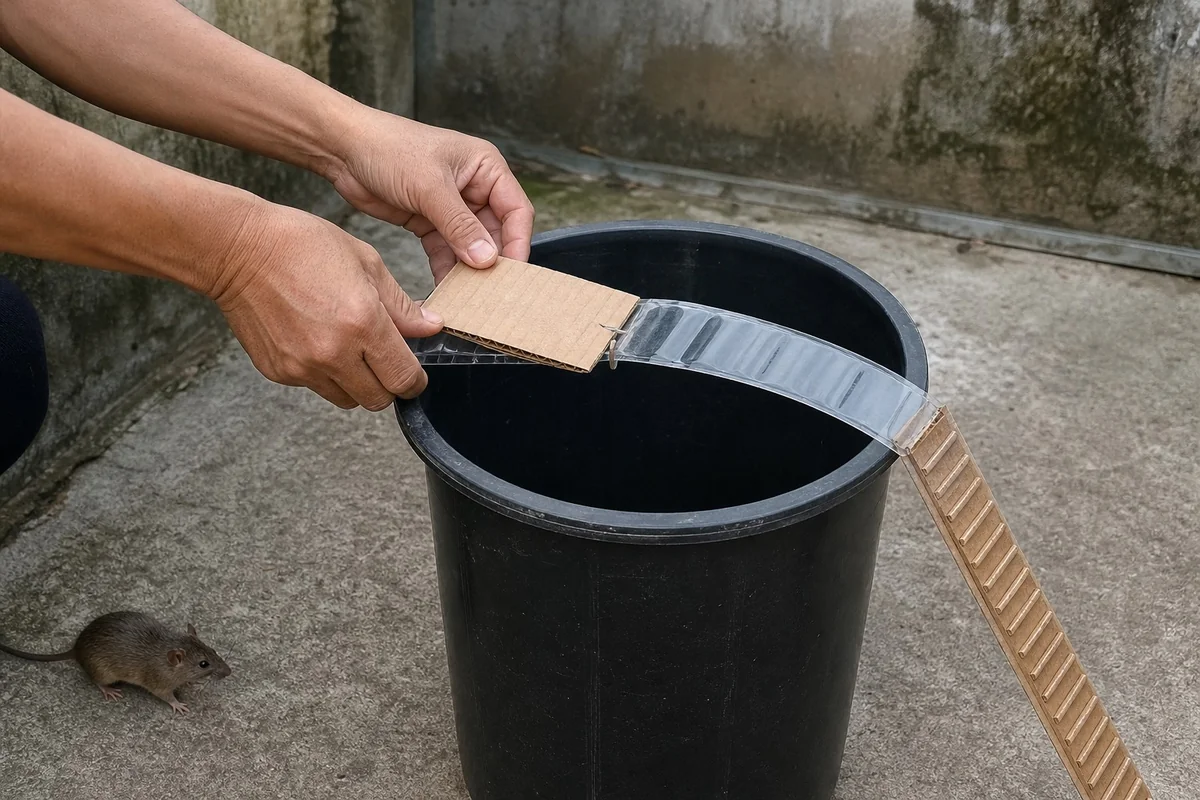
How to Make a Bucket Rat Trap That Rats Cannot Escape
How to make a bucket rat trap that works on rats: why a 5-gallon bucket is too shallow, the spinning roller build, pre-baiting, best bait and handling a caught rat.
Are Rat Traps Loud? What You Will Hear and Why
Are rat traps loud? How snap, covered, electronic, live and glue traps sound, what noise after the snap means, and how to keep trap noise away from bedrooms.

Best Rat Traps for the Home: Snap, Covered, Electric and Live
The best rat traps for the home: Tomcat and Tougher Than Tom snap traps, TRATPER and UCatch covered traps, the Rat Zapper and a live cage, plus how to set them.
Do Rat Traps Work? Why Rats Avoid Them and How to Fix It
Rat traps work when they respect a rat's caution. Why rats avoid traps, how each trap type performs, whether glue traps and bait boxes work,, how to judge results.