 Pest Pro Reviews Editorial Team • • 12 min read •
Best Outdoor Rat Traps: Covered and Pet-Safe Picks
The best outdoor rat traps: UCatch and TRATPER covered snap traps for yards with pets, the Tomcat for sheltered spots, a live cage, and where to place them.
The best outdoor rat traps are covered dual-entry snap traps: the UCatch for yards with pets and chickens and the TRATPER for strong catches along fences and foundations. The Tomcat Rat Snap Trap is the budget pick for sheltered spots or a homemade box, and the Anyhall cage is the no-kill option where local rules allow it.
- Outdoors, an enclosed mechanism matters more than anything else, because open jaws catch pets, birds and other wildlife.
- Rat-size snap traps kill quickest; glue boards should never be used outdoors, and poison puts pets and wildlife at risk.
- Traps work best placed against walls, fences and burrows, pre-baited unset for a few nights, while food and cover in the yard are removed.
What Makes a Rat Trap Work Outdoors
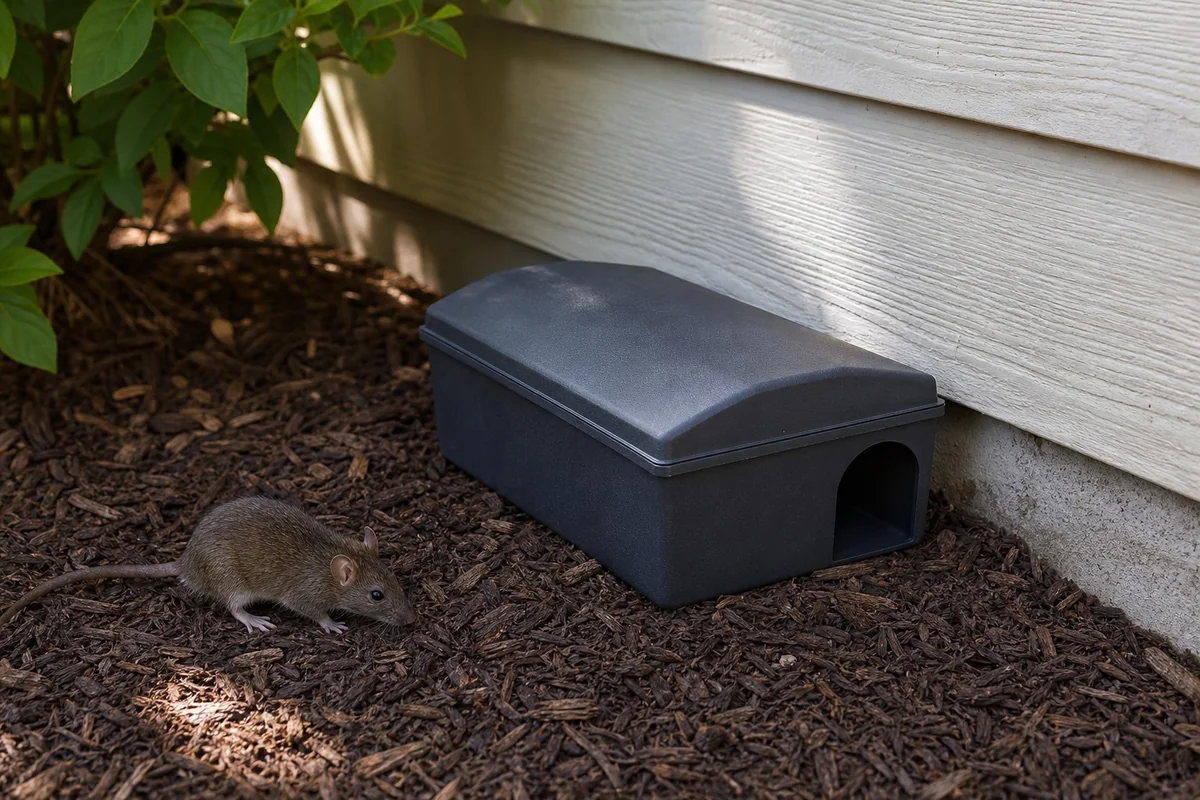
An outdoor trap faces things an indoor trap never does: rain and mud, curious dogs and cats, chickens, songbirds and squirrels. That is why the strike mechanism should sit inside a housing, with entries sized for a rat, and why the housing has to stay put on uneven ground. UC IPM's rat pest guide advises setting traps inside boxes or stations, or behind a barrier, wherever children, pets or birds might find them.
Is there a rat trap that kills rats instantly? A rat-size snap trap that strikes the head or neck kills quickly, and the same guide calls snap traps the safest, most effective and most economical way to trap rats. Glue boards are the opposite: UC IPM says they should never be used outdoors, because wild animals get stuck to them.
Which rat you have changes where traps go. Norway rats burrow along foundations, under woodpiles and around gardens, so their traps sit on the ground. Roof rats climb and often travel along fence tops, branches and utility lines at night, so their traps also belong off the ground on fences and ledges. If roof rats have reached the roof space, the rat traps section has a separate guide for attic traps.
Identify your needs and get personalized recommendations
Dogs, cats or chickens share the space where rats run.
Large Norway rats burrowing along the house or woodpile.
Many runways in sheltered places animals cannot reach.
You will not use kill traps and can check a cage every morning.
How We Selected These Outdoor Traps
We compared outdoor rat traps on whether the jaws are enclosed, whether the maker lists outdoor or covered outdoor use, how easy they are to set and empty, and what buyers report about catches, safety around animals and durability. Our sources were manufacturer specifications and bullets, Amazon listings and Amazon's review digests, plus UC IPM's guidance; we did not test the traps. Pet and wildlife safety counted most, since an outdoor trap is far more likely to meet a dog or a bird than an indoor one.
Several popular traps did not make the list. Both Kat Sense 6-packs drew mostly negative feedback on setting and reliability, with buyers saying traps go off on their own or will not stay set, and buyers of Victor's wooden rat traps report the same problem plus danger to fingers. Two live cages, from Pivmuth and Wanqueen, drew mostly negative durability feedback, including doors that let rats escape. Glue traps were excluded outright.
That leaves four traps, each for a different yard. For traps inside the house, see our guide to the best rat traps for the home; the picks below start with the safest choice for yards shared with animals.
UCatch Dual-Entry Rat Trap: Best Overall for Outdoors
The UCatch 2-Pack is a dual-entry ABS plastic tunnel trap with hands-free setting and disposal, listed for indoor and outdoor use. It is our top outdoor pick because buyers single out its safety around pets and chickens, the animals most likely to meet a trap in a yard.
- The pack holds 2 traps made of ABS plastic.
- The maker describes setting it by inserting bait, pressing the lever down and placing it in a rat hotspot.
- Buyers say it is much safer than traditional traps around pets and chickens, and easy to empty without touching the catch.
- Some buyers report it surviving several months outside, while others had units break after first use.
- Buyers also say the entry and bait cup are too narrow for very large rats.
Choose it for yards, decks, sheds and coops where animals roam and the rats are average size. If you see very large rats, the TRATPER below gives them more room.
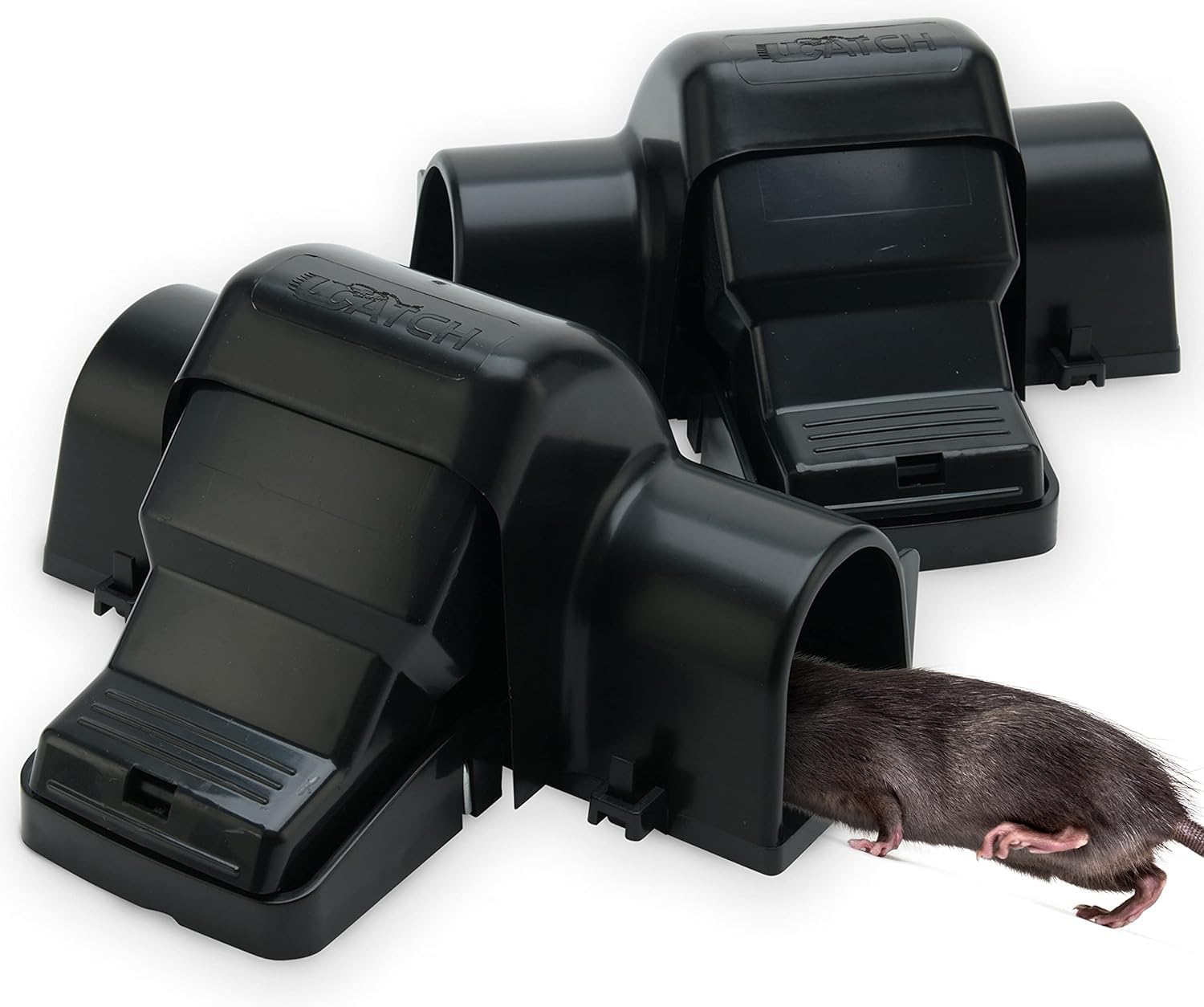
UCatch Dual-Entry Rat Trap
Best for: Outdoor yards with pets and chickens
- ✓Buyers say it is much safer around pets and chickens
- ✓Easy no-touch disposal
- −Buyers say the entry is too narrow for very large rats
- −Mixed durability feedback
Specifications (3)
- Material
- Premium ABS plastic
- Unit Count
- 2 Count
- Target Species
- Rat, Mouse, Chipmunk, Squirrel
TRATPER Rat Traps: Best Covered Trap for Large Rats
The TRATPER 2-Pack is a dual-entry covered snap trap whose maker lists it for indoor and outdoor placement, with the mechanism inside the tunnel. It is the larger of the two covered picks, and buyers rate it highly on catches and construction.
- Each trap measures about 6 x 5 x 8 inches, and the maker describes an added weight-bearing tunnel.
- The maker says the enclosed tunnel keeps children and pets away from the trapping mechanism.
- Setting is hands-free: put bait in, place the trap and push the lever down.
- Buyers report quick catches, easy setting and strong jaws, and find it safe around pets.
- Some buyers report poor-quality units, so test each trap on arrival.
Pick it for foundations, fence lines and woodpiles where big Norway rats burrow. Its size suits open runways along walls better than tight gaps under decks.

TRATPER Rat Traps 2-Pack
Best for: Large rats along foundations and fence lines
- ✓Mechanism enclosed in the tunnel
- ✓Buyers report quick catches
- ✓Strong jaws, per buyers
- −Some buyers report poor-quality units
Specifications (3)
- Target Species
- Rat, Chipmunk, Large Mouse, Large Mice
- Unit Count
- 2 Count
- Product Dimensions
- 6"L x 5"W x 8"H
Tomcat Rat Snap Trap: Best Budget Pick for Sheltered Spots
The Tomcat Rat Snap Trap is an open plastic rat trap that its maker lists for indoor or covered outdoor use. It is the budget pick for places animals cannot reach, such as inside a shed, under a closed deck or in a crawl space, and for use inside a homemade box.
- Each trap measures 8.63 x 3 x 5 inches, model 0361710.
- The maker says to place it perpendicular to a wall or other structure where rats travel, and that it sets by hand or foot.
- Its removable bait cup lets you service the trap without setting it, which helps with pre-baiting.
- Buyers find it very effective, often on the first night, and easy to set.
- Durability feedback is mostly negative, with thin plastic pins and bait cups breaking, and the jaws are exposed.
Use it where pets and birds cannot get to it, or inside a box with rat-size openings. Because it costs little, it is the trap to buy in numbers for a long fence or barn wall.
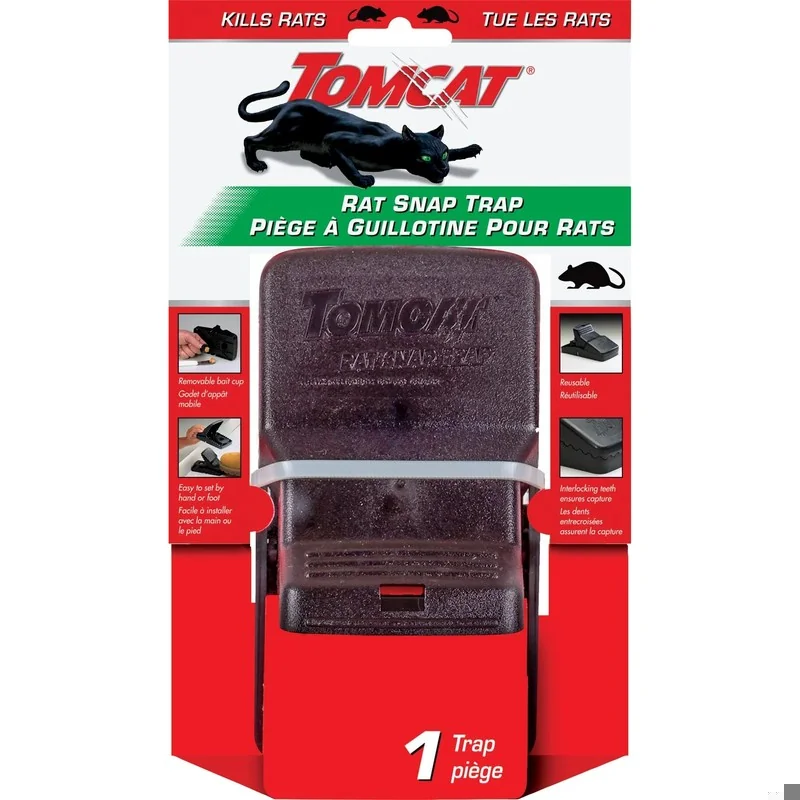
Tomcat Rat Snap Trap
Best for: Sheltered outdoor spots and trap boxes on a budget
- ✓Buyers find it very effective, often the first night
- ✓Sets by hand or foot
- ✓Removable bait cup
- −Buyers report thin plastic pins and bait cups breaking
- −Exposed jaws; keep away from pets
Specifications (3)
- Target Species
- Rat
- Material
- Plastic
- Product Dimensions
- 8.63"L x 3"W x 5"H
Anyhall Live Cage Traps: Best No-Kill Outdoor Trap
The Anyhall 2-Pack is an iron mesh cage with a large trigger pedal and a door that locks automatically when the pedal is tripped. It is the pick for households that will not use kill traps, with one serious caveat. UC IPM does not recommend live trapping for nonprofessionals and notes that in California a trapped rat must legally be euthanized or released right where it was caught; the CDC also advises against live traps.
- Each cage measures 12.5 x 5.5 x 4.5 inches, model 2RNB.
- The maker lists it for rats, mice, chipmunks and voles, but not large squirrels or opossums, which can chew through or break it.
- The maker advises gloves for handling and a cloth over the cage to calm the animal.
- Buyers rate its catch rate, quality and value highly; size feedback is mixed.
- A trapped rat must be dealt with every morning, and the cage needs shade.
Choose it only if your local rules allow it and you can check it daily. Outdoors, a cage also catches squirrels, chipmunks and birds, so you may release more animals than you catch rats.

Anyhall Live Cage Traps 2-Pack
Best for: No-kill households that can check traps daily
- ✓Buyers rate catch rate and quality highly
- ✓Large trigger pedal
- ✓Two cages per pack
- −Release of rats is restricted in some areas; check local rules
- −Not for large squirrels or opossums, per the maker
Specifications (3)
- Material
- Iron
- Product Dimensions
- 12.5"L x 5.5"W x 4.5"H
- Unit Count
- 2 Count
- UCatch Dual-Entry Rat Trap wins for: yards with pets and chickens
- TRATPER Rat Traps wins for: large rats along foundations and fences
- Tomcat Rat Snap Trap wins for: sheltered spots and homemade boxes on a budget
- Anyhall Live Cage Traps wins for: no-kill trapping where rules allow
The right one depends on who else uses your yard and how big the rats are.
How to Choose an Outdoor Rat Trap
Start with the animals that share your yard. A covered trap is the default outdoors, and an open trap only belongs inside a box or somewhere no pet, child or bird can reach. Then look at the rats themselves and at how many traps the space needs.
- Dogs, cats or chickens in the yard: the UCatch, which buyers single out for safety around animals.
- Big Norway rats along the foundation: the TRATPER, the roomier covered trap.
- A shed, barn wall or long fence: several Tomcat traps, inside boxes wherever animals can reach.
- No-kill household: the Anyhall cage, if local rules allow release and you check it every morning.
- Roof rats on fences or in trees: covered traps fastened to the top of the fence or a sturdy ledge, not only on the ground.
Buy enough for every runway. UC IPM suggests rat traps about 10 to 20 feet apart, so a single pack rarely covers a whole foundation.
How to Cover an Open Rat Trap Yourself
If you already own open rat snap traps, a simple box makes them safer outdoors. Use a sturdy wooden or plastic box with a lid and cut an entry hole at ground level in two opposite ends; UGA's extension guide describes holes about 3 inches across for rat bait boxes, which also suits a trap box.
Set the trap inside with its trigger in the path between the two holes, so a rat walking through has to cross it. Screw or weigh the lid down so pets and children cannot open it, and place the box tight against a wall or fence where rats travel.
Where to Place Traps in the Yard
Rats use the same routes every night, and a trap a few feet off the route is easy to walk around. Look for burrow holes along the foundation, worn paths through grass, droppings, gnawed fruit and greasy rub marks along fences and walls, then set traps right on those routes.
- Against structures: along the foundation, fences and walls, never in open lawn, with the trigger end facing the path.
- At burrows: beside active holes along the foundation, under woodpiles and near compost.
- Up high for roof rats: on fence tops, ledges and sturdy branches, secured so the trap cannot fall.
- Near food: beside bird feeders, fruit trees, chicken feed and garbage cans, where rats feed.
Pre-bait every trap unset for a few nights, then set them all on the same night. What's irresistible to rats is food with a strong smell and plenty of fat or protein: peanut butter, nuts, bacon and cooked chicken all work, used in pea-sized amounts. Outdoors, the food rats already eat in your yard, such as fallen fruit or bird seed, can work even better because it is familiar.
How to Get Rid of Rats Outside Quickly
Traps alone in a yard full of food work slowly, because the bait has to compete with everything else on offer. The fastest results come from trapping and clearing food and cover in the same week, so the trap is the easiest meal around.
- Food: keep garbage covered, pick up fallen fruit, and feed pets only what they eat at one meal or bring the bowl in at night.
- Compost: keep meat, fish and eggs out of it, since rats burrow under piles that hold them.
- Cover: thin dense ivy and shrubs, and store firewood, lumber and boxes tidily off the ground.
- Access to the roof: cut back tree limbs that overhang the roof, which roof rats use to reach the attic.
Once traps are working, look along the foundation for gaps rats use to get inside. UC IPM advises sealing openings larger than 1/4 inch with steel wool, wire screen or sheet metal, since rats chew through plastic, foam, wood and caulk.
Checking and Maintaining Outdoor Traps
Rats feed at night, so check traps every morning, wearing disposable gloves. Tip catches into a plastic bag, seal it and put it in the trash, and rinse plastic traps with soapy water when they get dirty or smell strongly.
After rain, replace soggy bait and clear mud and leaves from the entrances and trigger. Move any trap that stays untouched for a week closer to fresh signs. Keep a few covered traps out through fall, when rats look for shelter near houses.
Wear gloves when you bait and handle traps, not only when you empty them. TRATPER's maker notes that human scent can put rodents off the bait, and outdoors a trap has plenty of competing smells already.
Common Questions About Outdoor Rat Traps
How do I stop squirrels and chipmunks from setting off rat traps?
How do I stop squirrels and chipmunks from setting off rat traps?
Covered traps still admit chipmunks and small squirrels, so timing helps most. Set traps at dusk and spring them during your morning check, since squirrels and chipmunks forage by day and rats at night. Fastening traps inside a box with rat-size holes, away from bird feeders, cuts daytime visits further.
What should I do if a pet or bird gets caught?
What should I do if a pet or bird gets caught?
Take an injured pet to a vet right away; snap traps can break bones even when the animal walks off. A bird or squirrel in a live cage can simply be released. If non-target animals keep finding your traps, switch to covered traps, set them at dusk only, and fence or box them in.
Should I use bait stations outdoors as well as traps?
Should I use bait stations outdoors as well as traps?
Only if traps and clean-up are not enough, and only in tamper-resistant stations used exactly as the label says. UC IPM advises sealing entry points before baiting outside, so poisoned rats do not come indoors to die. Poison also risks pets and wildlife that eat a dying rat.
Do I need to deal with rats in my neighbor's yard too?
Do I need to deal with rats in my neighbor's yard too?
It helps a great deal. Rats forage well beyond one property line, so a neighbor's woodpile or fruit tree keeps refilling your yard. UGA's extension guidance suggests neighbors clean up and trap at the same time, which makes reinfestation from nearby homes less likely.
Can outdoor rat traps stay out in winter?
Can outdoor rat traps stay out in winter?
Yes. Plastic covered traps handle cold and wet weather; just clear snow and ice from the entrances so the trigger can move, and replace frozen or soggy bait. Fall and winter are when rats push toward houses, so traps along the foundation are worth keeping out then.
Which One Should You Buy?
The UCatch Dual-Entry Rat Trap is the outdoor pick for most yards. Its covered design keeps pets and chickens away from the jaws, and buyers find it easy to empty without touching the rat.
Choose the TRATPER if the rats along your foundation are large, the Tomcat if you need many traps for a shed, barn or fence line and can box them or keep animals away, and the Anyhall cage only if local rules allow release and you can check it every morning.
This week, walk the foundation and fence line, mark burrows and rub marks, and put out your first pre-baited traps right there.
Related Articles
Best Rat Traps for the Attic: Snap, Covered and Electric Picks
The best rat traps for the attic: Tomcat snap traps in numbers, TRATPER and Filpestco covered traps, UCatch for roof rats and the Rat Zapper, plus where to set them.
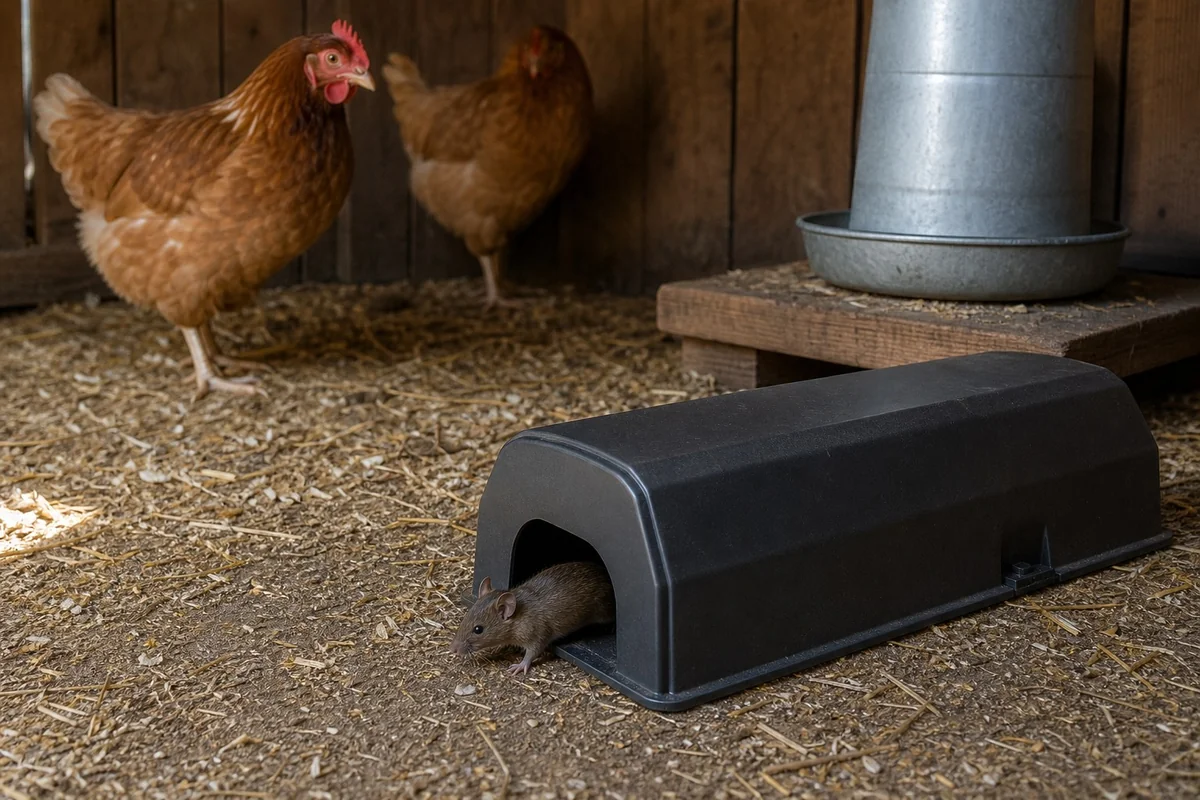
Best Rat Traps for a Chicken Coop: Covered, Hen-Safe Picks
The best rat traps for a chicken coop: UCatch and TRATPER covered traps, a low Filpestco tunnel, a boxed Tomcat and a live cage, plus how to trap safely around hens.

Best Rat Traps for the Home: Snap, Covered, Electric and Live
The best rat traps for the home: Tomcat and Tougher Than Tom snap traps, TRATPER and UCatch covered traps, the Rat Zapper and a live cage, plus how to set them.
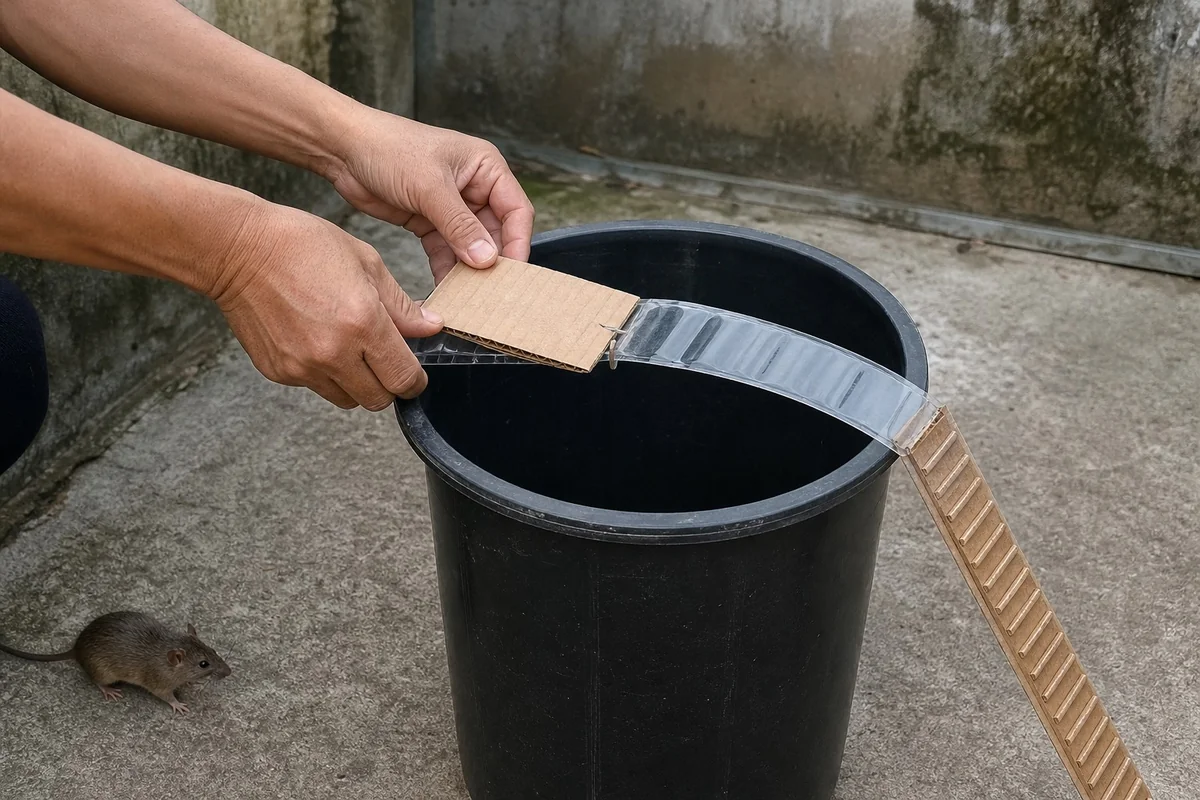
How to Make a Bucket Rat Trap That Rats Cannot Escape
How to make a bucket rat trap that works on rats: why a 5-gallon bucket is too shallow, the spinning roller build, pre-baiting, best bait and handling a caught rat.