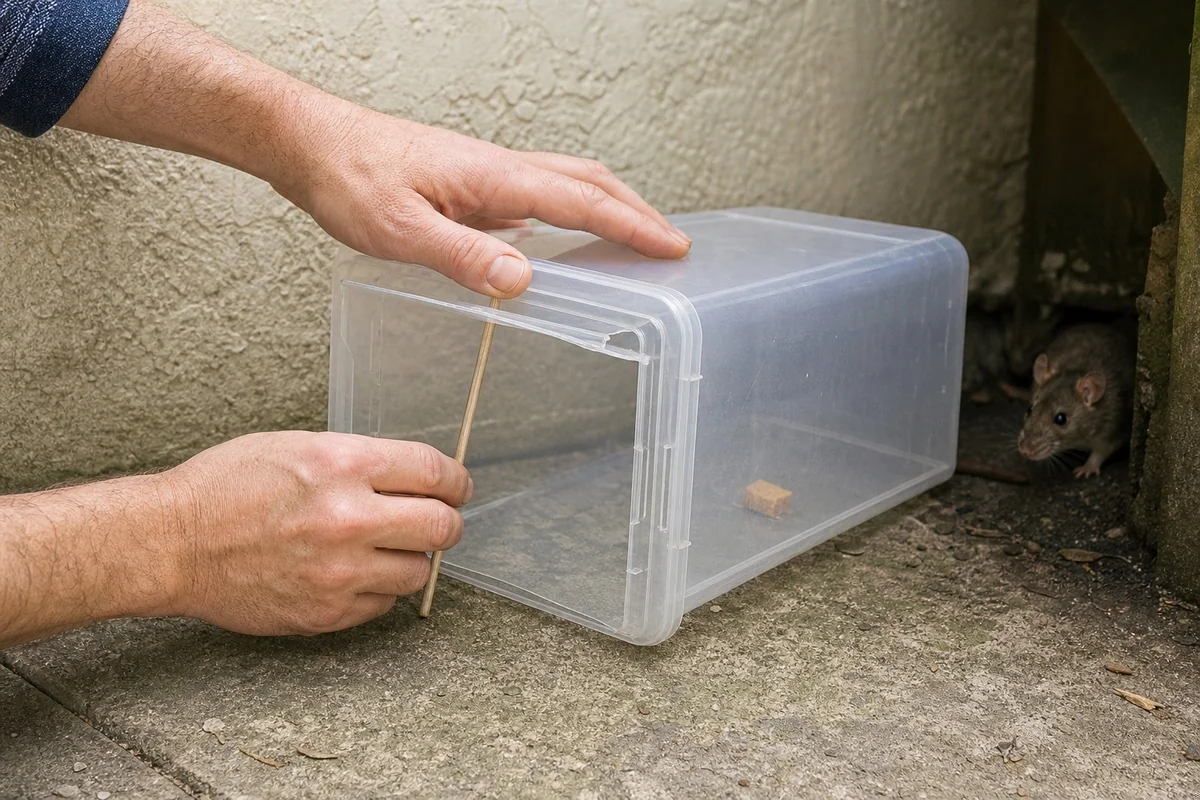

How to Make a DIY Trap for Smart Rats That Avoid Traps
How to make a DIY trap for smart rats: a wooden runway box that hides two snap traps, a week of pre-baiting, tricks for very wary rats and DIY methods to avoid.
The most effective DIY trap for smart rats is a homemade wooden runway box that hides two rat snap traps. Put the box on the rats' route with bait but no traps for about a week, add unset traps for a few more nights, then set them. The rats learn the box as a safe passage before it ever becomes a trap.
Why Smart Rats Need a Different Approach
Rats that avoid traps are cautious, not clever. UC IPM's rat pest guide notes that rats memorize their surroundings and avoid new objects and new foods, often for days or weeks, and that a rat that sets off a trap without being caught becomes very hard to trap again. A smart rat is usually one that has learned what a snap trap looks like.
A homemade trap cannot out-think that caution with a clever mechanism. What works is changing what the rat sees: a plain box on its runway that it uses for days before anything inside can hurt it. That is why the most successful DIY rat trap is a box around store-bought snap traps, not a contraption built from scratch.
For ready-made traps sized for big, experienced rats, see our guide to the best rat traps for large rats. The traps for large and smart rats section also covers homemade traps for large rats.
What You Need
Everything here is scrap or cheap hardware; the only parts worth buying new are the traps, since a weak trap is what made the rat smart in the first place.
- Two rat-size snap traps, plastic or steel, with removable or open bait cups.
- Scrap boards: a base, two sides and a lid, long enough for both traps end to end with a little room to spare.
- Screws or nails, plus a drill or hammer.
- A saw to cut an entry at each end, sized for a rat.
- Bait: the food the rats are already eating, or peanut butter, nuts or bacon.
- Thread or fine wire to tie dry bait to the triggers.
- Gloves for building, baiting and checking.
How to Build a Runway Box Trap Step by Step
- Size the box. Lay the two traps end to end, triggers facing the two ends, and cut the base long enough to hold them with room to spare. The sides should be tall enough for the traps to fire freely under the lid.
- Build the walls and lid. Fix the sides to the base and make a lid you can lift or unscrew, so you can reach the traps without moving the box.
- Cut the entries. Cut an opening at ground level in each end wall. UGA's extension guide describes holes about 3 inches across for rat bait boxes, which keeps out most pets while admitting rats.
- Find the runway. Look for droppings, gnaw marks and the dark, greasy rub marks rats leave along walls and pipes, and place the box tight against the wall on that route.
- Weather the box in place. Leave it empty, apart from a little bait in the middle on a jar lid, for about a week, until the bait disappears every night.
- Add the traps unset. Screw or zip-tie both traps to the base, baited but not set, and leave them for several more nights.
- Set both traps on the same night. Once bait is being taken calmly from the traps, set them, keep the bait the same and close the lid.
- Check every morning. Wearing gloves, lift the lid, empty any catch, rebait and reset, and leave the box exactly where it is.
Quick Checklist
How to build and use a runway box that hides two rat snap traps from trap-shy rats.
- Warning: Keep fingers clear of the jaws
- Warning: Never handle rats with bare hands
How to Trap a Very Smart Rat
For a rat that has already escaped a trap, add these to the box method. Each one removes a cue the rat has learned to fear.
- Change the runway: put the box on a different route from the trap it escaped, since rats link danger to a place as well as an object.
- Hide the trap completely: the box covers the shape and sound of the snap, so the rat never sees the object it learned to avoid.
- Tie the bait: UC IPM suggests fastening dry bait such as a nut to the trigger with thread, so the rat has to tug at the trigger to eat.
- Widen the trigger: UC IPM notes rat traps come with expanded triggers, and its house mouse guidance says wide trigger plates catch more; a square of stiff plastic glued to a small trigger does the same.
- Set triggers light: the same guide advises a trigger that springs easily.
- Set several boxes: UC IPM advises doubling the number of baited traps when bait vanishes from all of them, then setting them all.
What's irresistible to rats? Usually the food they are already eating in your house or yard, since familiar food raises no alarm. Peanut butter, nuts and bacon are good second choices, in pea-sized amounts.
Using the Box Indoors and Outdoors
Indoors, the box works along basement walls, in garages, behind appliances that can be pulled out and in attics, where it also keeps loose insulation off the traps. Its lid keeps curious pets and children away from the jaws, but still set it where they rarely go.
Outdoors, the box protects birds and pets from the traps and keeps rain off the bait. Set it tight against the foundation or a fence on a runway, weigh or screw the lid down so animals cannot open it, and never use glue boards or loose poison outside instead.
Wherever it sits, leave the box in place after the rats are gone. A box that has been on the runway for months is no new object when the next rat arrives.
DIY Methods to Avoid
Plenty of homemade rat traps circulate online, and several are cruel, unreliable or both. These are the ones to skip.
- Water buckets: UC IPM states that drowning is not considered humane, and a strong swimmer like a Norway rat can struggle for a long time.
- Homemade poisons: mixtures such as plaster or baking soda baits have no reliable evidence behind them and leave dying rats in walls.
- Glue boards: UC IPM does not recommend them for nonprofessionals, and a rat that tears free becomes even warier.
- Weak homemade snap mechanisms: a spring that injures without killing creates exactly the trap-shy rat you are trying to catch.
Common Mistakes With DIY Smart Rat Traps
- Setting the traps too soon → wary rats spring them and learn; wait until bait is taken calmly from unset traps.
- Moving the box → it becomes a new object again; leave it in one spot.
- Box in the open → rats run along walls; place it tight against one.
- Entries too small or too high → rats will not squeeze through or climb in; cut them at floor level, about 3 inches wide.
- Changing bait when you set → new food is suspicious; keep the same bait throughout.
Common Questions About DIY Traps for Smart Rats
How long should the box sit before I add traps?
How long should the box sit before I add traps?
Until the bait in it disappears every night, which is often about a week and longer for roof rats. Then add the traps unset for several more nights. Rushing either stage is the most common reason the box fails.
Can I make the box from plastic or cardboard instead of wood?
Can I make the box from plastic or cardboard instead of wood?
A sturdy plastic storage box works and is easy to clean. Cardboard works indoors for a short time, but rats chew through it and it collapses when wet, so use it only as a quick test before building a wooden or plastic box.
Will the box catch mice too?
Will the box catch mice too?
Mice will enter it, but they are often too light to set off a rat-size trap. If you see small droppings as well as large ones, put a mouse trap at the center of the box between the two rat traps.
How do I clean the box after a catch?
How do I clean the box after a catch?
Wearing gloves, spray the inside and the trap with household disinfectant, wait a few minutes, then wipe it out with paper towels. Let it dry before resetting, and avoid strong-smelling cleaners right before setting, since the smell can make the box seem new again.
Key Takeaways
A trap-shy rat is caught by patience, not invention. A plain wooden runway box around two store-bought rat snap traps, left on the runway with bait and no traps for a week, then with unset traps, then set on one night, gets past the caution that makes a rat “smart.” Tie the bait, keep triggers light and keep everything in the same place with the same food.
Skip water buckets, homemade poisons and glue, which are cruel or unreliable and create warier rats. If a rat still avoids every box after a few weeks, or catches stop while droppings continue, look for entry points or call a pest professional.
This weekend, build one box, put it on the busiest runway and bait it without traps.
Related Articles
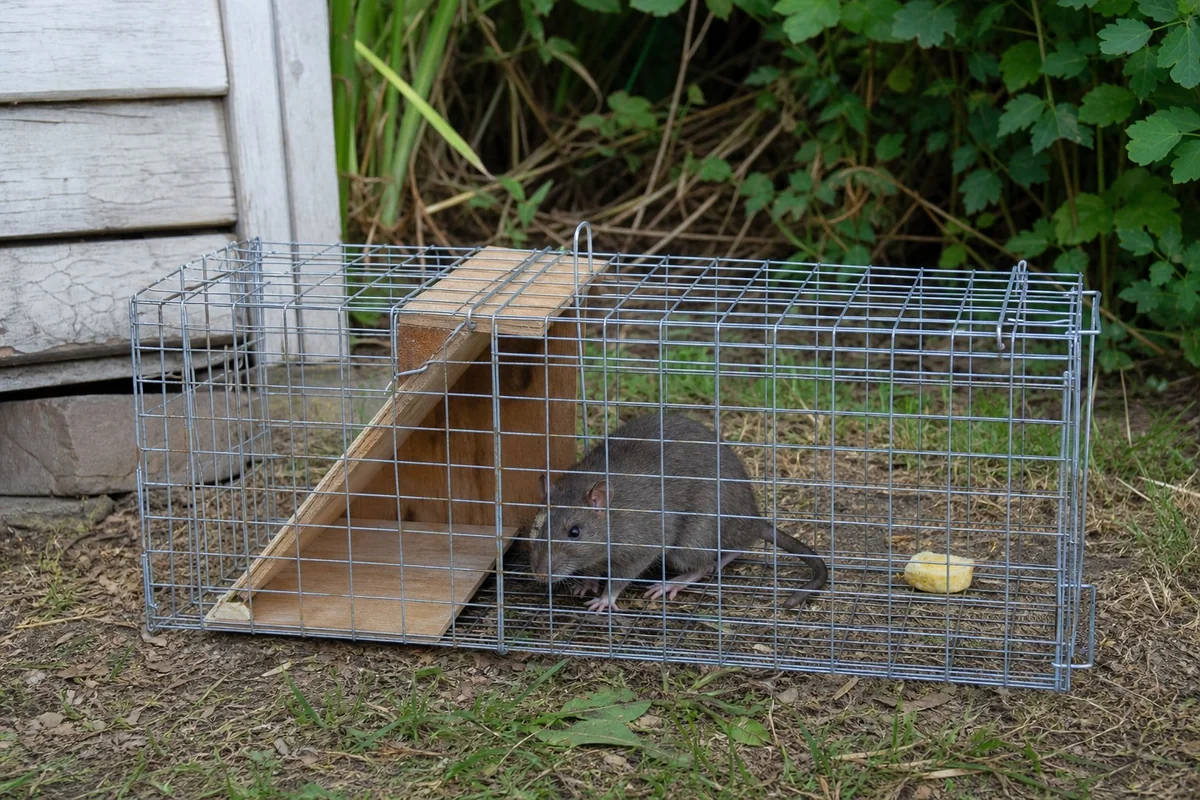
How to Make a Homemade Trap for Large Rats That Holds
Homemade traps for large rats compared: board-mounted snap traps, a runway box, deep-container traps and what to avoid; simple upgrades that stop big rats escaping.
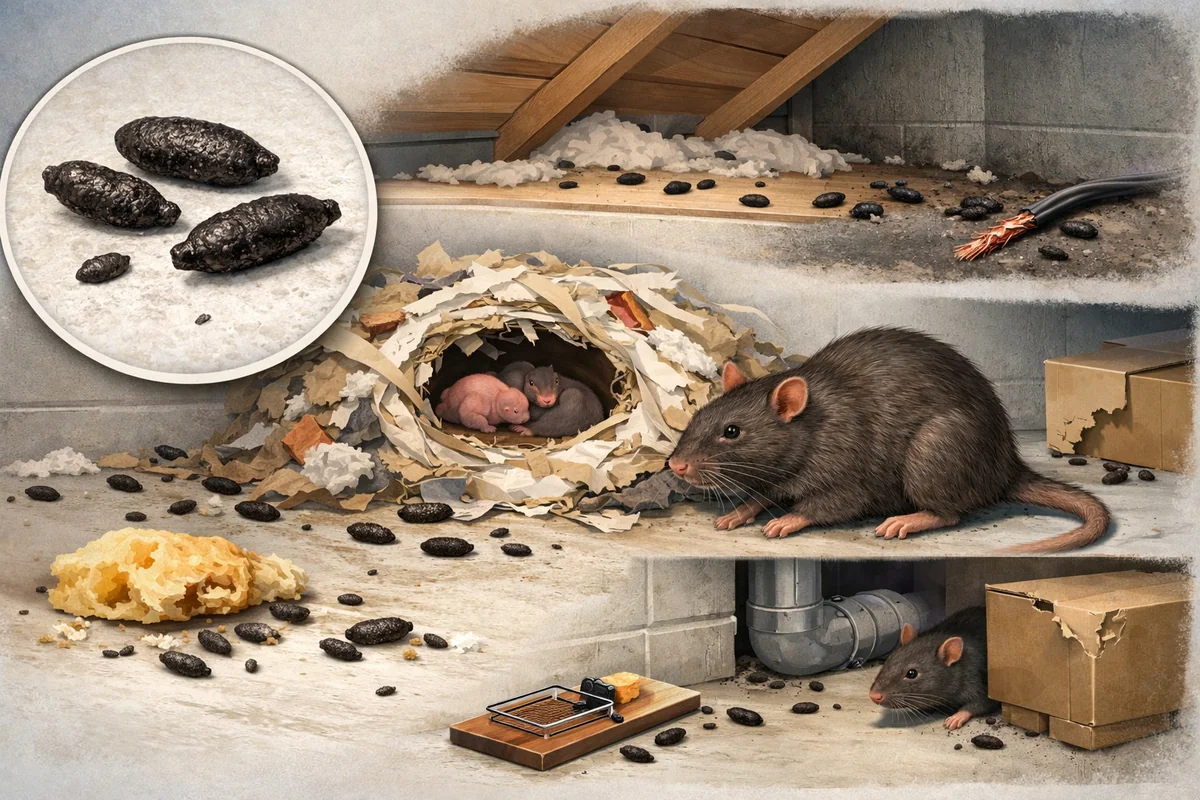
Best Rat Traps for Smart Rats: Picks and Methods That Work
Best rat traps for smart, trap-shy rats: TRATPER covered traps, the bait-proof Kness Big Snap-E, Tomcat for large sets and the Rat Zapper, plus methods that work.
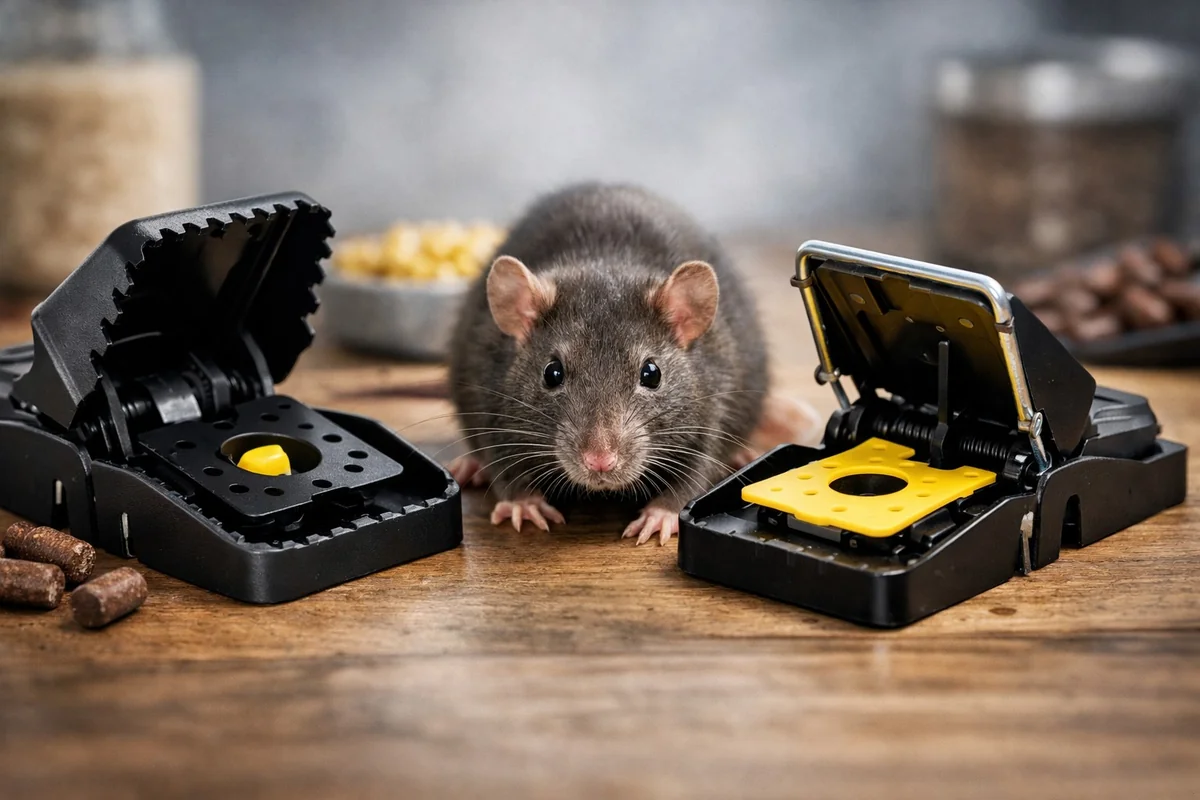
Best Rat Traps for Large Rats: Covered, Open and Live Picks
Best rat traps for large rats: TRATPER and Filpestco covered traps, Tomcat and Kness Big Snap-E snap traps, a live cage, and how to set traps big rats cannot escape.
How to Make a Bucket Rat Trap That Rats Cannot Escape
How to make a bucket rat trap that works on rats: why a 5-gallon bucket is too shallow, the spinning roller build, pre-baiting, best bait and handling a caught rat.