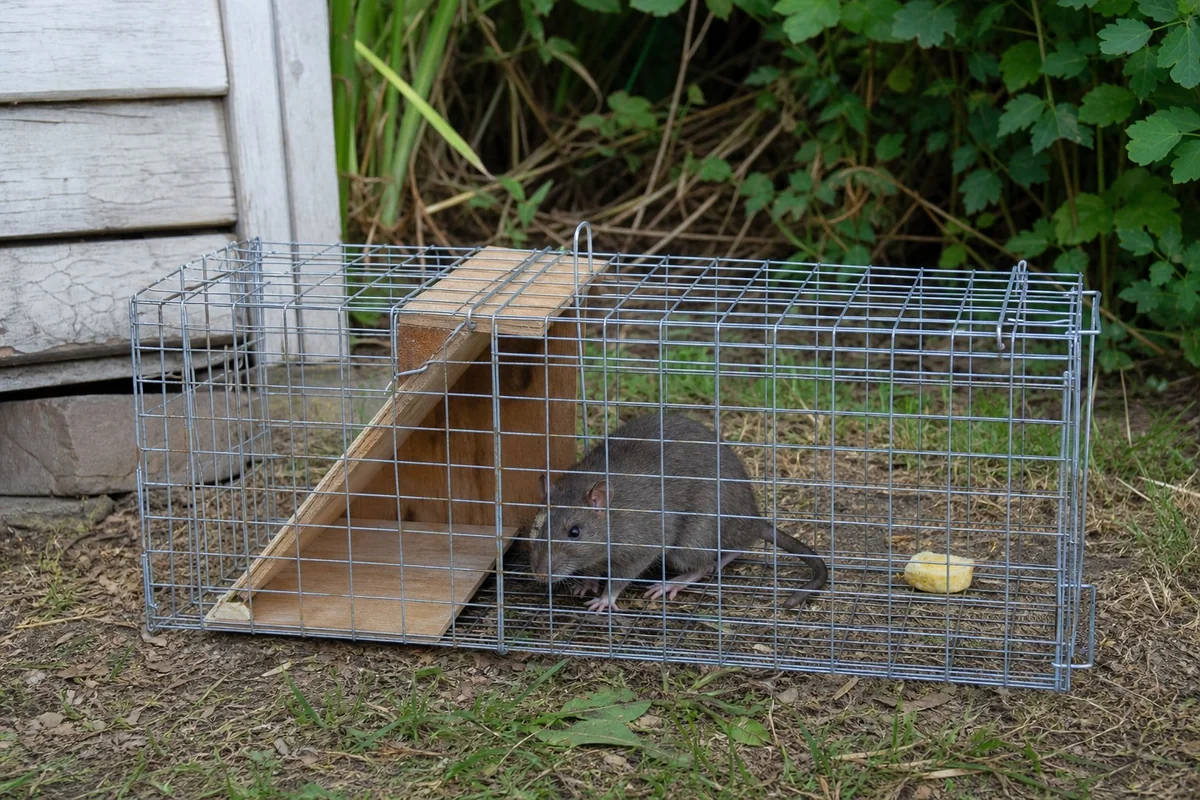

How to Make a Homemade Trap for Large Rats That Holds
Homemade traps for large rats compared: board-mounted snap traps, a runway box, deep-container traps and what to avoid; simple upgrades that stop big rats escaping.
A homemade trap for large rats works best when it builds around a store-bought rat snap trap rather than replacing it: a board the trap is screwed to, a box that guides the rat head-first onto the trigger, and bait tied in place. Fully homemade designs, such as deep-bucket traps, hold big rats only if the container is far deeper than a standard bucket.
Why Large Rats Beat Most Homemade Traps
The large rats in homes are almost always adult Norway rats, which can weigh more than a pound. A heavy rat breaks flimsy parts, drags loose traps, and climbs or jumps out of containers built with mice in mind. Many popular homemade traps were designed for mice and simply scaled up.
Big adults are also often experienced. A rat that survives a weak trap learns to avoid it, so a homemade design that only injures can leave you with a rat that is both large and trap-shy. That is why the homemade parts that help most are the ones that make a proper rat trap fire squarely and stay put.
If you would rather buy a trap built for big rats, see our guide to the best rat traps for large rats. The traps for large and smart rats section also covers DIY setups for trap-shy rats.
Homemade Options for Large Rats Compared
The table compares the homemade approaches people try on large rats, from the most to the least dependable.
| Homemade Option | How It Works | Works on Large Rats? | Main Drawback |
|---|---|---|---|
| Snap trap screwed to a board | Board stops the trap flipping or being dragged | Yes, the simplest upgrade | Jaws still exposed |
| Wooden box around snap traps | Box guides the rat straight onto the trigger | Yes, and it hides the trap | Takes an hour to build |
| Deep container with a spinning roller | Rat falls into a smooth-sided container | Only if the container is very deep | Holds the rat alive |
| Water bucket | Rat drowns | Often, but slowly | Not humane |
| Homemade deadfall or spring | Falling weight or improvised spring | Unreliable | Injures rats, pets and fingers |
Upgrades That Make a Rat Trap Hold a Big Rat
These changes cost little, use scrap materials and fix the usual reasons big rats escape a store-bought rat trap.
- Screw the trap to a board: a heavy rat caught off-center can flip or drag a loose trap; a board, or screws straight into a floor joist, keeps it in place and focuses the snap.
- Tie the bait: fasten a nut or a strip of bacon to the trigger with thread or fine wire, so the rat must tug the trigger instead of licking bait off the edge.
- Put the bait at the back: a pea-sized amount at the far edge of the cup draws the head over the strike bar. What's irresistible to rats is usually the food they already eat, or peanut butter, nuts and bacon.
- Widen the trigger: glue a square of stiff plastic to a small trigger, so a big foot or nose cannot miss it.
- Set the trigger light: a stiff trigger on a heavy rat fires late, after the head has passed.
How to Make a Rat Trap for Big Rats
The most dependable homemade trap for big rats is a simple wooden runway box around two rat snap traps. The box walls make the rat walk straight down the middle, so it meets the trigger head-first, and the lid hides the traps from rats that have learned what a trap looks like.
- Build a long box with a base, two sides and a removable lid, big enough for two traps end to end with room for the jaws to fire.
- Cut an entry at each end at floor level, wide enough for a big rat; UGA's extension guidance describes holes about 3 inches across for rat bait boxes.
- Screw both traps to the base, triggers facing the entries.
- Place the box against a wall on a runway with droppings and rub marks.
- Pre-bait with the traps unset until the bait is taken several nights running, then set both on the same night.
For a full build with a week-long pre-baiting plan, our guide to the DIY smart-rat box covers each stage in detail.
Can a Bucket Trap Hold a Large Rat?
Only with a much deeper container. A measured study of rodent jumping and climbing by federal wildlife researchers found rats jumping as high as 40 cm, about 16 inches, while a standard 5-gallon bucket is only about 14 inches deep. A big rat at the bottom of a bucket can reach the rim.
A tall, smooth-sided plastic trash can with a strong metal rod and roller can work, but the trap holds the rat alive, and live trapping comes with handling risks and, in some places, legal limits. Leave water out: drowning is not considered humane. For most people with a big rat, the board or box upgrades above are less work and more reliable.
What Is the Best Thing to Kill Big Rats?
A rat-size snap trap, set correctly and fastened down, is the quickest and most humane option for large rats; UC IPM calls snap traps the safest, most effective and most economical way to trap rats. Covered tunnel versions add safety where pets and children roam.
Poison is a poor choice in a house: rodenticides kill over several days, and poisoned rats often die inside walls and under floors. Glue boards are worse with big rats, since a large rat often pulls free and suffers, and homemade deadfalls and improvised springs tend to injure rather than kill.
Common Questions About Homemade Traps for Large Rats
Will a homemade box trap work outdoors?
Will a homemade box trap work outdoors?
Yes, and the box helps outside by keeping rain off the bait and birds and pets away from the jaws. Set it tight against the foundation or a fence on a runway, keep entries rat-sized, and screw or weigh the lid down so animals cannot open it.
Can I make a homemade live trap for a large rat?
Can I make a homemade live trap for a large rat?
You can, but it is hard to make one a big rat cannot chew, push or climb out of, and live trapping brings handling risks and, in some places, legal limits on release. A sturdy store-bought cage or a kill trap is more reliable.
How many homemade traps do I need for large rats?
How many homemade traps do I need for large rats?
Several. Large rats rarely come alone, and rat traps work best about 10 to 20 feet apart along each runway. Start with two boards or boxes on the busiest walls and add more if bait disappears from all of them.
Is a wooden box safe around pets?
Is a wooden box safe around pets?
Safer than an open trap, since the jaws sit inside, but a determined dog can still reach in through a large entry. Keep entries rat-sized, screw the lid down and place boxes where pets rarely go.
Key Takeaways
Big rats escape homemade traps because those traps are too weak, too loose or too shallow. Fixing each of those with scrap wood, screws and thread is cheap and quick, and it turns an ordinary rat trap into one a heavy rat cannot drag or dodge. Deep-container traps can hold a big rat only if they are far deeper than a 5-gallon bucket, and they leave you with a live rat to handle.
Skip water, poison, glue and improvised killing mechanisms, which are cruel, slow or unreliable on big rats. If a large rat keeps escaping homemade setups, switch to a roomy store-bought rat trap and pre-bait it unset first.
Tonight, screw two rat traps to a board, lay it along the busiest wall and bait it unset.
Related Articles
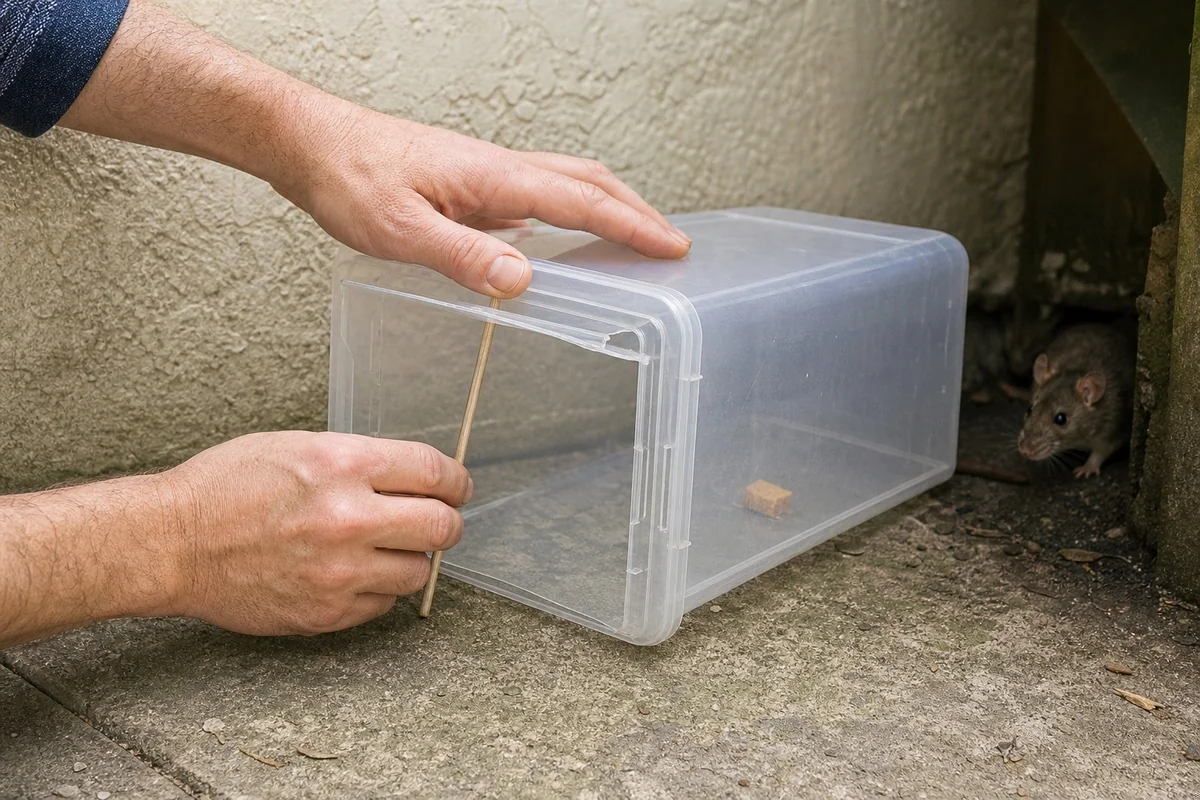
How to Make a DIY Trap for Smart Rats That Avoid Traps
How to make a DIY trap for smart rats: a wooden runway box that hides two snap traps, a week of pre-baiting, tricks for very wary rats and DIY methods to avoid.
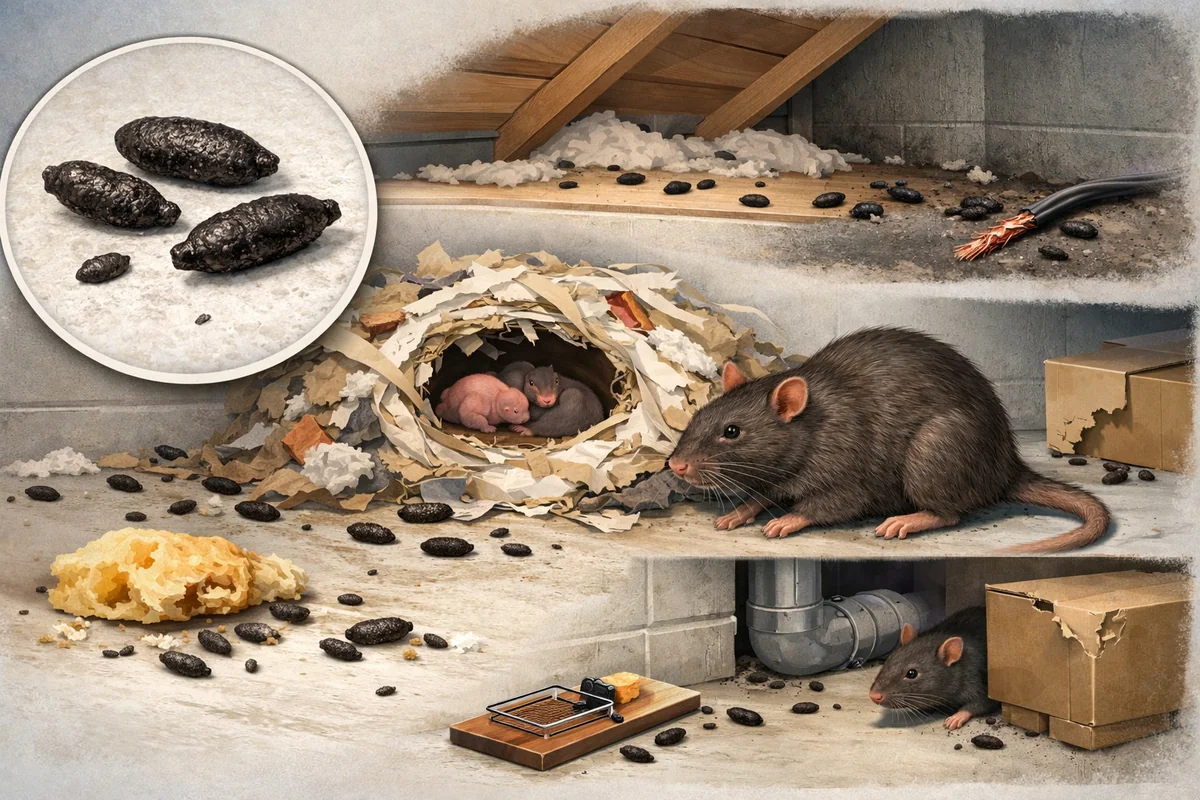
Best Rat Traps for Smart Rats: Picks and Methods That Work
Best rat traps for smart, trap-shy rats: TRATPER covered traps, the bait-proof Kness Big Snap-E, Tomcat for large sets and the Rat Zapper, plus methods that work.

Best Rat Traps for Large Rats: Covered, Open and Live Picks
Best rat traps for large rats: TRATPER and Filpestco covered traps, Tomcat and Kness Big Snap-E snap traps, a live cage, and how to set traps big rats cannot escape.
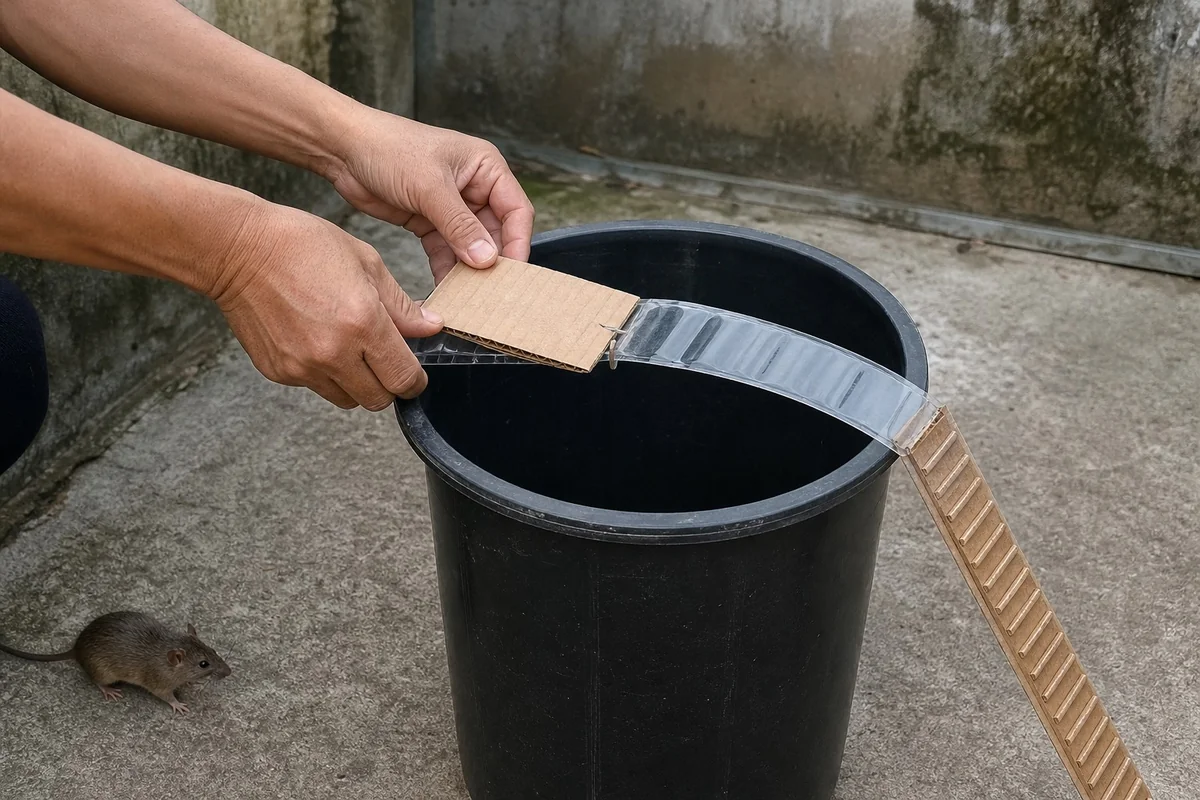
How to Make a Bucket Rat Trap That Rats Cannot Escape
How to make a bucket rat trap that works on rats: why a 5-gallon bucket is too shallow, the spinning roller build, pre-baiting, best bait and handling a caught rat.