
How to Treat Termites Yourself: A DIY Plan and Its Limits
How to treat termites yourself: confirm the pest, destroy mud tubes, fix moisture, foam galleries, treat bare wood with borate, and know when to call a pro.
To treat termites yourself, confirm they are termites, find every sign of activity, destroy mud tubes, fix the moisture and wood-to-soil contact that feeds them, inject foam into galleries you can reach, treat bare wood with a borate and replace damaged wood. A colony living in the soil under the house still needs a licensed professional.
What You Need
- A bright flashlight and a flathead screwdriver: to inspect and probe wood for hollow, damaged spots.
- A notepad or phone camera: to record where you find mud tubes, pellets, wings and damage.
- A termite foam with an injection tip: for galleries inside boards, door frames and trim.
- A drill with a small bit: to make injection holes into hollow wood.
- A borate wood treatment and a pump sprayer or brush: for bare framing and replacement lumber.
- Gloves, safety glasses and a mask rated for the product: for drilling, foaming and spraying in tight spaces.
- Basic repair supplies: replacement lumber, wood filler and caulk for cracks and openings.
The cost is low to moderate, mostly the foam and the borate. The skill level is the same as basic home repair, but crawl spaces and attics can be cramped and hazardous, so work with a helper nearby.
What You Can and Cannot Treat Yourself
Do-it-yourself termite control has a real ceiling, and knowing where it sits saves money. University of California IPM's guide to subterranean and other termites says do-it-yourself pesticides against termites are generally not effective and that soil treatments belong to professionals. The EPA's own termite guidance agrees that in most cases termiticide application can only be done properly by a trained pest management professional, and it notes that products that only kill termites on contact have not shown they can protect a structure.
That leaves plenty for a homeowner to do well:
- Yours to handle: inspection, destroying mud tubes, fixing leaks and drainage, removing wood that touches soil, spot-treating galleries you can reach, treating bare wood with a borate and replacing damaged boards.
- A professional's job: treating the soil around and under the foundation, whole-house fumigation or heat for drywood termites, and termites inside slab foundations or closed walls throughout the house.
If you want to compare the products themselves, our guide to the best termite treatments for the home covers foams, borates, stakes and sprays. The termites section links our guides to wood, furniture and flooring.
How to Treat Termites Yourself, Step by Step
- Confirm they are termites: termites have straight antennae, a thick waist and four wings of equal length, while flying ants have elbowed antennae, a pinched waist and longer front wings.
- Identify the type: mud tubes on the foundation mean subterranean termites, piles of tiny six-sided pellets below small holes mean drywood termites, and termites in soaked, rotting wood point to dampwood termites.
- Map every sign: check the foundation, crawl space, garage, door and window frames, porches and attic, probing wood with the screwdriver and noting each tube, pellet pile and soft spot.
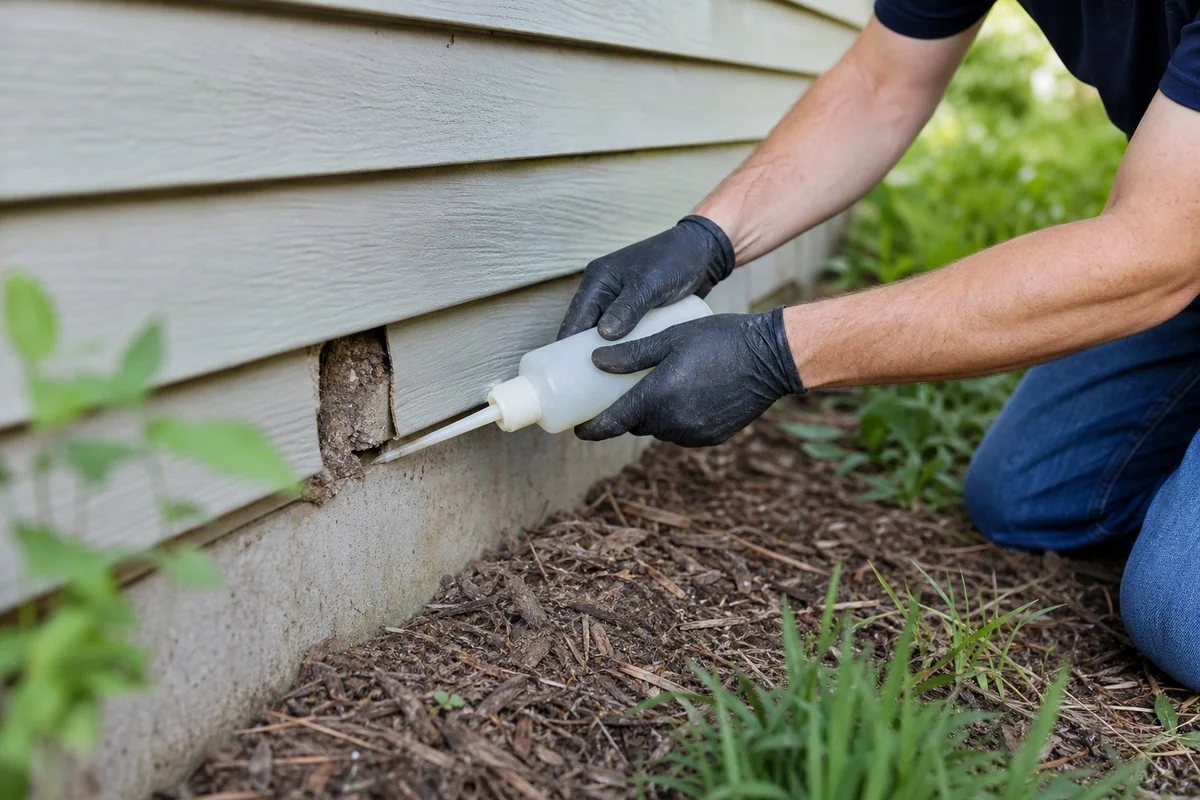
- Destroy mud tubes: scrape them off the foundation and posts, since UC IPM notes they give termites their path into wood, and check a week later whether they have been rebuilt.
- Cut off moisture and soil contact: fix leaks, clear gutters, grade soil away from the foundation, and remove wood, stumps and stored lumber touching the soil next to the house.
- Inject foam into galleries you can reach: drill small holes into hollow sections of trim, frames or posts and inject foam per the label until it shows at nearby holes.
- Treat bare wood with a borate: spray or brush accessible framing, sill plates and new lumber until wet, since borates protect only the wood they soak into.
- Replace damaged wood: swap out soft or hollow boards, treating the new wood on every face, and have a contractor check anything load-bearing.
- Monitor and decide: recheck the scraped tubes, clear pellet piles and look again over the next weeks; new activity means the colony is beyond reach and it is time for a professional.
Quick Checklist
How to find, treat and monitor termites you can reach yourself.
- Warning: Crawl spaces and attics can be hazardous; work with a helper nearby.
- Warning: Wear gloves and eye protection; check for wiring before drilling.
- Warning: Wear a mask rated for the product in enclosed spaces.
This plan treats what you can see and makes the house less inviting, but it does not reach a colony in the soil. That is why the monitoring step matters as much as the treatment.
Home Remedies: Boric Acid, Neem, Vinegar and Smells
Home remedies are where most DIY termite plans go wrong, because they can kill a few termites in front of you while the colony carries on out of sight.
- Boric acid: termites have to eat or touch it, so powder sprinkled on a floor or spray on painted wood does little. The useful form is a borate wood treatment, which the EPA notes is commonly sprayed on wood during construction, applied to bare wood so termites that feed there die.
- Orange oil: UC IPM notes that lab and field tests from two universities question how well d-limonene, the active part of orange oil, works on drywood termites.
- Neem oil: we found no reliable evidence that neem oil controls termites in a house.
- Vinegar: it may kill a termite soaked in it, but it does not reach the colony or protect wood; mixing it with lemon juice does not change that.
- Smells termites hate: no scent, from essential oils to cedar, reliably keeps termites away from a house.
- Nematodes and fungi: the EPA notes these have shown some success, mainly in lab studies.
What kills termites fastest without chemicals is simply exposure: workers are soft-bodied and dry out quickly away from their moist tunnels. That is why breaking tubes and fixing moisture do more than any kitchen remedy, and why the steps above put them first.
Which Signs Call for a Professional
The sign you find tells you whether the job is yours. Use this table after you have mapped the house in step 3.
| What You Find | What It Usually Means | Who Should Treat It |
|---|---|---|
| Mud tubes on the foundation or piers | Subterranean colony in the soil | Professional soil treatment or baiting |
| One damaged board, post or frame | Localized feeding you can reach | DIY foam, borate and repair |
| Six-sided pellets in one spot | Drywood termites in that wood | DIY spot foam, then watch for more |
| Pellets in several rooms or the attic | Several drywood colonies | Professional fumigation or heat |
| Swarmers indoors | A mature colony nearby | Professional inspection |
| Termites in soaked, rotting wood | Dampwood termites and a leak | DIY: fix the leak, replace the wood |
When you do call a professional, the EPA advises checking that the company is licensed by the state, reading the label of any product used and asking when it is safe to go back into treated areas. UC IPM recommends getting more than one inspection report before you sign.
When Termites Are Most Active
Termite colonies feed all year, but you are most likely to notice them when they swarm. UC IPM notes that the most common native subterranean termites swarm in the afternoon in spring or fall, usually on a clear day after heavy rain. Formosan termites swarm at dusk and fly to lights, and drywood termites swarm during the day in summer and fall.
Swarm season is a good time to inspect, since wings on windowsills and swarmers indoors point to where a colony is. It is also a good time to do the moisture and soil-contact fixes in step 5, before the next season's swarmers look for a new site.
Common Mistakes and Fixes
- Spraying swarmers and stopping there: the swarm is a sign of a colony; inspect and map the house.
- Treating finished wood with a borate: paint and varnish block it; treat bare wood or inject foam into galleries.
- Leaving wood against the soil: UC IPM recommends keeping wood at least 12 inches above the soil; move firewood, mulch and scrap lumber away.
- Relying on termite stakes alone for active damage: baits are slow; treat the damaged wood and get an inspection.
- Skipping the recheck: look for rebuilt tubes and new pellets for several weeks after treating.
Most DIY failures come from treating a symptom and assuming the problem is gone. Rechecking is the only way to know.
Common Questions About DIY Termite Treatment
Can I treat termites in my walls myself?
Can I treat termites in my walls myself?
Only where you can find the galleries. Foam injected through small holes into a wall void or frame can treat termites at that spot, but termites in walls usually come from a colony in the soil, so mud tubes or damage in several walls call for a professional inspection.
Do termite stakes from the hardware store work on their own?
Do termite stakes from the hardware store work on their own?
They are slow and work only if termites find them. UC IPM notes the most effective bait products are for professional use and that baits can take months or longer to control a colony, so stakes are monitoring and backup rather than a fix for active damage.
Will termites come back after DIY treatment?
Will termites come back after DIY treatment?
They often do if the colony was never reached. Spot foam kills termites in the treated wood, but a subterranean colony in the soil can rebuild tubes and find other wood, which is why rechecking for weeks after treatment matters.
Is DIY termite treatment cheaper than hiring a professional?
Is DIY termite treatment cheaper than hiring a professional?
For a single damaged board or a few mud tubes, yes, since foam and a borate cost far less than a service visit. For a colony in the soil it usually is not, because store products cannot treat the soil properly and the damage keeps growing while you try.
Key Takeaways
Treating termites yourself works for what you can reach: confirming the pest, breaking mud tubes, fixing moisture and soil contact, foaming galleries, treating bare wood with a borate and replacing damaged boards. It does not reach a subterranean colony in the soil or drywood termites spread through the house.
Home remedies such as vinegar, neem oil and orange oil are not a substitute for these steps. Mud tubes on the foundation, pellets in several rooms or swarmers indoors mean it is time for a licensed inspection.
This weekend, take a flashlight and screwdriver around the foundation and crawl space and write down every sign you find.
Related Articles
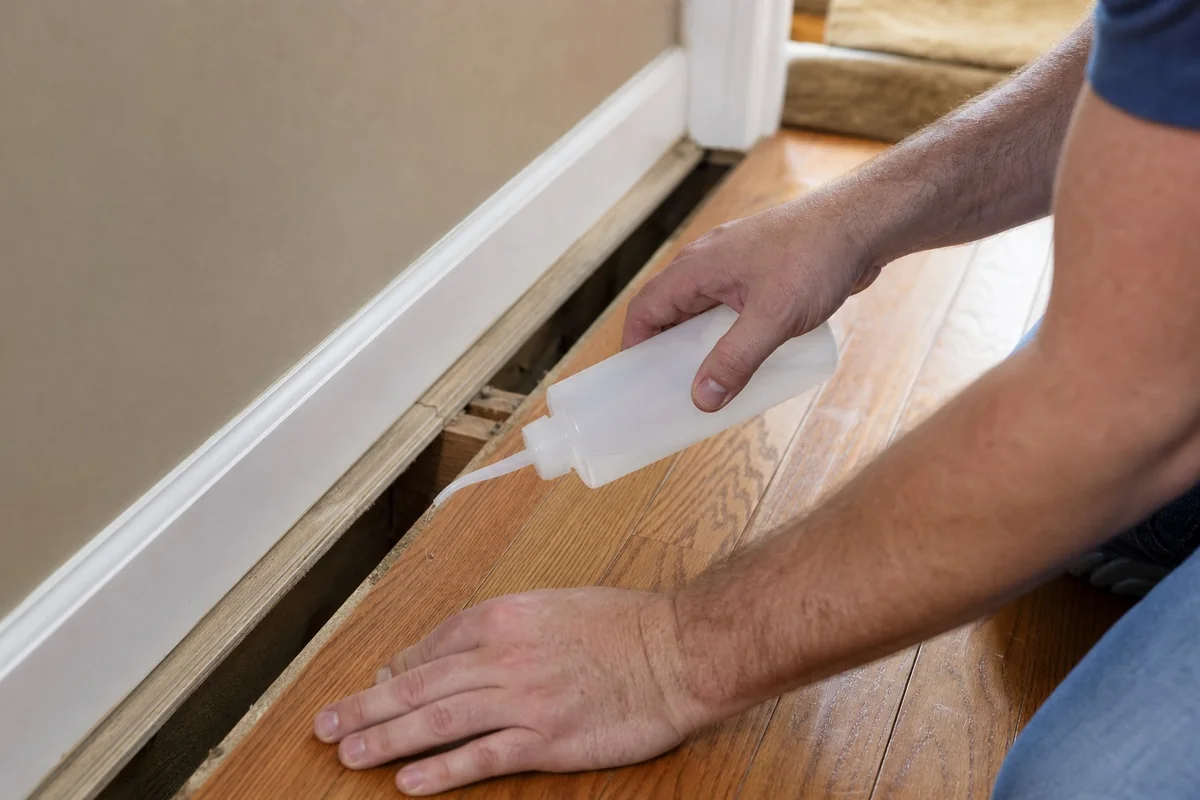
How to Treat Termites in Wood Flooring, From Below and Above
How to treat termites in wood flooring: spot the signs, tell subterranean from drywood, treat joists and subfloor from below, foam boards, know when to call a pro.
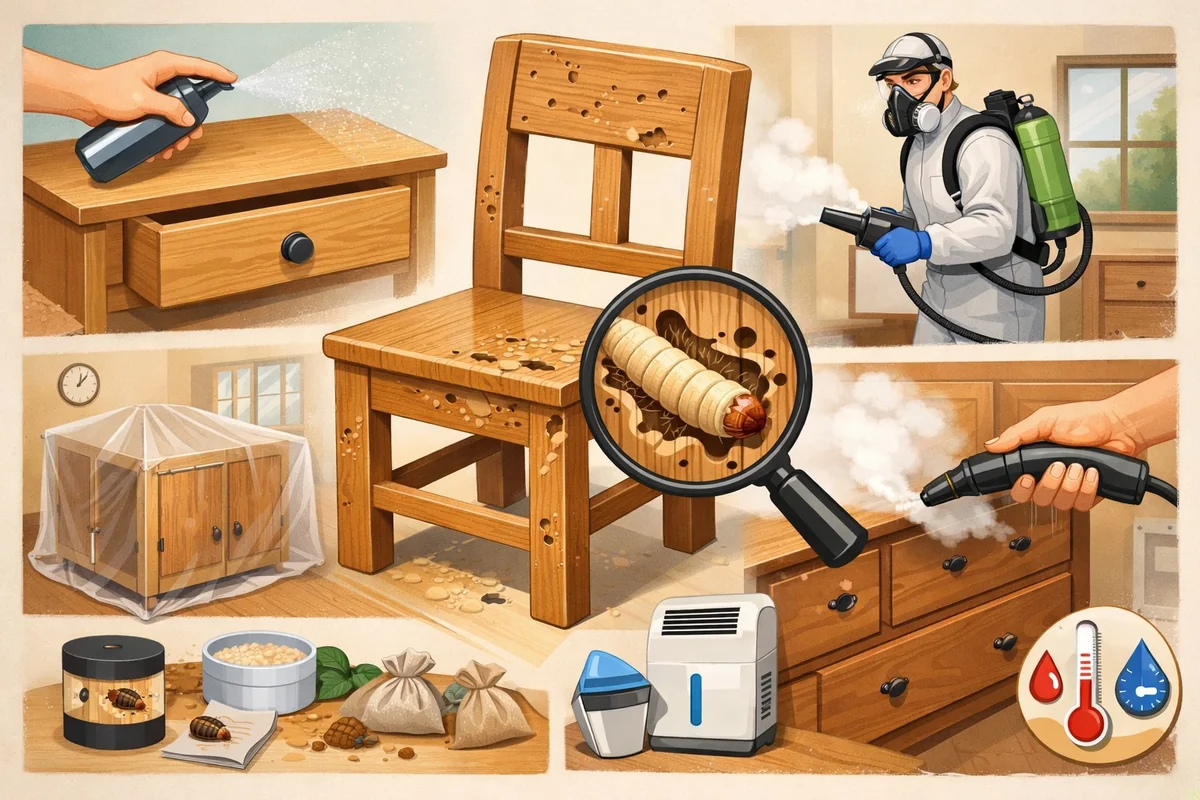
Best Termite Treatments for Wood Furniture: Foams and Aerosols
Best termite treatments for wood furniture: Termidor Foam for drywood galleries, BioAdvanced and Spectracide foams, TERRO aerosol, and when to call a professional.
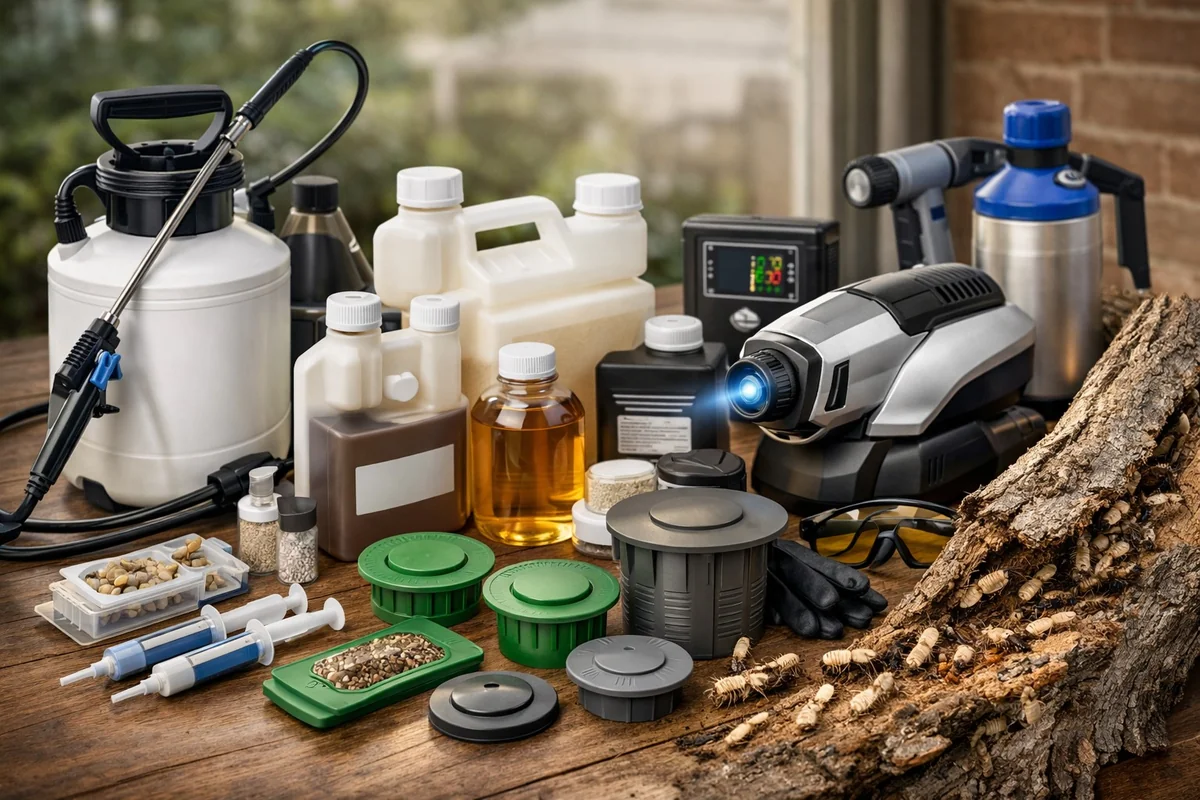
Best Home Termite Treatments: Foam, Borate, Stakes and Spray
Best termite treatments a homeowner can use: Termidor Foam, Spectracide foam, Bora-Care borate, Terminate stakes and TERRO spray, plus when you need a professional.
Best Termite Treatments for Wood: Borates, Copper and Foam
Best termite treatments for wood: Bora-Care and Tim-Bor borates for bare indoor lumber, Copper-Green for outdoor wood, and Termidor Foam for wood already infested.