 Pest Pro Reviews Editorial Team • • 11 min read •
Best Home Termite Treatments: Foam, Borate, Stakes and Spray
Best termite treatments a homeowner can use: Termidor Foam, Spectracide foam, Bora-Care borate, Terminate stakes and TERRO spray, plus when you need a professional.
The best termite treatment a homeowner can apply is Termidor Foam, a non-repellent fipronil foam for spot-treating galleries and wall voids, with Spectracide Terminate Foam as the budget option. Bora-Care protects bare wood with borate, and Spectracide stakes and TERRO's spray have narrower roles. An active subterranean infestation, though, calls for a licensed professional.
- UC IPM says do-it-yourself pesticides against termites are generally not effective; most proven methods are professional-only.
- Homeowner products work best for spot treatment of exposed galleries, protecting bare wood and fixing the conditions that attract termites.
- Termite baits are slow and, according to extension guidance, are usually not used alone against an existing infestation.
What a Homeowner Can and Cannot Treat
Termite control is one area where the honest answer limits what products can do. University of California IPM's guide to subterranean and other termites states that do-it-yourself pesticides for use against termites are generally not effective, that the most effective methods are for professional use only, and that soil-applied termiticides require special training because of the risk of contaminating ducts, pipes and groundwater.
That leaves homeowners real, but narrower, jobs. You can replace damaged wood, fix leaks and drainage, remove wood-to-soil contact, break up mud tubes, spot-treat exposed galleries with foam and protect bare wood with borates. Consumer products for those tasks are what this guide compares; a colony in the soil under your house is a job for a licensed company.
For the wider picture of crawling pests, see our overview of ants, roaches and other crawling bugs, and the termites section links our guides to wood, furniture and flooring treatments.
Identify your needs and get personalized recommendations
Damage in a frame, trim or post.
A small outdoor infestation.
Crawl space or attic lumber.
Wants early warning.
Identify Your Termite First
Treatment depends on the type. UC IPM describes three groups: subterranean termites nest in soil and reach wood through mud tubes; drywood termites live entirely inside dry wood such as framing, furniture and fences; and dampwood termites live in very moist wood, which signals a moisture problem.
- Mud tubes: pencil-width tunnels of soil on foundations or walls point to subterranean termites.
- Fecal pellets: tiny pellets with six flattened sides, piled below small holes, point to drywood termites.
- Swarmers and wings: winged termites or piles of shed wings indoors, though swarming alone does not prove an infestation.
- Damaged wood: wood that is thin at the surface, darkened or blistered and easily punctured with a screwdriver.
Termites and ants are easy to confuse. Termites have straight antennae, a thick waist and two pairs of equal-length wings, while ants have elbowed antennae, a pinched waist and unequal wings.
Termite Treatment Types Compared
We compared homeowner termite products on what they reach, the active ingredient, where the label allows them and what buyers report. Our sources were the makers' listings, Amazon's review digests and UC IPM and Mississippi State University Extension guidance; we did not test the products.
| Type | How It Works | Best For | Key Trade-Off |
|---|---|---|---|
| Non-repellent foam | Expands into galleries and voids; termites contact and carry it | Spot treatment of known galleries | Only treats where you inject it |
| Contact foam | Kills termites it reaches | Small exposed infestations | No colony effect |
| Borate wood treatment | Soaks into bare wood and kills termites that feed on it | Protecting exposed framing and lumber | Only works on unfinished wood |
| Bait stakes | Slow-acting bait shared by foraging workers | Detecting and slowly reducing subterranean activity | Slow; not a stand-alone cure |
| Contact spray | Kills exposed termites and leaves a residue | Swarmers and exposed workers | Does not reach the colony |
| Professional soil treatment | Treated soil barrier around and under the house | Active subterranean infestations | Licensed applicators only |
If you plan to tackle a small problem yourself, our guide on how to treat termites yourself walks through the steps.
Best Termite Foam Treatments
Foam is the most useful homeowner tool for an infestation you can locate. It expands into hollow galleries, wall voids and cracks that a spray cannot reach. Mississippi State University Extension notes that foam treatments are mainly used to supplement other treatments, injected into voids in buildings and foundations.
Termidor Foam: Best Overall
BASF's Termidor Foam comes in a 20-ounce can with fipronil at 0.005%, a non-repellent active ingredient.
- The foam expands 30 to 1 to penetrate voids, galleries and nests, per the maker.
- It lists arboreal, dampwood, drywood and subterranean termites, carpenter ants and wood-boring beetles.
- The label allows wall voids, wood elements, decks, fencing, utility poles and tree voids.
- Buyers report it stops termites in spot treatments, including drywood termites, and saves money compared with tenting; state restrictions may apply.
Choose it for galleries you can find, such as termite damage in a door frame or a void where swarmers emerged. Drill small holes into the gallery, inject foam and seal, and recognize that termites in hidden areas need a professional.
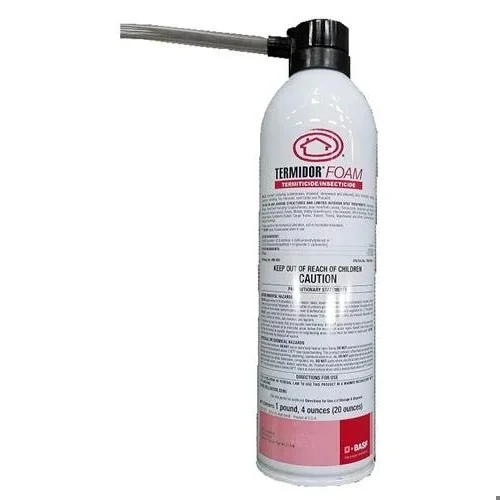
BASF Termidor Foam 20 oz
Best for: Spot-treating galleries you can locate
- ✓Non-repellent fipronil, per the maker
- ✓Expands 30:1 into voids
- ✓Lists drywood and subterranean termites
- −Only treats where injected
- −State restrictions may apply
Specifications (3)
- Item Form
- Spray
- Liquid Volume
- 20 fluid ounces
- Specification Met
- EPA
Spectracide Terminate Termite Killing Foam: Best Budget Foam
Spectracide's Terminate Foam comes in a 16-ounce can for spot treatment indoors and outdoors.
- The maker says it kills exposed subterranean, drywood and dampwood termites on contact.
- The foam expands into voids, channels in damaged wood, behind veneers and in cracks.
- It also treats carpenter bee tunnels.
- Buyers report it eliminated signs of infestation in stumps and trees; quality and value opinions are mixed.
Choose it for a small, exposed infestation in a stump, fence post or outbuilding. It kills by contact, so it works best where you can reach the termites directly.
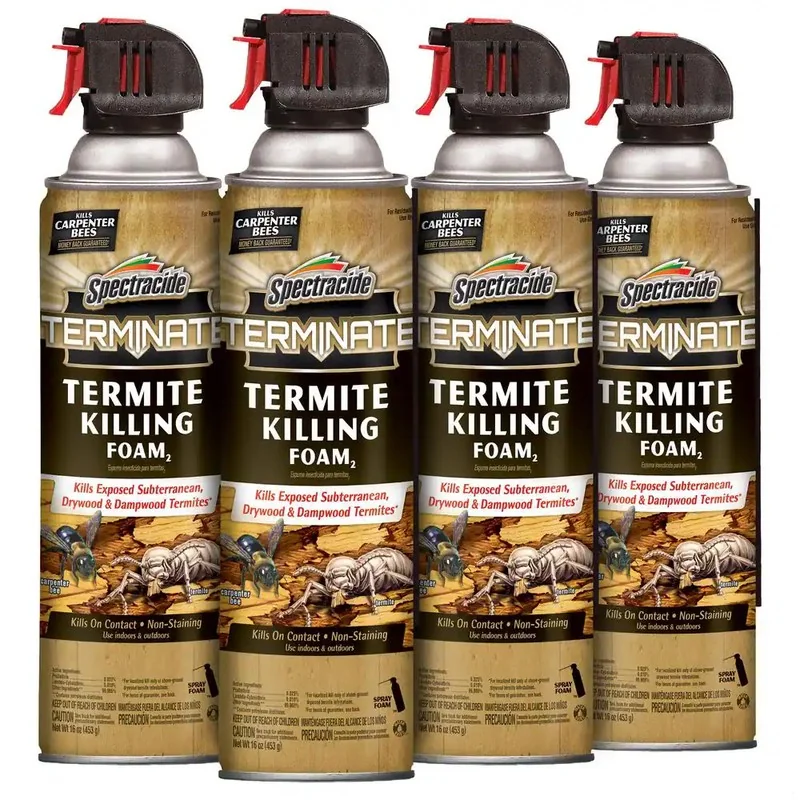
Spectracide Terminate Termite Killing Foam 16 oz
Best for: Small exposed infestations on a budget
- ✓Lists subterranean, drywood and dampwood termites
- ✓Expands into voids and channels
- ✓Effective on stumps, per buyers
- −Contact kill only
- −Mixed quality and value feedback
Specifications (3)
- Item Form
- Spray
- Liquid Volume
- 16 fluid ounces
- Unit Count
- 16 Ounce
Best Borate Wood Treatment
Borate wood treatments soak into bare wood, where termites that feed on it die. Mississippi State University Extension describes borate treatments as a preconstruction option applied to the lower framing of a building before walls are closed in; on existing homes, they suit any bare wood you can reach, such as crawl space framing, attic lumber and repairs.
Bora-Care: Best for Protecting Wood
Nisus Bora-Care is a 1-gallon borate concentrate with disodium octaborate tetrahydrate.
- The maker says one gallon of concentrate covers approximately 800 square feet, applied to bare wood surfaces in a 2-foot band.
- It is listed for termites, carpenter ants, wood-boring beetles and decay fungi.
- The maker says it stays active in treated wood for the life of the structure.
- Buyers find it effective and appreciate its low toxicity for indoor use; value opinions are mixed.
Choose it for exposed crawl space framing, sill plates, attic lumber and replacement wood. It must go on bare, unpainted and unsealed wood to soak in, so it cannot treat finished floors or furniture through the finish.
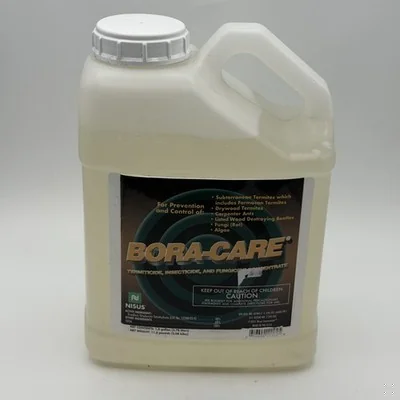
Nisus Bora-Care Wood Treatment Concentrate 1 gal
Best for: Protecting bare framing and lumber
- ✓About 800 sq ft per gallon, per the maker
- ✓Also lists wood-boring beetles and decay fungi
- ✓Low toxicity indoors, per buyers
- −Only penetrates bare, unfinished wood
- −Mixed value feedback
Specifications (3)
- Active Ingredients
- disodium octoborate tetrahydrate
- Liquid Volume
- 1 gallons
- Item Form
- Spray
Best Termite Bait Stakes
In-ground termite baits use slow-acting insecticides that foraging workers carry back to the colony. Mississippi State University Extension notes that baits ultimately destroy colonies but are slow, and are usually not used alone to control an existing infestation; professionals pair them with liquid treatment at known activity points.
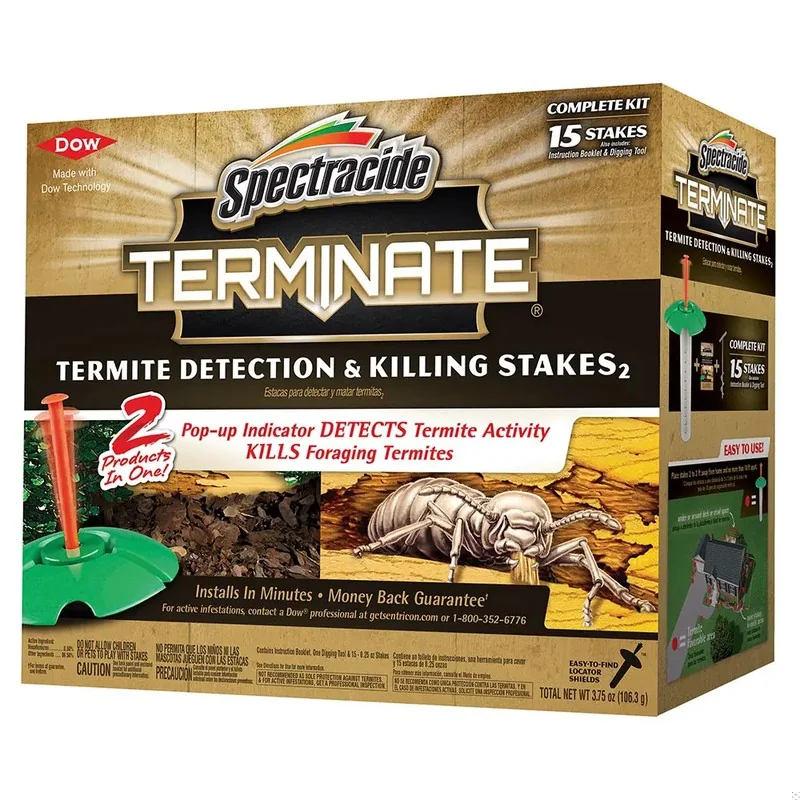
Spectracide Terminate Termite Detection and Killing Stakes: Best for Monitoring
Spectracide's stakes come 15 to a kit with hexaflumuron, an insect growth regulator, and pop-up indicators that show termite activity.
- The maker says to place stakes 2 to 3 feet from the house and no more than 10 feet apart.
- The kit includes locator shields, a digging tool and instructions.
- Buyers find them easy to install and cheaper than annual service.
- Effectiveness is mixed: some report subterranean termites under control, others say the stakes never showed activity while termites persisted.
Choose them as an early-warning system around a home with no active infestation, or between professional inspections. Do not rely on them to stop termites already in your walls.
Spectracide Terminate Termite Stakes 15 Count
Best for: Monitoring for subterranean activity
- ✓Pop-up indicators show activity
- ✓Easy to install, per buyers
- ✓Cheaper than annual service, per buyers
- −Mixed effectiveness, per buyers
- −Slow; not a cure for active infestations
Specifications (3)
- Active Ingredients
- Hexaflumuron
- Item Form
- Stakes
- Unit Count
- 15 Count
Best Termite Spray
Ready-to-use sprays kill termites and swarmers you can see and leave a residue in cracks. They do not reach colonies in soil or deep inside wood, which UC IPM notes is why over-the-counter products rarely solve termite problems.
TERRO Carpenter Ant and Termite Killer: Best for Exposed Termites
TERRO's T1100 is a 32-ounce ready-to-use trigger spray with deltamethrin at 0.02%.
- The maker says it kills on contact and continues to kill for up to 4 months.
- It is labeled for crack and crevice treatment, crawl spaces and indoor and outdoor use.
- Buyers find it effective, especially on carpenter ants, and easy to use.
- Opinions on how long it lasts and value are mixed.
Choose it for swarmers indoors, exposed workers in a damaged board or carpenter ants that look like termites. Pair it with foam or a professional for the colony itself.

TERRO Carpenter Ant & Termite Killer Spray 32 oz
Best for: Swarmers and exposed termites
- ✓Kills on contact, per the maker
- ✓Up to 4 months residual, per the maker
- ✓Effective on carpenter ants, per buyers
- −Does not reach the colony
- −Mixed longevity feedback
Specifications (3)
- Active Ingredients
- Deltamethrin 00.02%; Other Ingredients 99.98%
- Item Form
- Spray
- Liquid Volume
- 32 fluid ounces
When You Need a Professional
Call a licensed pest control company when you find mud tubes on the foundation, termites in several places or damage in walls you cannot open. UC IPM recommends a licensed inspection before any treatment and inspections every 3 to 5 years, and notes that professionals have soil termiticides, baiting systems and, for drywood termites, whole-structure fumigation and heat that homeowners cannot use.
For widespread drywood termites, UC IPM's drywood termite guide describes fumigation and whole-structure heat as the treatments that reach hidden infestations. It advises getting at least three inspection reports, asking for references, checking licenses and complaint histories, and reading the guarantee carefully.
How to Choose the Right Termite Treatment
- Damage in a door frame, trim or post you can reach: Termidor Foam injected into the galleries.
- A small infestation in a stump or fence: Spectracide Terminate Foam.
- Bare framing in a crawl space or attic: Bora-Care to protect the wood.
- No active termites but nearby risk: Spectracide stakes as monitors, plus moisture and wood-soil fixes.
- Swarmers or exposed workers: TERRO spray, then find the source.
- Mud tubes on the foundation or damage in several places: a licensed professional.
Whatever you choose, fix the conditions first: keep wood at least 12 inches above soil, as UC IPM advises, remove wood piles and stumps near the house, repair leaks and keep gutters and grading moving water away from the foundation.
Preventing Termites Around Your Home
Prevention costs less than any treatment, and most of it needs no product at all. Termites need wood, moisture and a hidden route from the soil, so the goal is to take those away.
- Keep wood off the soil: extension guidance puts the minimum gap at 12 to 18 inches between untreated structural wood and the soil, depending on the foundation.
- Keep siding clear of soil: the same extension guidance calls for at least 6 inches between soil grade and the bottom of siding, a gap that mulch and leaves slowly close.
- Control water: fix plumbing leaks, clean gutters and grade soil so water drains away from the foundation.
- Remove food sources: move firewood, lumber and cardboard away from the house and remove old stumps and buried wood.
- Keep crawl spaces accessible: ventilated, dry and open enough for regular inspection.
These steps also make any treatment last longer, because termiticides and baits work best when termites are not finding easier routes and wetter wood.
Common Questions About Termite Treatment
What are the differences between termite bait and liquid termite control?
What are the differences between termite bait and liquid termite control?
Liquid termiticides create a zone of treated soil around and under the foundation that kills termites passing through, and they act quickly. Baits use slow-acting insecticide that workers carry back to the colony; they can eliminate colonies but take months, so professionals often combine them with liquid treatment at active spots.
Can WD-40 be used to exterminate termites?
Can WD-40 be used to exterminate termites?
No. WD-40 is a lubricant, not a registered termiticide, and spraying it into wood does not reach colonies or protect the structure. It may kill a termite it soaks, but it can also create a fire hazard. Use a product labeled for termites, or call a professional.
What attracts termites to a house?
What attracts termites to a house?
Moisture and wood close to the soil. Leaky pipes, poor drainage, mulch and soil piled against the foundation, wood piles, stumps and wood touching the ground all invite subterranean termites. Keeping wood at least 12 inches above soil and fixing water problems are the most effective preventive steps.
What is a home remedy for killing termites?
What is a home remedy for killing termites?
There is no proven home remedy for a termite infestation. Orange oil, vinegar and boric acid mixes may kill termites they touch, but they do not reach colonies. What homeowners can do is remove wood from soil contact, fix moisture problems, break up mud tubes and replace damaged wood.
Are termites in the house always a serious problem?
Are termites in the house always a serious problem?
They should always be taken seriously. Colonies grow slowly and damage builds over years, so a small find may not mean major damage yet, but subterranean termites rarely go away on their own. Get a licensed inspection to learn the extent before choosing a treatment.
Which One Should You Buy?
- Termidor Foam wins for: spot-treating galleries you can locate
- Spectracide Terminate Foam wins for: small exposed infestations on a budget
- Bora-Care wins for: protecting bare framing and lumber
- Spectracide Terminate Stakes win for: monitoring for subterranean activity
- TERRO Carpenter Ant and Termite Killer wins for: swarmers and exposed termites
Buy Termidor Foam if you have found termites in wood you can reach. It is non-repellent, expands into galleries and voids, and lists drywood and subterranean termites, which makes it the most capable spot treatment available to homeowners.
Use Spectracide foam for small outdoor jobs, Bora-Care for bare framing, the stakes for monitoring and TERRO's spray for swarmers. For mud tubes on the foundation or damage in several rooms, call a licensed professional and get more than one inspection report.
Before you buy, walk the foundation with a flashlight and check for mud tubes, since that one finding decides between a DIY product and a professional.
Guides in This Topic
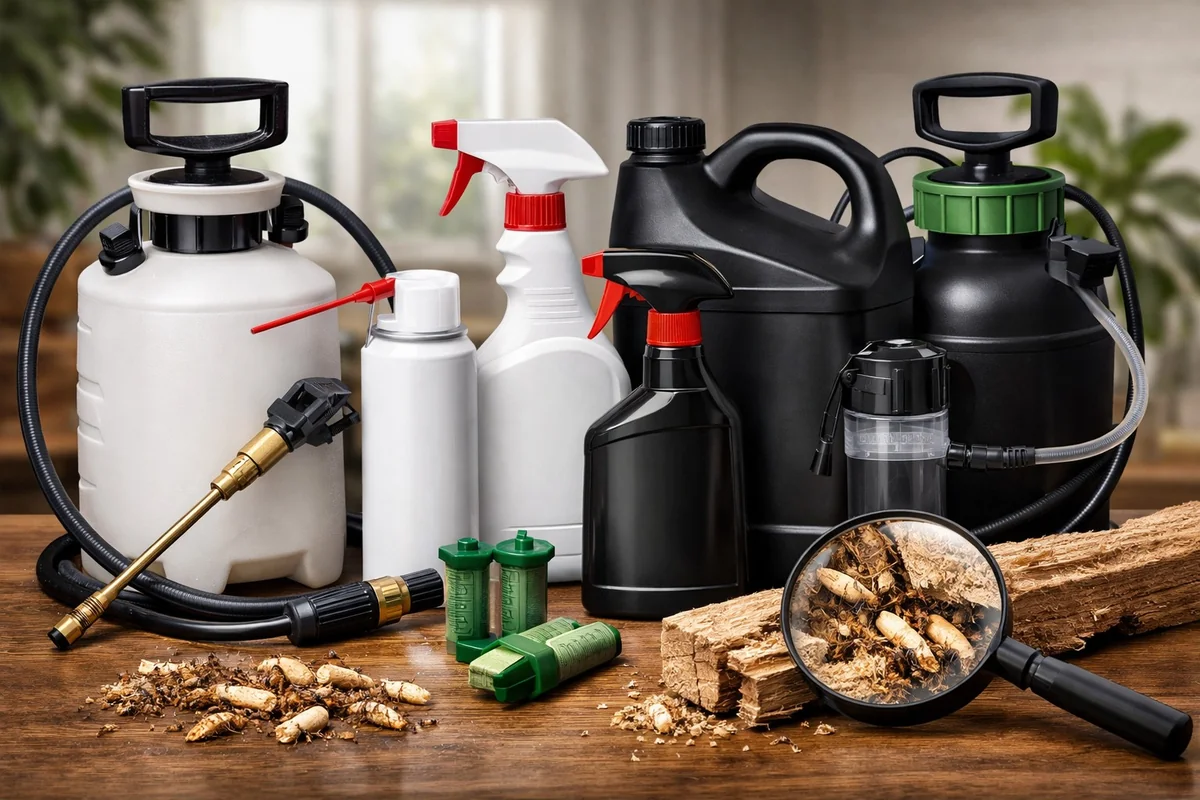 Best Termite Sprays for Wood: Borate, Foam and Aerosol Picks
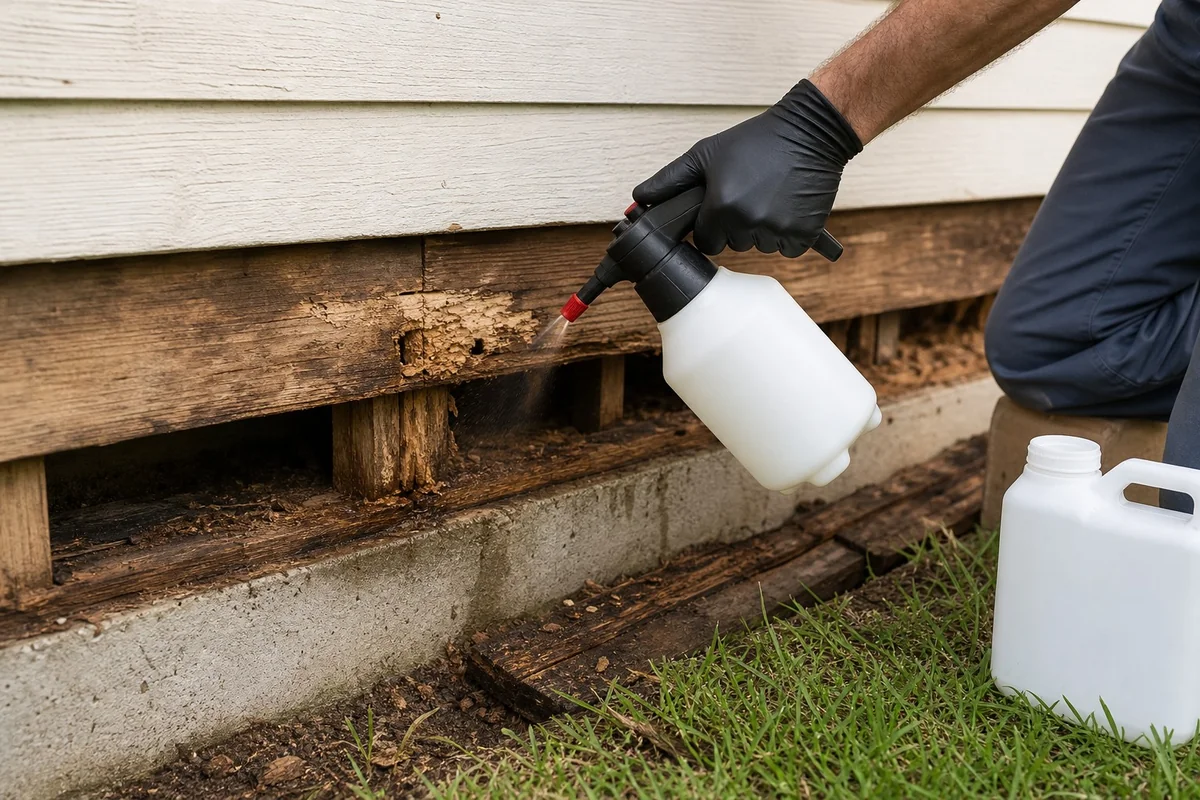 Best Termite Treatments for Wood: Borates, Copper and Foam
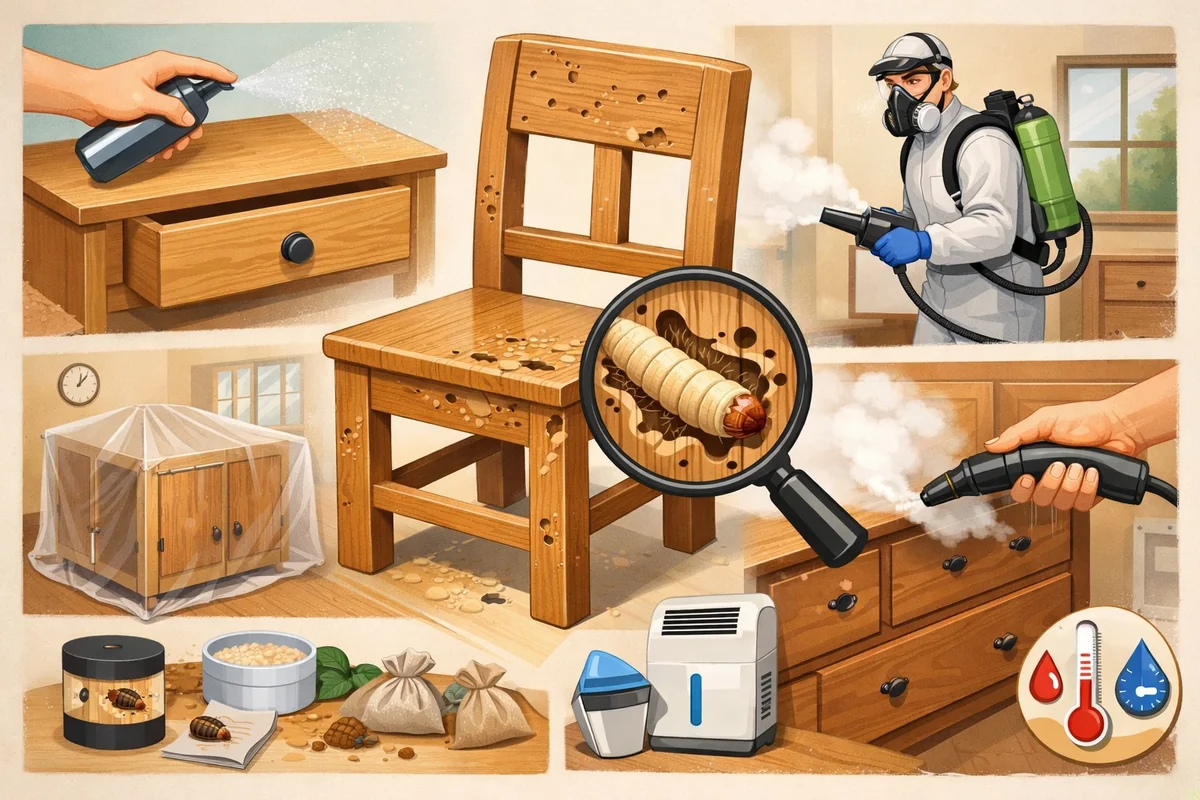 Best Termite Treatments for Wood Furniture: Foams and Aerosols
 How to Treat Termites in Wood Flooring, From Below and Above
 How to Treat Termites Yourself: A DIY Plan and Its Limits