 Pest Pro Reviews Editorial Team • • 8 min read •
Best Termite Treatments for Wood Furniture: Foams and Aerosols
Best termite treatments for wood furniture: Termidor Foam for drywood galleries, BioAdvanced and Spectracide foams, TERRO aerosol, and when to call a professional.
The best termite treatment for wood furniture is Termidor Foam, a non-repellent fipronil foam you inject into the galleries of an infested piece. BioAdvanced's foam is the alternative that also lists wood-boring beetles, Spectracide Terminate Foam is the budget contact option and TERRO's aerosol treats cracks and joints. Badly infested or valuable pieces are best fumigated by a professional.
- Termites in furniture are usually drywood termites, which leave tiny six-sided fecal pellets below small holes.
- Foam injected into galleries reaches termites inside the wood; surface sprays do not.
- UC IPM notes home-use products are not effective for localized drywood treatment of structures, so check the house as well as the furniture.
Is It Termites or Wood-Boring Beetles?
Furniture pests are often misidentified, and the treatment depends on which you have. Drywood termites live inside dry wood and push their droppings out through small holes. University of California IPM's drywood termite guide notes that their fecal pellets have six hexagonal sides, are diagnostic for drywood termites, and are pushed out through kickout holes smaller than 2 mm across.
- Drywood termites: small piles of hard, six-sided pellets like coarse sand or poppy seeds below tiny holes.
- Wood-boring beetles: round exit holes with fine, flour-like powder rather than distinct pellets.
- Subterranean termites: mud tubes and soil packed in tunnels, usually only in furniture that touches a floor or wall with termite access.
For an overview of termite products for the whole house, see our guide to the best termite treatments for the home; the termites section links our wood and flooring guides.
Identify your needs and get personalized recommendations
Drywood termites in solid wood.
Likely wood-boring beetles.
Inexpensive furniture.
Treat the Furniture, Then Check the House
A termite-infested chair or dresser may be a stray import, or a sign that the house itself has drywood termites. UC IPM notes that drywood colonies are usually small, widely dispersed and take years to mature, so an infested piece can be one of several sites.
Move the piece away from other wooden furniture, check nearby baseboards, window frames and other furniture for pellets, and inspect the attic if you can do so safely. If you find pellets in several places, UC IPM describes whole-structure fumigation or heat as the treatments that reach hidden infestations, and localized treatments of the house itself as work for licensed applicators.
A simple activity check helps: clear the pellets from below a hole and look again a few days later. New pellets suggest active termites, though UC IPM cautions that vibration can also shake old pellets loose.
Furniture Treatment Options Compared
The right approach depends on the piece and how far the termites have spread. The table compares what a homeowner can do with what a professional offers.
| Option | How It Works | Best For | Limit |
|---|---|---|---|
| Injected non-repellent foam | Fills galleries; termites contact and spread it | Infested solid-wood pieces | Requires small drill holes |
| Injected contact foam | Kills termites it reaches in galleries | Small, localized damage | No transfer effect |
| Aerosol with crack nozzle | Kills termites in joints and cracks | Joints, seams and holes | Little penetration into solid wood |
| Professional chamber fumigation or heat | Treats the whole piece | Antiques and heavily infested pieces | Cost and transport |
| Replacing or discarding | Removes the infested wood | Structurally ruined, low-value pieces | Loses the furniture |
How We Selected These Products
We compared termite products suited to injecting or spraying wood furniture, focusing on whether they list drywood termites, how they reach galleries and what buyers report. Our sources were the makers' listings, Amazon's review digests and UC IPM guidance; we did not test the products.
Foams lead the list because they expand into the galleries inside a piece, where drywood termites live. Perimeter sprays and soil products were left out, since they do not reach termites inside furniture, and so were listings without clear label details. The aerosol closes the list as a companion for joints rather than a stand-alone fix.
Termidor Foam: Best Overall for Furniture
BASF's Termidor Foam is a 20-ounce can of non-repellent foam with fipronil at 0.005%.
- The foam expands 30 to 1 into voids and galleries, per the maker.
- It lists drywood, subterranean, dampwood and arboreal termites, plus carpenter ants and wood-boring beetles such as powder post beetles.
- Because it is non-repellent, termites do not avoid treated galleries.
- Buyers report it stops termites in spot treatments, including drywood termites; state restrictions may apply.
Choose it for a solid-wood dresser, table or bed frame with active pellets. Drill small holes into the galleries near kickout holes, inject foam per the label, then fill the holes with wood filler.
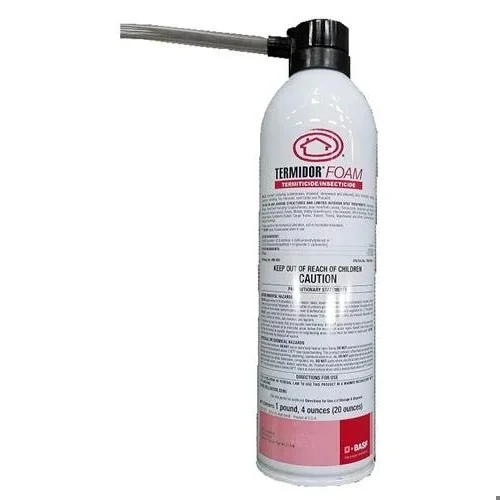
BASF Termidor Foam 20 oz
Best for: Drywood termites in solid-wood furniture
- ✓Lists drywood termites and powder post beetles
- ✓Expands 30:1 into galleries
- ✓Non-repellent
- −Requires small drill holes
- −State restrictions may apply
Specifications (3)
- Item Form
- Spray
- Liquid Volume
- 20 fluid ounces
- Specification Met
- EPA
BioAdvanced Termite and Carpenter Bee Killer Plus Foam: Best for Termites and Beetles
BioAdvanced's foam comes in an 18-ounce can with imidacloprid.
- The maker says it kills active termites, including those hidden in wall voids and structural spaces.
- It also lists wood-infesting beetles and carpenter bees, useful when you are not sure what is in the wood.
- The foam expands up to 30 times its volume, per the maker.
- Buyers report quick results; quality and foaming get mixed reviews, with some cans leaking foam.
Choose it when the damage could be termites or beetles. Test on a hidden spot first, since foam residue can mark some finishes, and wipe any foam that escapes onto the surface right away.
BioAdvanced Termite & Carpenter Bee Killer Plus Foam 18 oz
Best for: Damage that could be termites or beetles
- ✓Lists wood-infesting beetles
- ✓Expands up to 30 times, per the maker
- ✓Works quickly, per buyers
- −Some cans leak foam, per buyers
- −Test on a hidden spot first
Specifications (3)
- Active Ingredients
- Lmidacloprid
- Item Form
- Spray
- Liquid Volume
- 18 fluid ounces
Spectracide Terminate Termite Killing Foam: Best Budget Foam
Spectracide's Terminate Foam comes in a 16-ounce can for spot treatment.
- The maker says it kills exposed subterranean, drywood and dampwood termites on contact.
- The foam expands into voids, channels in damaged wood and behind veneers.
- Buyers report it eliminated signs of infestation; quality and value opinions are mixed.
Choose it for small, localized damage in a lower-value piece. It works by contact, so it must reach the termites directly through the galleries. It is also handy for treating termites found in a picture frame, stool or wooden box where a larger can or a professional visit would be more than the job needs.
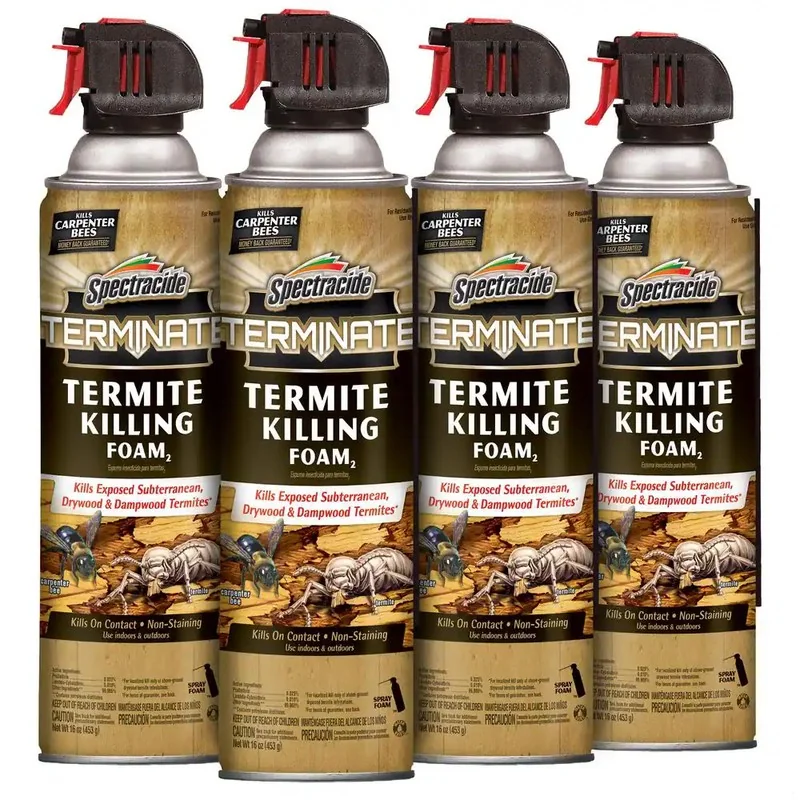
Spectracide Terminate Termite Killing Foam 16 oz
Best for: Small damage in lower-value pieces
- ✓Lists drywood termites
- ✓Expands behind veneers and into channels
- ✓Eliminated signs, per buyers
- −Contact kill only
- −Mixed quality feedback
Specifications (3)
- Item Form
- Spray
- Liquid Volume
- 16 fluid ounces
- Unit Count
- 16 Ounce
TERRO Carpenter Ant and Termite Killer Aerosol: Best for Joints and Cracks
TERRO's T1901 aerosol comes in a 16-ounce can with a two-way nozzle.
- It lists termites, carpenter ants, carpenter bees, wood wasps and beetles and borers.
- The maker says it kills on contact and keeps working for up to one month, and that it is odorless and non-staining.
- The maker notes it is not recommended as sole protection and advises a professional inspection for active infestations.
- Buyers of the line find it effective, especially on carpenter ants.
Choose it for the joints, seams and holes of a piece, alongside foam in the galleries. On its own it treats the surface rather than the inside of the wood.
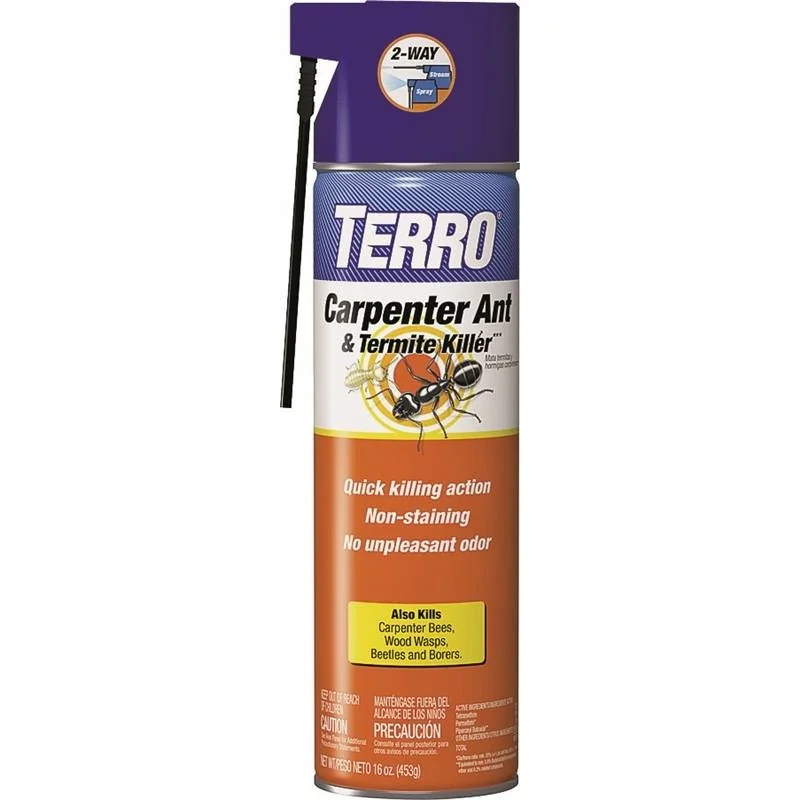
TERRO Carpenter Ant & Termite Killer Aerosol 16 oz
Best for: Joints, seams and holes
- ✓Lists beetles and borers
- ✓Odorless and non-staining, per the maker
- ✓Effective on carpenter ants, per buyers
- −Little penetration into solid wood
- −Not a stand-alone termite treatment
Specifications (3)
- Item Form
- Spray
- Liquid Volume
- 16 fluid ounces
- Target Species
- Carpenter ants, Carpenter bees, Termites, Wood wasps, Beetles& Borers
- Termidor Foam wins for: drywood termites in solid-wood furniture
- BioAdvanced Foam wins for: damage that could be termites or beetles
- Spectracide Terminate Foam wins for: small damage in lower-value pieces
- TERRO T1901 Aerosol wins for: joints, seams and holes
For valuable or heavily damaged pieces, a professional is the better route.
When to Call a Professional
Antiques, upholstered pieces and furniture with termites throughout are hard to treat by injection without damage. Pest control companies can treat furniture in a fumigation chamber or with heat, which reaches every gallery without drilling, and UC IPM notes heat treatment must bring wood to at least 120°F for at least 33 minutes.
Call a professional too if you find pellets in more than one room, since that points to termites in the structure. UC IPM advises getting at least three inspection reports and checking licenses and references before choosing a company, and reading any guarantee carefully before signing.
How to Inject Foam Into Infested Furniture
- Move the piece outdoors or to a garage: work in a ventilated space away from other furniture.
- Map the galleries: find kickout holes and tap the wood to locate hollow-sounding sections.
- Drill small holes: use a small bit on a hidden face, drilling into the hollow sections a few inches apart.
- Inject the foam: insert the applicator tip and inject per the label until foam appears at nearby holes.
- Wipe and fill: wipe excess foam, let the piece dry and fill the holes with matching wood filler.
- Monitor: clear pellets and check for new ones over the following weeks.
Wear gloves and eye protection, and keep the piece away from children and pets until it has dried. If new pellets keep appearing after a second treatment, the piece needs professional treatment.
Common Questions About Termites in Furniture
Should I throw away furniture with termites?
Should I throw away furniture with termites?
Not automatically. Solid-wood pieces with localized damage can usually be treated by injecting foam into the galleries, and valuable pieces can be fumigated or heat-treated by a professional. Discard furniture only if the damage is structural or the piece is low-value and heavily infested, and wrap it in plastic before moving it out.
Does boric acid work on termites in furniture?
Does boric acid work on termites in furniture?
Not as a cure. Borate treatments protect bare wood by soaking in, but they cannot penetrate paint, varnish or other finishes, so they do little for finished furniture. Boric acid powder sprinkled on the surface does not reach termites inside the galleries.
Can termites spread from furniture to my house?
Can termites spread from furniture to my house?
Drywood termites in a piece can produce swarmers that start new colonies in other dry wood, including the house. That is why UC IPM suggests checking for pellets elsewhere and why heavily infested pieces should be treated or removed promptly.
How do I know if termites in furniture are dead?
How do I know if termites in furniture are dead?
Clear all pellets from below the holes after treatment and check again over the following weeks. If no new pellets appear, the termites are likely dead, though vibration can loosen old pellets. Fresh pellets mean another treatment or a professional is needed.
Which One Should You Buy?
Termidor Foam is the termite treatment to buy for wood furniture. It is non-repellent, expands into the galleries where drywood termites live and lists drywood termites and powder post beetles, so it covers the pests most often found in furniture.
Choose BioAdvanced's foam if you are unsure whether you have termites or beetles, Spectracide's foam for small damage in a lower-value piece and TERRO's aerosol for joints and cracks. Send antiques and heavily infested pieces to a professional for chamber treatment.
Before you buy, look closely at the droppings below the holes, since six-sided pellets and fine powder point to different pests.
Related Articles
Best Termite Sprays for Wood: Borate, Foam and Aerosol Picks
Best termite sprays for wood: Bora-Care borate for bare lumber, BioAdvanced foam for voids, TERRO aerosol and spray for infested wood, plus what sprays cannot do.
Best Termite Treatments for Wood: Borates, Copper and Foam
Best termite treatments for wood: Bora-Care and Tim-Bor borates for bare indoor lumber, Copper-Green for outdoor wood, and Termidor Foam for wood already infested.
Best Home Termite Treatments: Foam, Borate, Stakes and Spray
Best termite treatments a homeowner can use: Termidor Foam, Spectracide foam, Bora-Care borate, Terminate stakes and TERRO spray, plus when you need a professional.
How to Treat Termites in Wood Flooring, From Below and Above
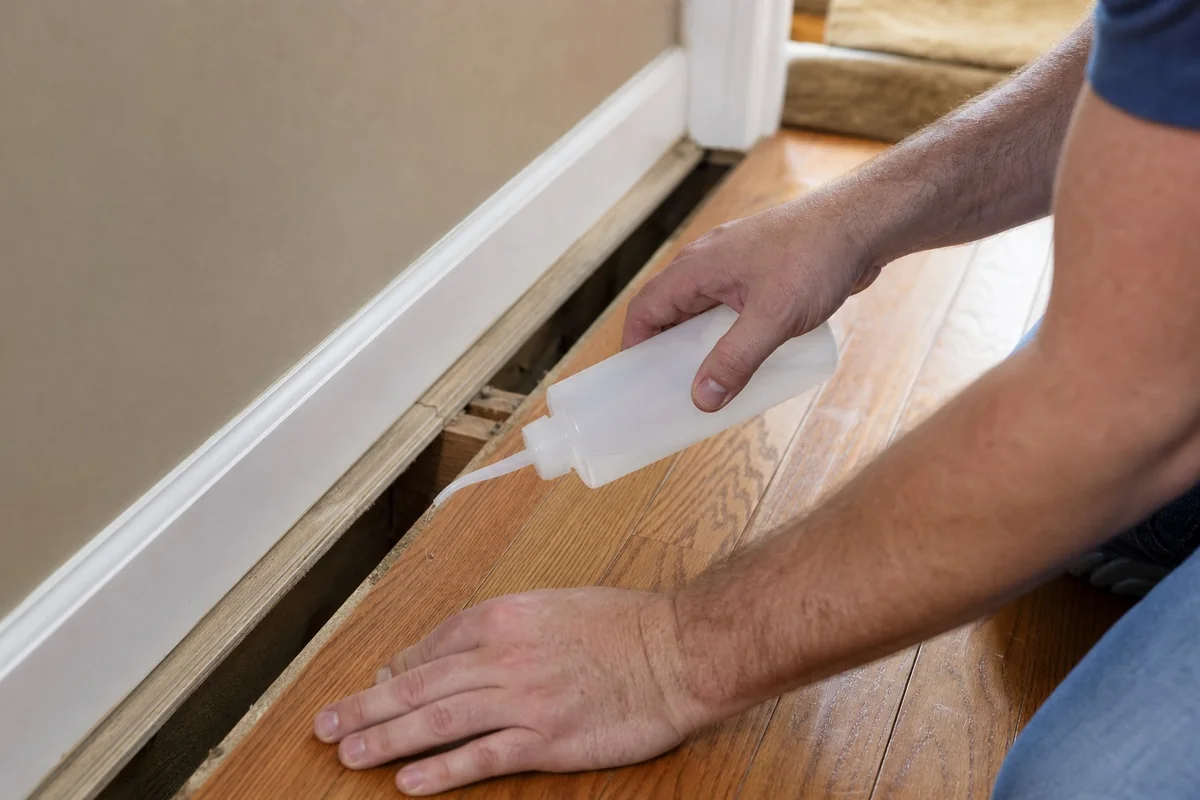
How to treat termites in wood flooring: spot the signs, tell subterranean from drywood, treat joists and subfloor from below, foam boards, know when to call a pro.