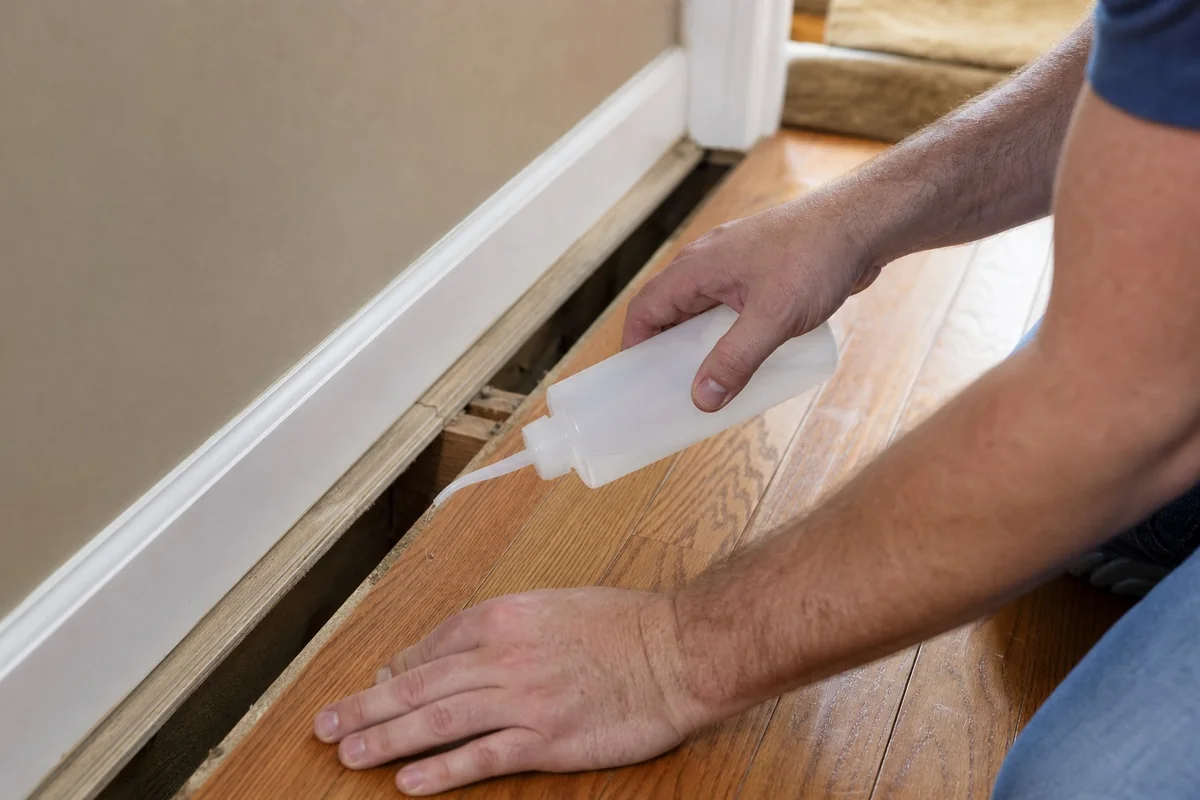

How to Treat Termites in Wood Flooring, From Below and Above
How to treat termites in wood flooring: spot the signs, tell subterranean from drywood, treat joists and subfloor from below, foam boards, know when to call a pro.
To treat termites in wood flooring, confirm the damage is termites, work out whether they are subterranean or drywood, treat from the crawl space below with foam and a borate on bare joists and subfloor, inject foam into damaged boards from above, then replace the damaged wood and fix the moisture. Floors over a slab, or damage across several rooms, need a professional.
What You Need
- A flashlight and a flathead screwdriver: to probe boards, joists and subfloor for soft, hollow wood.
- A termite foam with an injection tip: for galleries in floorboards, joists and subfloor.
- A drill with a small bit: to make injection holes along seams or in boards you will replace.
- A borate wood treatment and a pump sprayer: for bare joists, sill plates and the underside of the subfloor.
- Replacement boards, wood filler and a pry bar: for repairing damaged flooring.
- Gloves, safety glasses, a mask rated for the product and knee pads: for drilling and crawl space work.
The cost is low to moderate unless boards or subfloor need replacing. Access is what decides the job: a house on a crawl space lets you reach the floor from below, while a floor laid on a concrete slab can only be reached from above.
Signs Termites Are in Your Floor
Termite damage in floors is easy to mistake for water damage, because termites eat the wood from the inside and leave a thin skin on top. Look for these signs:
- Blistering or bubbling boards: the surface rises or ripples as termites hollow out the wood below.
- Soft or sagging spots: boards that flex underfoot or that a screwdriver pushes into easily.
- Hollow sound: tapping produces a dull, papery sound over damaged areas.
- Mud tubes: pencil-width tubes on piers, foundation walls or joists in the crawl space, or coming through slab cracks.
- Six-sided pellets: tiny, hard droppings piled along baseboards or below small holes, the sign of drywood termites.
- Wings: piles of shed wings near windows, doors or floor vents after a swarm.
University of California IPM's guide to subterranean and other termites describes damaged wood as darkened or blistered, thin at the surface and easy to puncture with a knife or screwdriver. Fine, flour-like powder below round holes points to wood-boring beetles instead. For a full look at products, see our guide to the best termite treatments for the home, and the termites section links our wood and furniture guides.
Subterranean or Drywood: Why It Changes the Treatment
Subterranean termites live in the soil and reach the floor through mud tubes, so they attack floors from below: joists, sill plates, subfloor and then the boards. Treating the floor kills the termites in it, but the colony in the soil stays alive and can return, so mud tubes are a signal to plan for a professional soil treatment or baiting.
Drywood termites live entirely inside dry wood and do not need soil contact. UC IPM's drywood termite guide notes their colonies are usually small, widely dispersed and slow to mature, and that home-use products are not effective for localized treatment of a structure. In Southern California and other drywood regions, a single infested floor area may be spot-treated, but pellets in several rooms mean whole-structure fumigation or heat by a licensed company.
How to Treat Termites in a Wood Floor
- Rule out water damage and beetles: probe the soft spot; tunnels packed with soil or pellets mean termites, while uniformly soft, wet wood points to a leak and fine powder to beetles.
- Identify the termite: mud tubes in the crawl space or at slab cracks mean subterranean termites; pellets along baseboards mean drywood termites.
- Map the damage from above: tap and probe across the room and into neighboring rooms, marking every hollow or soft area with painter's tape.
- Inspect from below: in a crawl space, check joists, sill plates, piers and the underside of the subfloor under the marked areas, and scrape off any mud tubes.
- Treat from below: inject foam into galleries in joists and subfloor, then spray a borate on bare joists, sill plates and the subfloor underside until wet.
- Inject the floorboards: drill small holes along seams or in boards you will replace anyway, and inject foam per the label until it shows at nearby holes.
- Replace damaged wood: pull up boards that are hollow or crushed, check and replace subfloor below them, and have a contractor check any joist with serious damage.
- Fix the cause: repair plumbing leaks under kitchens and bathrooms, improve crawl space ventilation and drainage, and remove wood touching the soil under the house.
- Monitor: recheck the crawl space for rebuilt tubes and the floor for new pellets or blisters over the following weeks.
Quick Checklist
How to find and treat termites in a wood floor from below and above.
- Warning: Crawl spaces can be hazardous; work with a helper nearby.
- Warning: Wear a mask rated for the product in the crawl space.
Borates protect only bare wood, so they belong on the underside of the floor, not on finished boards. Foam is what reaches termites inside the finished flooring.
Floors on a Slab and Engineered Flooring
A wood, engineered or laminate floor laid on a concrete slab has no crawl space to work from. Subterranean termites reach it through cracks in the slab, gaps around plumbing and expansion joints, often behind baseboards or under the floor where you cannot see them. Engineered hardwood has a plywood core and laminate a wood-fiber core, so termites can feed on both.
On a slab, you can inject foam into a damaged area you have opened up and replace the boards, but you cannot treat the soil under the slab. That takes a professional drilling and treating through the slab or installing baits, so damage in a slab floor is a reason to call for an inspection early rather than after you replace the flooring.
When to Call a Professional
| What You Find | What It Usually Means | Who Should Treat It |
|---|---|---|
| One soft area over a crawl space, no tubes | Localized feeding you can reach | DIY foam, borate and repair |
| Mud tubes on piers or joists | Subterranean colony in the soil | Professional soil treatment or baiting |
| Damage in a floor on a slab | Termites entering through the slab | Professional |
| Pellets in one spot | Drywood termites in that wood | DIY spot foam, then watch for more |
| Pellets in several rooms | Several drywood colonies | Professional fumigation or heat |
| Sagging floor or damaged joists | Structural damage | Contractor plus professional treatment |
UC IPM recommends getting at least three inspection reports and checking licenses and references before choosing a company. Ask whether the treatment covers the soil under the floor, not only the damaged boards.
Common Mistakes and Fixes
- Replacing boards without treating the cause: the colony eats the new boards; find the mud tubes or pellets first.
- Spraying borate on a finished floor: the finish blocks it; treat the bare underside or inject foam.
- Calling it water damage: probe blistered boards before refinishing or replacing them.
- Checking only the damaged room: map neighboring rooms and the crawl space too.
- Ignoring a damp crawl space: fix leaks and ventilation, since moist wood draws termites back.
A floor repair lasts only as long as the termites stay out, so the crawl space work matters as much as the boards you can see.
Common Questions About Termites in Wood Floors
Are termites hard to get rid of in a floor?
Are termites hard to get rid of in a floor?
The termites in the floor are not; foam and replacement deal with them. The colony is the hard part: subterranean termites keep coming from the soil until it is treated, and drywood termites may have other colonies in the house, which is why rechecking and, often, a professional are needed.
How long do termites stay in wood?
How long do termites stay in wood?
Until they are killed or the wood is gone. UC IPM notes drywood colonies take years to mature, living inside the same wood the whole time, and subterranean termites keep returning to a food source as long as they can reach it from the soil.
Do I have to pull up the whole floor?
Do I have to pull up the whole floor?
Usually not. Replace only boards that are hollow or crushed, along with any damaged subfloor below them, and treat the rest from the crawl space. Map the damage with a screwdriver first, since termite damage often extends beyond the blistered area you can see.
Can I refinish a floor after termite treatment?
Can I refinish a floor after termite treatment?
Yes, once the treated areas are dry and you have seen no new activity for several weeks. Fill injection holes with matching wood filler, then sand and refinish as usual; refinishing first hides blisters and pellets that tell you whether termites are still active.
Key Takeaways
Treating termites in wood flooring starts with confirming termites and their type, then treating from below where you can: foam in the galleries, a borate on bare joists and subfloor, and repairs to leaks and wood-to-soil contact. Damaged boards get foam or replacement, and the repair holds only if the crawl space stays dry and free of tubes.
Mud tubes in the crawl space, damage in a floor on a slab, pellets in several rooms or sagging joists mean the job needs a professional, whatever you treat yourself.
Today, probe every blistered or soft spot in the floor and mark it with tape before anything else.
Related Articles
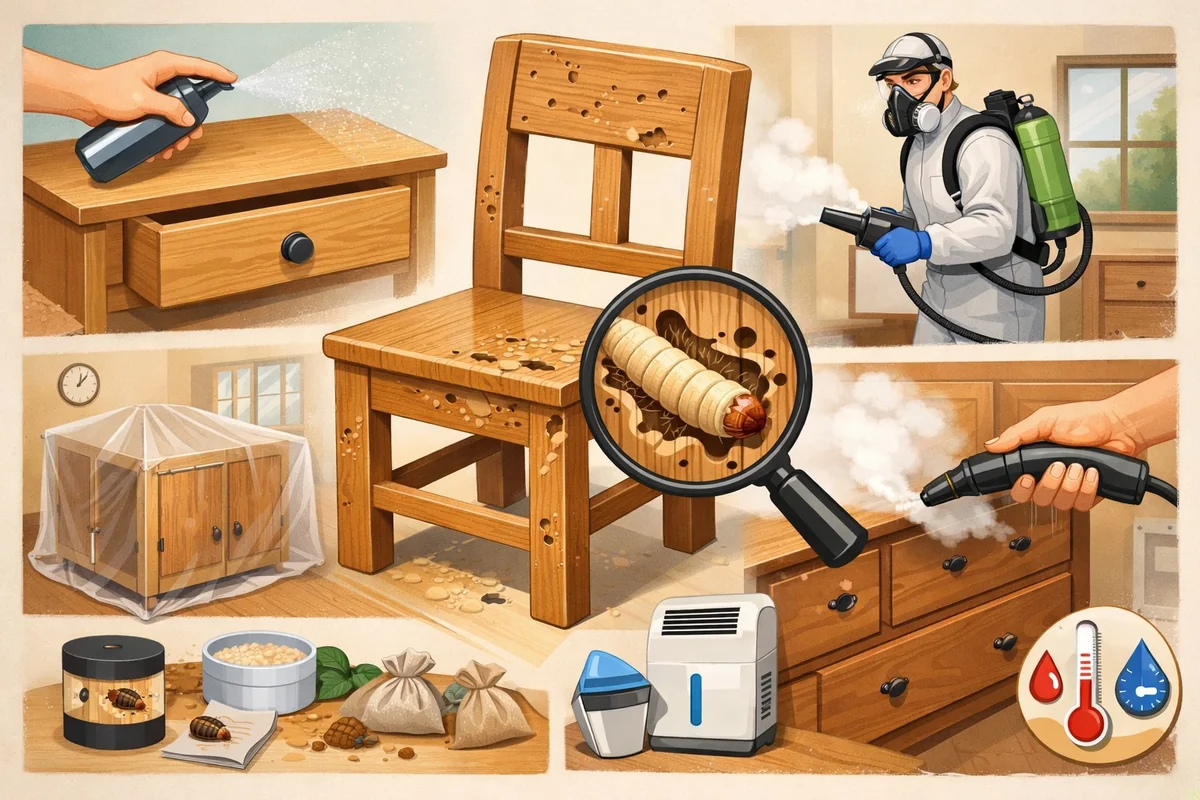
Best Termite Treatments for Wood Furniture: Foams and Aerosols
Best termite treatments for wood furniture: Termidor Foam for drywood galleries, BioAdvanced and Spectracide foams, TERRO aerosol, and when to call a professional.
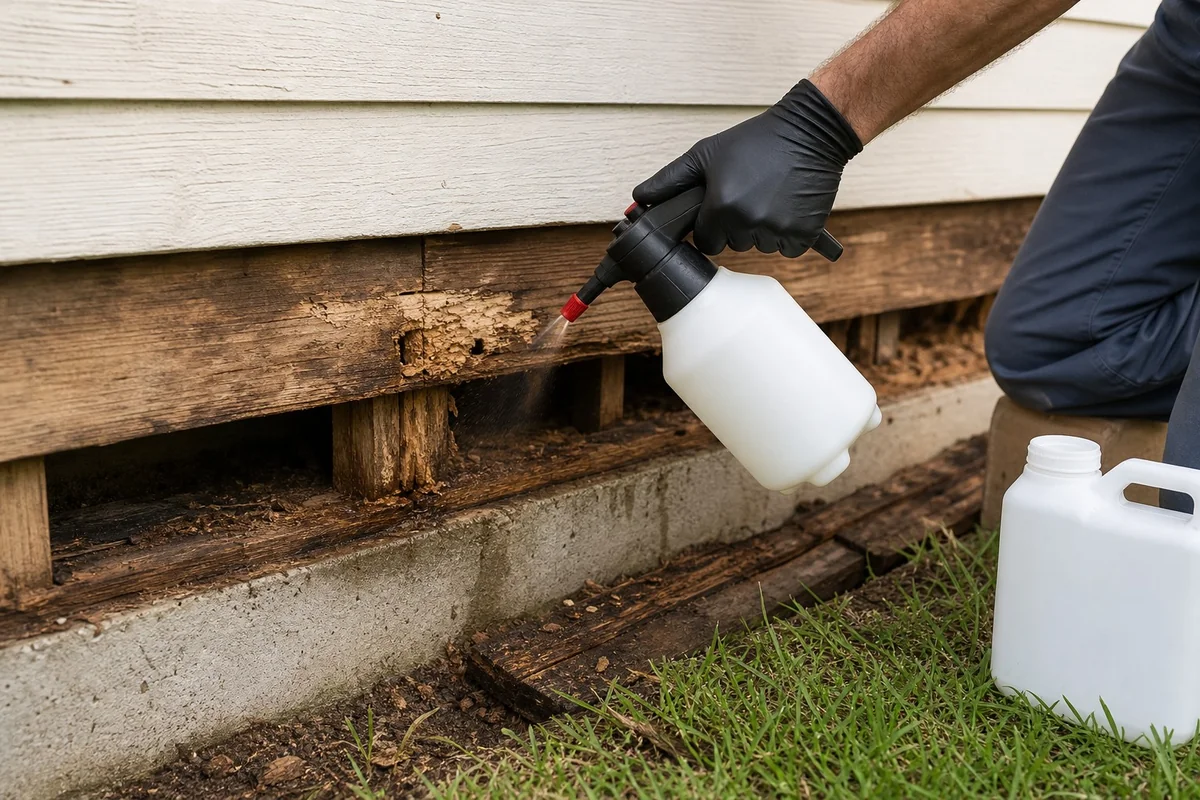
Best Termite Treatments for Wood: Borates, Copper and Foam
Best termite treatments for wood: Bora-Care and Tim-Bor borates for bare indoor lumber, Copper-Green for outdoor wood, and Termidor Foam for wood already infested.
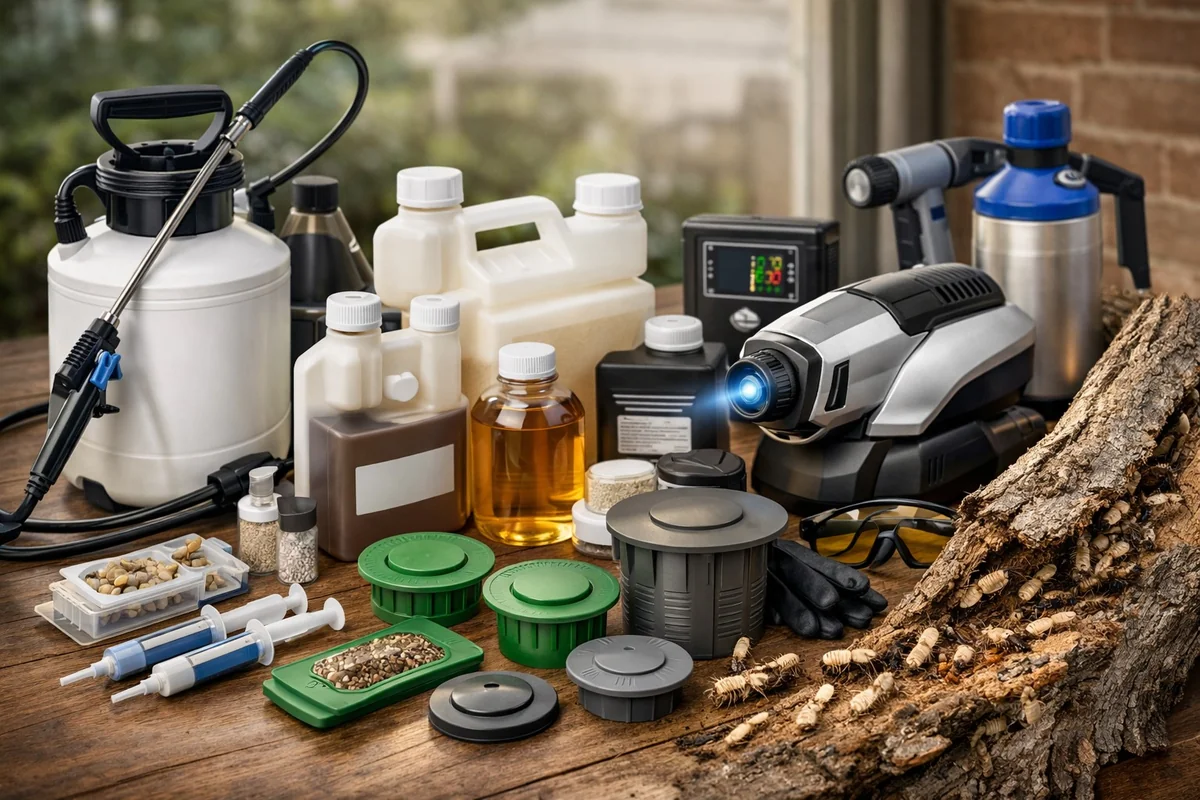
Best Home Termite Treatments: Foam, Borate, Stakes and Spray
Best termite treatments a homeowner can use: Termidor Foam, Spectracide foam, Bora-Care borate, Terminate stakes and TERRO spray, plus when you need a professional.
Best Termite Sprays for Wood: Borate, Foam and Aerosol Picks
Best termite sprays for wood: Bora-Care borate for bare lumber, BioAdvanced foam for voids, TERRO aerosol and spray for infested wood, plus what sprays cannot do.