 Pest Pro Reviews Editorial Team • • 11 min read •
Best Termite Treatments for Wood: Borates, Copper and Foam
Best termite treatments for wood: Bora-Care and Tim-Bor borates for bare indoor lumber, Copper-Green for outdoor wood, and Termidor Foam for wood already infested.
The best termite treatment for wood is Bora-Care, a borate concentrate that soaks into bare lumber so termites that feed on it die. Tim-Bor is the budget borate powder, Copper-Green is the copper naphthenate preservative for wood outdoors or near soil, and Termidor Foam treats wood that already has termites inside. A preservative protects wood; it does not remove a colony.
- Borates suit bare wood indoors and in sheltered spots; copper naphthenate suits wood exposed to rain or soil.
- Every wood treatment needs bare, unfinished wood to soak in; paint and varnish block it.
- Wood that already has termites inside needs a foam injected into the galleries, and a colony in the soil needs a professional.
Protecting Wood vs Killing Termites Already in It
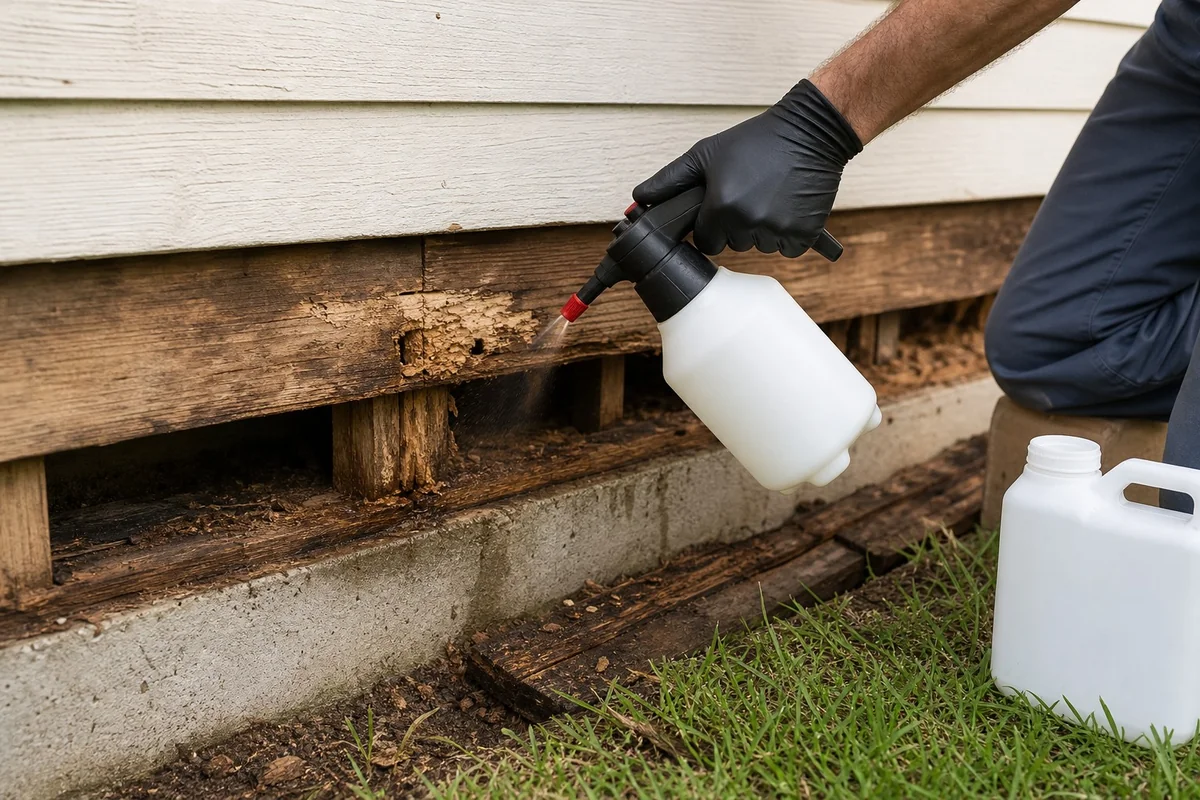
“Termite treatment for wood” covers two different jobs. A wood treatment, also called a preservative, soaks into lumber so that termites, beetles and decay fungi cannot use it. A termiticide foam or spray kills termites that are already tunneling through a board. Most people searching for the best treatment for wood need the first job done well, with the second as backup.
Neither job eliminates a subterranean colony living in the soil. University of California IPM's guide to subterranean and other termites says do-it-yourself pesticides against termites are generally not effective and that soil treatments are work for trained professionals. What a homeowner can do is replace damaged wood, fix moisture problems, break wood-to-soil contact and treat the lumber that termites would reach first.
For whole-house options, including foams, stakes and professional treatments, see our guide to the best termite treatments for the home. The termites section gathers our guides to sprays, flooring and furniture.
Identify your needs and get personalized recommendations
Bare wood indoors.
Wood exposed to rain or soil.
Active galleries in a board.
Can You Treat Wood Yourself for Termites?
Yes, as long as the wood is bare and you can reach it. Unfinished framing in a crawl space, sill plates, attic lumber, new boards before they go up, deck framing and fence posts can all be treated by brushing or spraying on a preservative. The treatment works only where it soaks in, so it has to go on every exposed face, including the cut ends.
Three things put wood out of reach for a homeowner:
- Finished wood: paint, stain, varnish and sealer stop a preservative from soaking in, so finished trim or flooring needs stripping or sanding first.
- Hidden wood: studs inside closed walls and joists under a finished floor cannot be coated without opening them up.
- Wood already full of termites: a preservative protects sound wood but does not reach termites deep in galleries; that calls for an injected foam, and widespread damage calls for a professional.
If you find mud tubes on the foundation or damage in several places, start with a licensed inspection rather than a can of preservative.
Borate or Copper Naphthenate? Wood Treatments Compared
Two kinds of wood treatment are sold to homeowners. Borates, sold as a concentrate or a powder you dissolve in water, are odorless once dry and suited to indoor wood. Copper naphthenate is an oil-based, solvent-carried preservative that binds to the wood and resists washing out, which makes it the choice for wood outdoors.
| Treatment | How It Works | Best For | Limit |
|---|---|---|---|
| Borate concentrate | Soaks into bare wood; termites die after feeding | Framing, sill plates, attic and crawl space lumber | Bare wood only; keep out of rain and soil |
| Borate powder | Dissolved in water, then sprayed or brushed on | Smaller jobs and new lumber on a budget | Mixing required; bare wood only |
| Copper naphthenate | Copper binds to wood fibers and resists leaching | Posts, sills, decks and cut ends outdoors | Solvent odor; green or brown tint |
| Termiticide foam | Expands into galleries and kills termites inside | Wood with active termites | Treats only where injected |
The American Wood Council's guidance on cut ends of pressure-treated wood says drilled holes and cut ends need a preservative, with copper naphthenate or oxine copper for mostly exterior use and boron-based preservatives for interior use only. That split is a good rule for any wood you treat yourself.
How We Selected These Products
We compared wood treatments and foams sold to homeowners on their active ingredients, the pests and uses on their labels, where they can be used and what buyers report. Our sources were the makers' listings and technical sheets, Amazon's review digests, UC IPM guidance and the American Wood Council; we did not test the products.
We favored treatments that protect the wood itself over perimeter sprays, which are mainly contact killers for nuisance pests. Borates lead for indoor framing, a copper preservative covers wood outdoors, and one foam covers wood that already has termites in it. We left out soil termiticide concentrates meant for licensed applicators, granules that do not treat wood, and listings without clear label details.
Bora-Care: Best Overall Termite Treatment for Wood
Nisus Bora-Care is a 1-gallon concentrate of disodium octoborate tetrahydrate that you dilute with water and spray or brush onto bare wood.
- The maker says it penetrates deep into wood fibers and protects against termites, carpenter ants, wood-boring beetles and decay fungi.
- One gallon of concentrate covers approximately 800 square feet applied as a 2-foot band on wood surfaces, per the maker.
- The maker says it remains active in the wood for the life of the structure and lists it for new and existing homes, against drywood and subterranean termites.
- Buyers find it effective, odorless and relatively safe to use indoors; some find it thick and hard to mix, and value opinions are mixed.
Choose it for crawl space framing, sill plates, attic lumber and any bare wood you can reach indoors. It is the treatment to use when you are replacing termite-damaged boards, since the new wood and the surrounding framing can be treated before the walls or floor close up again.
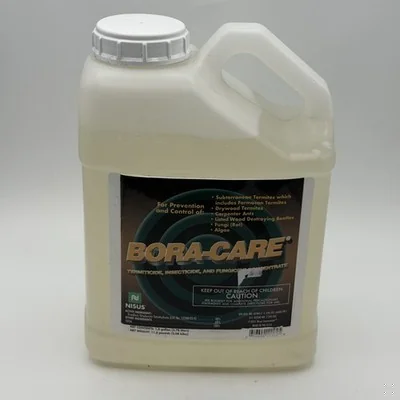
Nisus Bora-Care Wood Treatment Concentrate 1 gal
Best for: Bare framing and lumber indoors
- ✓About 800 sq ft per gallon, per the maker
- ✓Also lists wood-boring beetles and decay fungi
- ✓Low toxicity indoors, per buyers
- −Only penetrates bare, unfinished wood
- −Mixed value feedback
Specifications (3)
- Active Ingredients
- disodium octoborate tetrahydrate
- Liquid Volume
- 1 gallons
- Item Form
- Spray
Tim-Bor Professional: Best Budget Borate
Nisus Tim-Bor Professional is a 1.5-pound bag of borate powder that you dissolve in water and apply to bare wood.
- The maker describes it as a wood preservative that protects lumber from fungal decay and wood-destroying insects.
- It lists termites, beetles and carpenter ants as target pests.
- It is labeled as an insecticide, fungicide and wood preservative for interior and exterior use on untreated wood.
- Stored dry in its original container, it will last indefinitely, per the maker.
- The listing has few ratings and no review summary, so buyer experience is limited.
Choose it for treating a few sheets of new plywood or a stack of replacement studs without buying a gallon of concentrate. Mix only what the label specifies for the job, since the dissolved solution is what goes on the wood, and follow the label's mixing rate exactly rather than guessing.
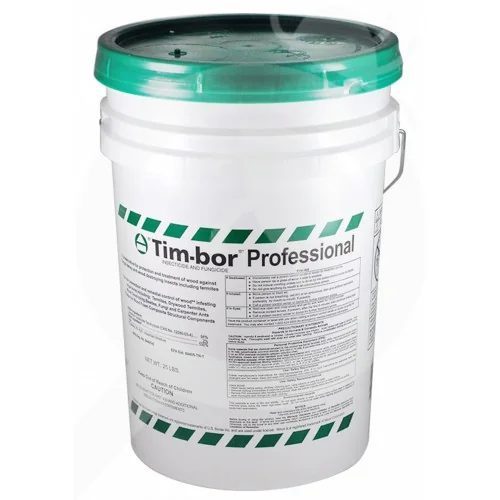
Nisus Tim-Bor Professional 1.5 lb
Best for: Small borate jobs on a budget
- ✓Lists termites, beetles and carpenter ants
- ✓Interior and exterior use on untreated wood, per the label listing
- ✓Keeps indefinitely when stored dry, per the maker
- −Must be mixed before use
Specifications (2)
- Unit Count
- 24 Ounce
- Target Species
- Insects
Copper-Green Wood Preservative: Best for Outdoor Wood
Copper-Green is a 1-gallon copper naphthenate preservative in a hydrocarbon solvent. The maker's technical sheet lists copper naphthenate at 10%, which works out to 1% copper as metal.
- The technical sheet lists termites, powder post beetles, fungus, rot and decay among what it prevents.
- It names fence posts, poles, foundations, sills, decks, porches and wood exposed to moisture or weather.
- The maker says the copper reacts with the wood so it is not easily lost by leaching.
- Estimated coverage is 150 to 200 square feet per gallon as a brush coat, per the technical sheet, and soaking gives deeper penetration than brushing.
- The gallon has no review summary; buyers of the brown-tinted version say it soaks well into cedar, and the odor gets mixed reactions.
Choose it for fence and deck posts, wood steps and sills that touch masonry, and cut ends of lumber used outdoors. The technical sheet notes that wood meant to resist subterranean termites should be treated before it goes into construction, so coat posts before setting them. It dries with a green tint, so pick the brown version for wood that stays visible.

Copper-Green Wood Preservative 1 gal
Best for: Posts, decks and wood outdoors
- ✓Lists termites and powder post beetles, per the technical sheet
- ✓Copper binds to wood and resists leaching, per the maker
- ✓For posts, sills and wood near soil
- −Strong solvent odor
Specifications (3)
- Material
- Copper
- Color
- Green
- Surface Recommendation
- Wood
Termidor Foam: Best for Wood Already Infested
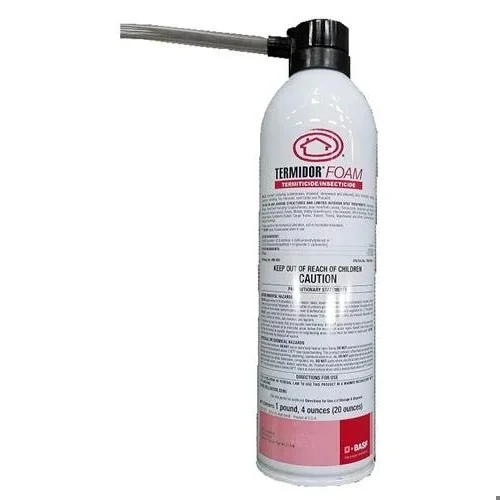
BASF's Termidor Foam is a 20-ounce can of non-repellent foam with fipronil at 0.005%.
- The foam expands 30 to 1 to fill galleries and voids, per the maker.
- It lists subterranean, drywood and dampwood termites, plus carpenter ants and wood-boring beetles.
- Termites do not avoid treated galleries, because the active ingredient is non-repellent.
- Buyers report it stops termites in spot treatments; state restrictions may apply.
Choose it when the wood you planned to protect already has termites in it. Drill small holes into the hollow sections, inject the foam, and once the termites are gone, replace or treat the wood so it does not get reinfested.
BASF Termidor Foam 20 oz
Best for: Wood that already has termites inside
- ✓Non-repellent fipronil, per the maker
- ✓Expands 30:1 into galleries
- ✓Lists subterranean, drywood and dampwood termites
- −Only treats where injected
- −State restrictions may apply
Specifications (3)
- Item Form
- Spray
- Liquid Volume
- 20 fluid ounces
- Specification Met
- EPA
- Bora-Care wins for: bare framing and lumber indoors
- Tim-Bor Professional wins for: small borate jobs on a budget
- Copper-Green Wood Preservative wins for: posts, decks and wood outdoors
- Termidor Foam wins for: wood that already has termites inside
Most homes need one borate for indoor wood and a copper preservative for anything outside.
Which Treatment for Which Wood
The right product depends on where the wood is and whether it gets wet. Use this as a quick guide before you buy.
- Crawl space framing and sill plates: a borate on the bare wood, plus fixing any moisture that keeps the wood damp.
- Attic and wall framing during a remodel: a borate while the framing is open.
- Replacement boards after termite damage: a borate on all faces before installing indoors; copper naphthenate for boards that will be outdoors.
- Fence posts, deck posts and landscape timbers: copper naphthenate, soaking the end that goes into the ground.
- Cut ends and drilled holes in pressure-treated lumber: copper naphthenate, since cutting exposes untreated wood in the middle of the board.
- Finished furniture, trim and flooring: neither preservative works through a finish, so these need injected foam or a separate approach.
Treated wood still needs good building practice. UC IPM recommends keeping wood at least 12 inches above the soil, fixing leaks and grading the soil away from the foundation, and pressure-treated lumber is the better choice where wood has to touch the ground.
How to Apply a Wood Treatment
- Check the wood is bare: sand or strip paint, stain and sealer, since the treatment has to soak in.
- Clean the surface: brush off dirt, sawdust and loose wood so the solution reaches the fibers.
- Mix only what you need: dilute concentrates and dissolve powders exactly as the label directs.
- Apply until the wood is wet: spray or brush every face you can reach, giving the end grain extra solution.
- Add coats as the label allows: let each coat soak in before the next one.
- Let it dry before covering: wait for the wood to dry before insulating, sealing or closing it up.
- Protect borate-treated wood from rain: keep it under cover, or use copper naphthenate for wood that will stay outdoors.
Wear gloves, eye protection and a mask rated for the product, and ventilate attics and crawl spaces well. Copper naphthenate carries a strong solvent odor, so use it outdoors or with plenty of fresh air, keep it away from flames, and dispose of soaked rags as the label directs. Keep children and pets away until treated wood has dried, and store concentrates locked away in their original containers.
Common Questions About Termite Treatments for Wood
Is pressure-treated wood safe from termites?
Is pressure-treated wood safe from termites?
It resists termite feeding far better than untreated lumber, which is why UC IPM recommends it where wood is exposed. The protection is strongest near the surface, so cutting or drilling a board exposes less-treated wood inside; treat cut ends and holes with copper naphthenate before installing the board.
Does borate wash out of wood outdoors?
Does borate wash out of wood outdoors?
It can. Borates stay water-soluble in the wood, which is why the American Wood Council lists boron-based field treatments for interior use only. For posts, decks and other wood that gets rained on or touches soil, a copper naphthenate preservative, which binds to the wood, is the better choice.
How long does a wood treatment protect against termites?
How long does a wood treatment protect against termites?
Bora-Care's maker says the borate stays active for the life of the structure when the wood stays dry and protected, and Copper-Green's maker says its copper resists leaching. Neither protects wood added later or wood the treatment never reached, so treat replacement boards and new cut ends as you go.
Can I treat wood that is already painted?
Can I treat wood that is already painted?
Not effectively. Borates and copper preservatives have to soak into bare wood, and paint, stain or sealer stops them. Strip or sand the area you want to protect, treat it, let it dry and then refinish; for termites already inside finished wood, inject a foam into the galleries instead.
Which One Should You Buy?
Bora-Care is the termite treatment to buy for wood. It soaks into bare lumber, lists termites, carpenter ants, wood-boring beetles and decay fungi, and protects framing indoors for the life of the structure.
Choose Tim-Bor Professional for smaller borate jobs on a budget, Copper-Green for posts, decks and other wood exposed to rain or soil, and Termidor Foam for wood that already has termites in it. If you find mud tubes or damage in several places, bring in a licensed professional first and treat the wood as part of the repair.
Before you buy, list the wood you want to treat and note whether each piece is bare, finished, indoors or outdoors.
Related Articles
Best Termite Sprays for Wood: Borate, Foam and Aerosol Picks
Best termite sprays for wood: Bora-Care borate for bare lumber, BioAdvanced foam for voids, TERRO aerosol and spray for infested wood, plus what sprays cannot do.
Best Termite Treatments for Wood Furniture: Foams and Aerosols
Best termite treatments for wood furniture: Termidor Foam for drywood galleries, BioAdvanced and Spectracide foams, TERRO aerosol, and when to call a professional.
Best Home Termite Treatments: Foam, Borate, Stakes and Spray
Best termite treatments a homeowner can use: Termidor Foam, Spectracide foam, Bora-Care borate, Terminate stakes and TERRO spray, plus when you need a professional.
How to Treat Termites in Wood Flooring, From Below and Above
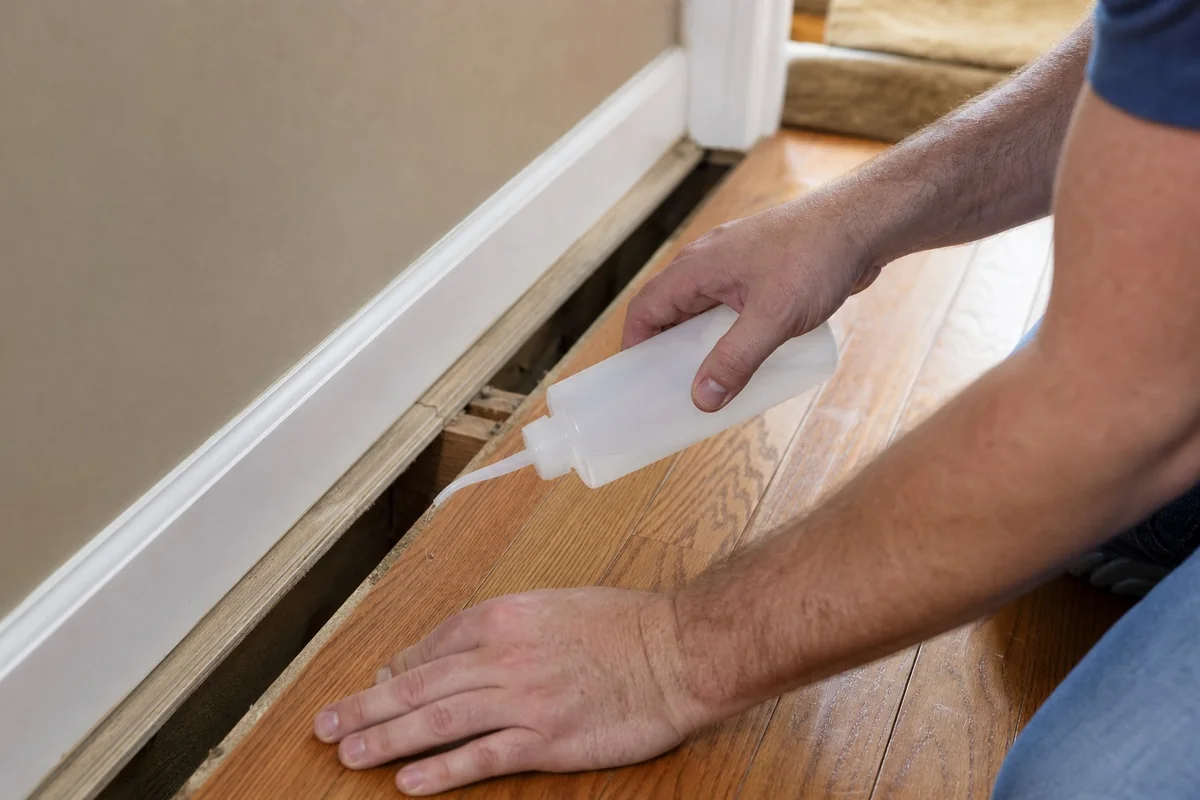
How to treat termites in wood flooring: spot the signs, tell subterranean from drywood, treat joists and subfloor from below, foam boards, know when to call a pro.