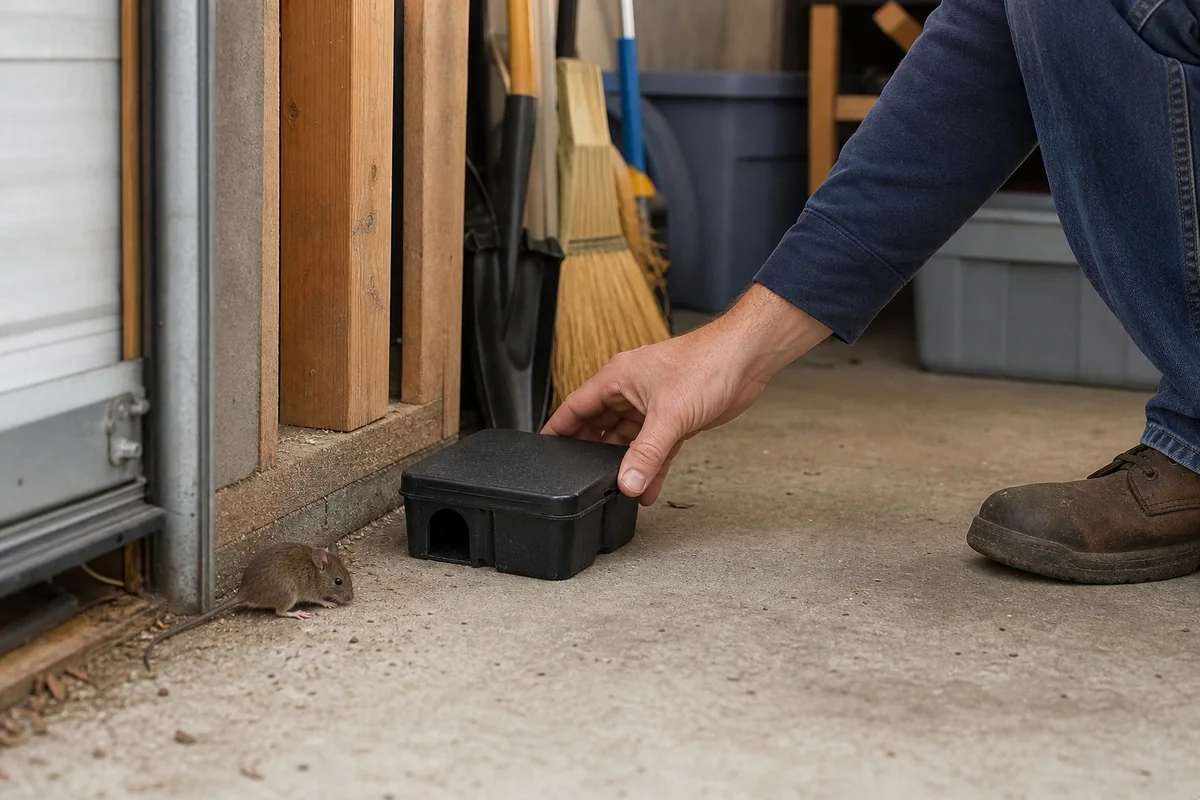

How to Get Rid of Mice in the Garage
How to get rid of mice in the garage: store seed and pet food in hard bins, find nests, trap along the walls and seal the garage door and the door to the house.
The best way to get rid of mice in the garage is to remove what feeds and shelters them, such as birdseed, pet food, grass seed and cardboard boxes, set snap traps along the walls and behind stored items, and fix the gap under the garage door. Garages attract mice because they are sheltered, rarely disturbed and full of food stored in thin bags.
Why Mice Move Into Garages
A garage is a halfway house between the yard and your home. It stays dry and sheltered, people walk through it only briefly, and it often holds exactly what mice eat: bags of birdseed, dog food, grass seed and garbage bins. Cluttered shelves and stacked boxes give them places to nest close to that food.
The biggest entry point is usually the garage door itself. Worn or torn bottom seals, gaps at the sides and doors left open for hours let mice walk straight in. A University of Georgia guide to getting rats and mice out of your house and yard recommends keeping patio and garage doors closed and sealing the openings under doors.
What Do Mice Eat in a Garage?
Whatever is easiest to reach. The usual targets are dry pet food, birdseed, grass seed, garden bulbs, garbage and recycling with food residue, and any snacks or groceries stored there. Mice also chew cardboard, paper and fabric for nesting material.
- Move food into hard bins: metal or thick plastic containers with tight lids for pet food, birdseed and grass seed.
- Rinse recycling: food residue in cans and containers draws mice to the bins.
- Swap cardboard for plastic: store holiday items, paper and clothing in lidded plastic bins.
- Get stored items off the floor: shelving with open space underneath leaves fewer hidden corners.
If the mice are also reaching the space above the garage, our guide on how to get rid of mice in the attic covers trapping and sealing there.
How to Find a Mouse Nest in the Garage
Garage nests are usually hidden behind or inside stored things, close to food. Look for shredded paper, fabric or insulation, droppings concentrated in one area and gnawed boxes.
- Behind and under shelves, workbenches and storage cabinets.
- Inside cardboard boxes, old furniture, sports bags and folded tarps.
- In garage wall insulation where drywall is missing or damaged.
- Around the water heater, freezer or anything that gives off warmth.
- In cars that sit unused, including the engine bay and air filter housing.
Wear gloves and a mask while you move stored items, and do not sweep droppings; soak them with disinfectant first and wipe them up.
Trapping Mice in the Garage
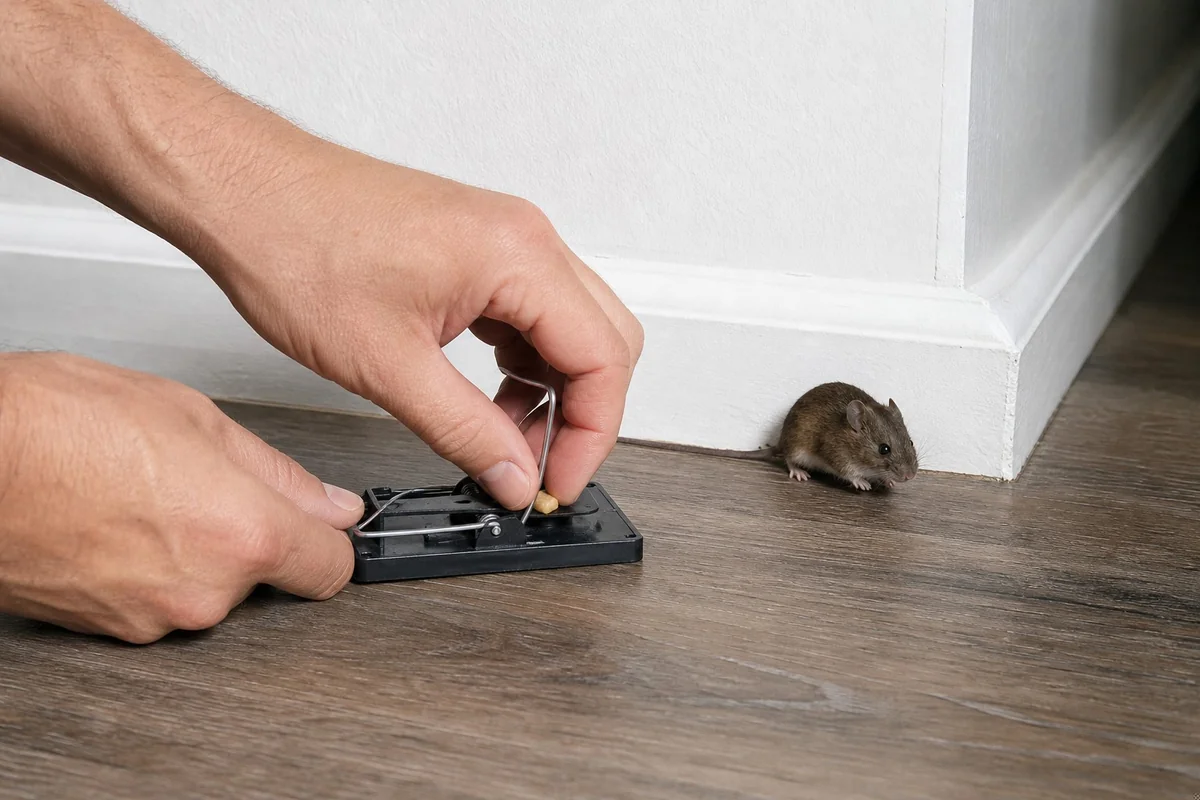
Once food is put away, traps work quickly in a garage because mice have fewer alternatives. Set snap traps flat against the walls, behind stored items and next to the garage door, with the bait end toward the wall, about every 10 feet where you see droppings.
Check traps every morning and keep them out for a few weeks, since garages see new arrivals whenever the door is open. If children or pets use the garage, use covered tunnel traps. The mice in attics and garages section covers the attic and the yard as well.
Sealing the Garage Door and Walls
Sealing is what keeps a cleared garage clear. Replace a worn or cracked bottom weather seal on the garage door, add side and top seals if light shows around the edges, and close the gap under the entry door with a door sweep.
Inside, seal holes around pipes and wiring with steel wool and caulk, and cover vents or larger gaps with 1/4-inch hardware cloth. Pay special attention to the door between the garage and the house, which needs a tight sweep so mice in the garage cannot walk inside.
Mice in the Garage but Not the House
That is a good sign, but treat it as a warning. Mice settle in garages first because of the food and shelter, then move into the house through the connecting door, shared walls or gaps around pipes. Deal with the garage now, seal the door between the garage and the house, and set a couple of traps on the house side of that wall as an early warning.
Check the house side for signs as well: droppings in the laundry room, mudroom or kitchen cabinets nearest the garage mean mice have already found a way through. If you see them, follow the same steps indoors rather than waiting.
Common Questions About Mice in the Garage
How do I get rid of mice in the garage fast?
How do I get rid of mice in the garage fast?
Do everything the same day: move all seed and pet food into hard bins, set plenty of snap traps along the walls and behind stored items, and close the garage door when you are not using it. Check traps each morning and replace the bottom door seal within the week.
What does a dead mouse in the garage mean?
What does a dead mouse in the garage mean?
Usually that mice are living in or passing through the garage, or that someone nearby is using poison. Look for droppings and nests to see whether there is an active group, wear gloves to dispose of it, and set traps if you find fresh signs.
Can I keep birdseed in the garage?
Can I keep birdseed in the garage?
Yes, if it is in a metal or thick plastic bin with a tight lid. Paper and thin plastic bags are one of the main reasons mice move into garages, and spilled seed around the bin draws them in just as much.
How do I get rid of rats in the garage?
How do I get rid of rats in the garage?
Use rat-size snap traps, pre-bait them unset for a few nights because rats avoid new objects, and seal gaps with metal rather than steel wool alone. Rats can squeeze under a door with a gap of about half an inch, so a tight garage door seal matters even more.
Key Takeaways
Garage mice come for stored food and stay for shelter, so hard bins for pet food and seed, plastic instead of cardboard and fewer floor-level piles do much of the work. Snap traps along the walls and behind stored items remove the mice that are left.
A sealed garage door, a sweep under the house door and caulked pipe gaps keep the garage clear and protect the house beyond it. Check parked cars for nests and keep traps out for a few weeks.
This weekend, move every bag of seed and pet food into a lidded bin and check the bottom seal of the garage door.
Related Articles
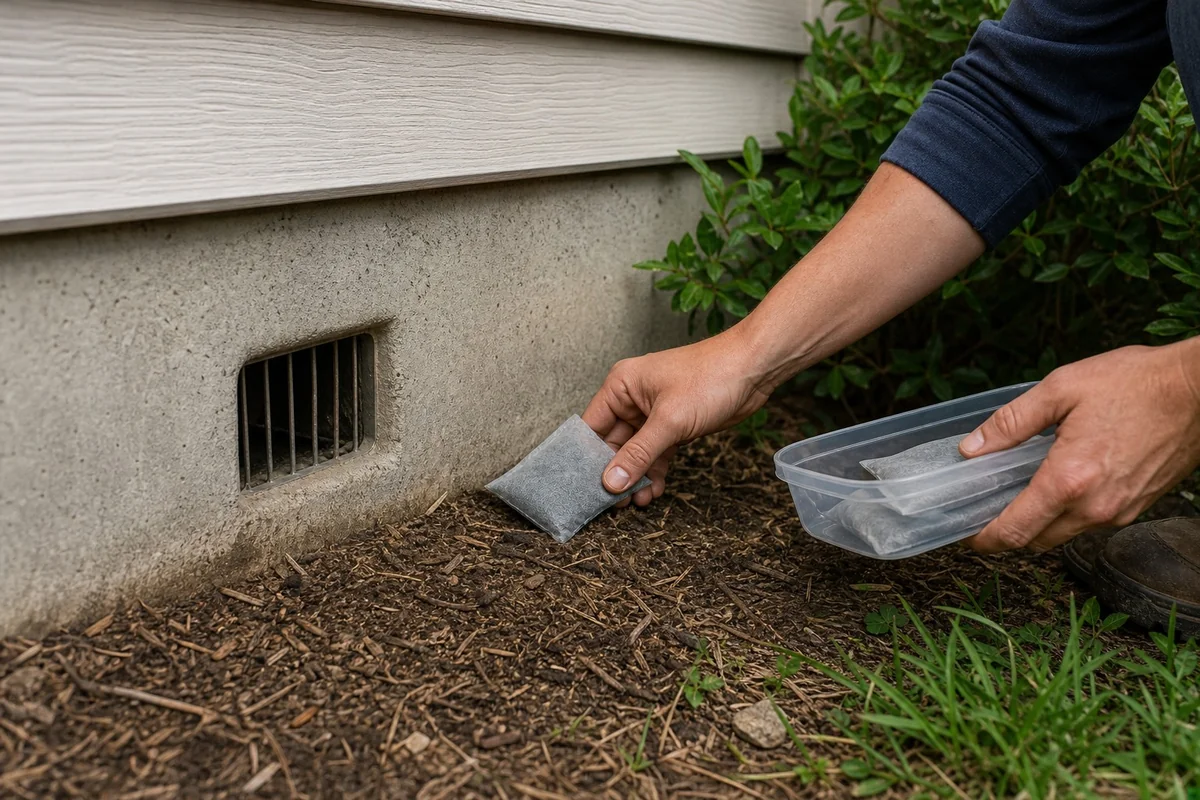
How to Get Rid of Mice Outside: Yard and Foundation Plan
How to get rid of mice outside: remove food and cover, raise firewood, trap along the foundation with covered traps and seal gaps. What does not work outdoors.
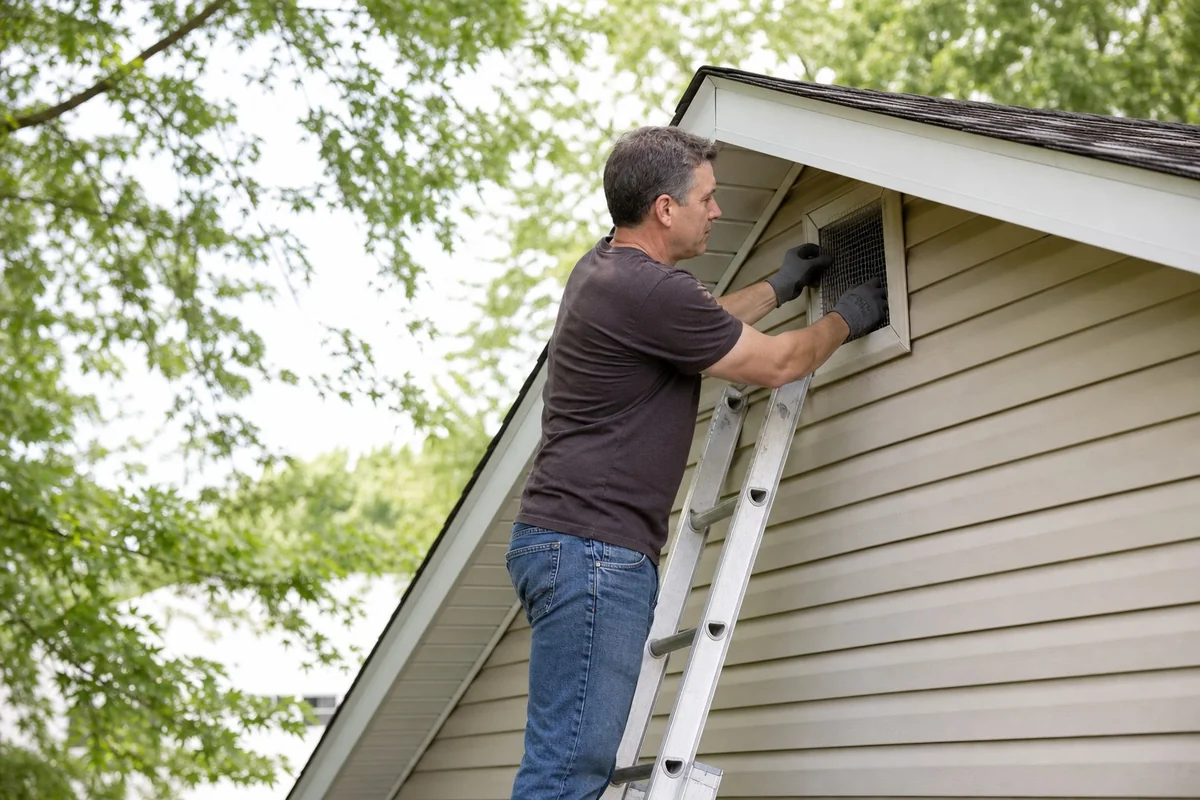
How to Get Rid of Mice in the Attic
How to get rid of mice in the attic: signs to look for, how to trap along joists and eaves, sealing the roofline and cleaning droppings and insulation safely.
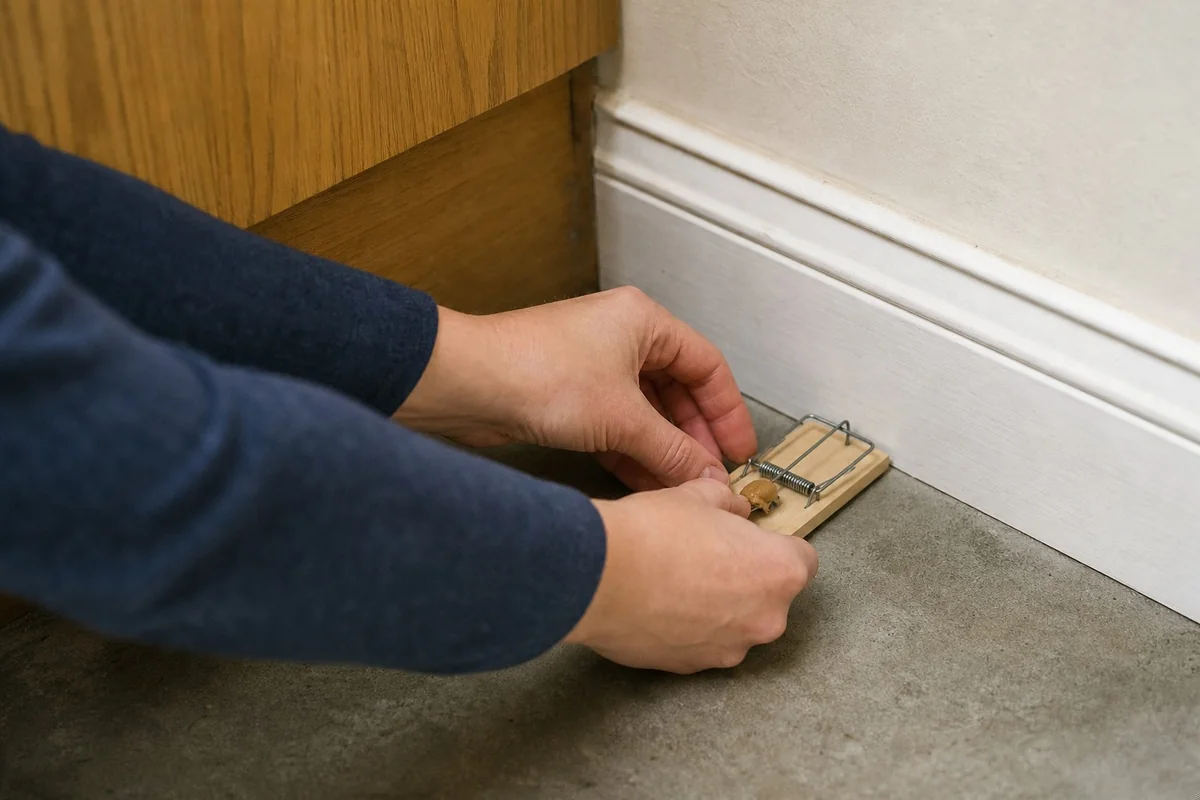
How to Get Rid of Mice Fast: A One-Week Plan
The fastest way to get rid of mice in a house: many snap traps at once, no food left out and gaps sealed in the first days. A one-week plan and what slows it down.
How to Get Rid of Mice in an Apartment
How to get rid of mice in an apartment: report it in writing, store food sealed, trap on the runways, seal gaps in your unit and get the building involved.