 Pest Pro Reviews Editorial Team • • 9 min read •
Best Natural Bug Sprays for the Home: Contact Kill and Repellent
The best natural bug sprays for the home: STEM, Safer Home, Orange Guard, Vanquar and Waspika peppermint and Chomp! for travel, plus how to use them indoors.
The best natural bug spray for the home is STEM, a plant-based spray that kills ants, roaches and flies on contact indoors and out. Safer Home's cottonseed and clove oil spray covers more crawling insects, Orange Guard's orange peel extract suits kitchens, Vanquar and Waspika are peppermint repellents for spiders and entry points, and Chomp! is the travel-size spray for luggage and hotel beds.
- Natural bug sprays kill what they hit or repel for a short time; none leaves the weeks-long barrier of a synthetic residual spray, so plan on reapplying.
- Many plant-based sprays are sold as minimum-risk pesticides, which the EPA does not review for effectiveness, so results vary more than with registered insecticides.
- Peppermint, clove and citrus oils are toxic to cats; in a cat home, spray only where cats cannot walk or groom.
Do Natural Bug Sprays Work?
They work for what they are: contact killers and short-term repellents. A plant-oil spray that soaks an ant or roach usually kills it within minutes, and a peppermint band along a doorway can turn some insects away for a few days. What these sprays do not do is reach the colony, the nest inside a wall or the insects that arrive after the spray fades.
Most products in this category are sold as minimum-risk pesticides. The EPA's page on minimum risk pesticides explains that these products use ingredients the agency considers low risk and that it does not evaluate them for effectiveness. That is why buyer feedback on natural sprays is more mixed than on synthetic ones, and why the label claims deserve some skepticism.
Sprays are one tool among several. Our guide to natural pest control for the home and garden explains prevention, beneficial insects and low-toxicity products in order, and the natural pest control section covers the yard and plants as well.
Identify your needs and get personalized recommendations
Trails on counters.
Webs and corners.
Hotels and rentals.
Natural Bug Spray Types Compared
| Type | Active Ingredients | How It Works | Best For |
|---|---|---|---|
| Plant-oil contact spray | Botanical extracts, cottonseed, clove | Kills insects it soaks | Ants, roaches, flies you can see |
| Citrus spray | D-limonene from orange peel | Kills on contact, light repellency | Kitchen ant trails, entry points |
| Peppermint repellent | Peppermint oil | Repels for a few days | Spiders, doorways, garages |
| Travel spray | Peppermint, lemongrass | Contact kill, repellency | Luggage, hotel beds |
We compared natural bug sprays on their ingredients, the pests they list, whether they kill or only repel, residue and scent, and what buyers report about results and sprayers. Our sources were the makers' listings, Amazon's review digests and the EPA guidance above; we did not test the products. We left out sprays whose buyers mostly report clogged or broken pumps or poor value, a peppermint kit with mostly negative application reviews, and a cedar spray with too few ratings to judge.
Best Natural Sprays That Kill on Contact
Contact sprays are for the insects you see: the ant line on the counter, the roach by the sink, the fly on the window. Spray the insect directly, then wipe the area once it is dead.
STEM Botanical Insecticide: Best Overall Natural Bug Spray
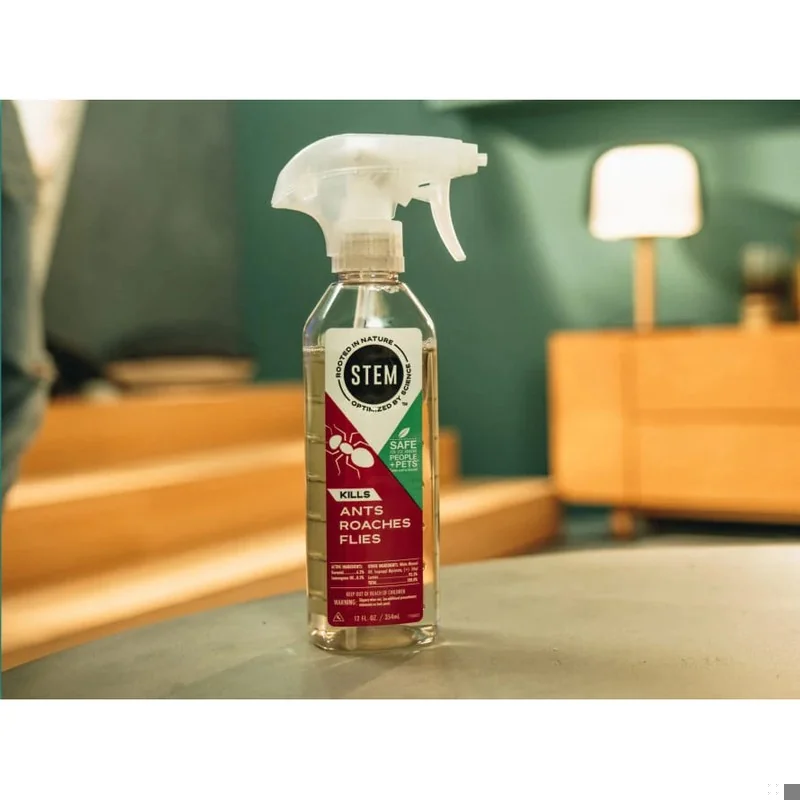
From SC Johnson, STEM's 12-ounce trigger bottle uses a plant-based active ingredient to kill ants, roaches and flies quickly, per the maker.
- It is labeled for indoor and outdoor use and has no added dye or fragrance, per the maker.
- The maker says it was tested by entomologists and is safe around people and pets when used as directed.
- Buyers report bugs dying almost instantly and like that it is safe around pets; many mention a greasy residue and nozzles that stop working early.
Choose it as the one natural spray to keep under the kitchen sink for ants, roaches and flies. Wipe surfaces after the insects die to remove the oily film, and keep the nozzle clean by rinsing it with warm water if it starts to sputter.
STEM Botanical Insecticide Spray 12 oz
Best for: Ants, roaches and flies on contact
- ✓Kills on contact, per buyers
- ✓Plant-based active ingredient
- ✓Indoor and outdoor use
- −Greasy residue, per buyers
- −Sprayer failures, per buyers
Specifications (2)
- Item Volume
- 12 fluid ounces
- Item Form
- Trigger
Safer Home Multi-Insect Spray: Best for Many Crawling Insects
When the problem is a mix of silverfish, spiders and roaches rather than one pest, Safer Home's 24-ounce bottle of cottonseed and clove oil covers the widest list of crawling insects among these picks, fleas included, per the maker.
- It is labeled for kitchens, bathrooms, living rooms and basements, and dries without needing cleanup, per the maker.
- The maker describes a quick-kill formula for ants, flies and roaches.
- Buyers like the natural ingredients and that it is safe around pets and children; many say it works only when sprayed directly on insects.
Choose it for a basement or bathroom with a mix of silverfish, spiders and roaches. It is a contact spray, so it pays to find where insects enter and seal it, and keep it away from cats because of the clove oil.

Safer Home Multi-Insect Spray 24 oz
Best for: Basements and bathrooms with many crawling insects
- ✓Natural oils, per the maker
- ✓Dries without residue, per the maker
- ✓Safe around pets and children, per buyers
- −Works only on direct contact, per buyers
- −Keep away from cats (clove oil)
Specifications (2)
- Item Volume
- 24 fluid ounces
- Unit Count
- 24.96 Ounce
Orange Guard Home Pest Control: Best Citrus Spray for Kitchens
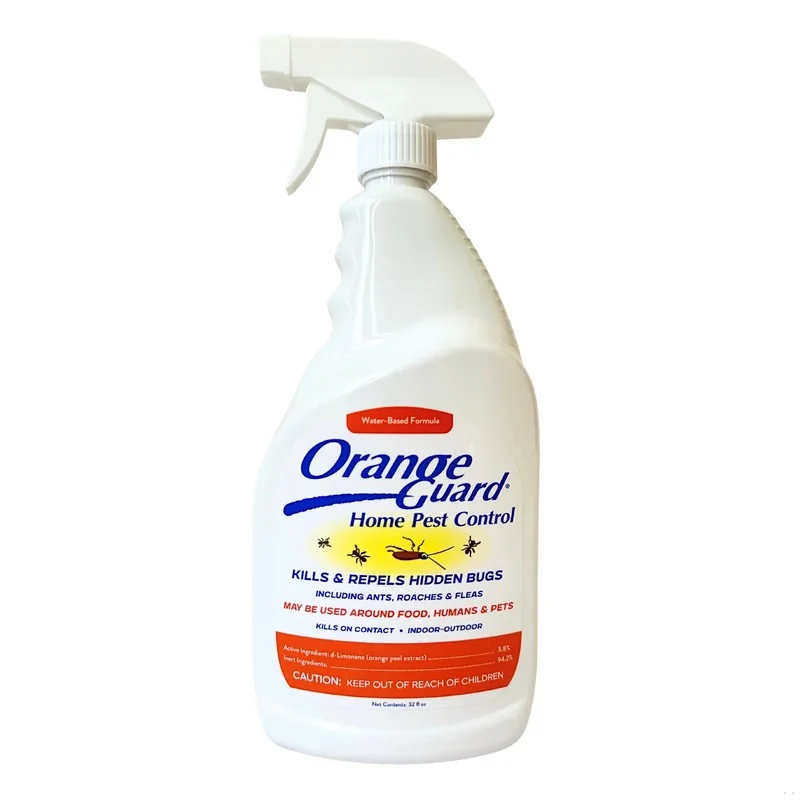
Orange Guard is a water-based 32-ounce spray whose active ingredient, d-limonene at 5.8%, comes from orange peel.
- It lists ants, roaches, fleas, palmetto bugs and silverfish, and is labeled for indoor and outdoor use.
- The maker describes it as food-grade and biodegradable, with a gentle orange scent.
- Buyers find it works on ants and like the scent; some report sprayers breaking early and a sticky residue.
Choose it for ant trails along kitchen counters and the gaps where they come in. Spray the ants and the entry point, wipe up once they are gone, and reapply when new ants appear.
Orange Guard Home Pest Control 32 oz
Best for: Kitchen ant trails
- ✓Orange peel extract, per the maker
- ✓Pleasant scent, per buyers
- ✓Safe around pets and children, per buyers
- −Mixed effectiveness, per buyers
- −Little lasting residue
Specifications (2)
- Liquid Volume
- 32 fluid ounces
- Item Form
- Spray
Best Natural Repellent Sprays
Peppermint sprays are repellents more than killers. Research on spiders has found that peppermint deters some species and not others, so treat these sprays as a band along entry points, renewed every few days, rather than a cure.
Vanquar Peppermint Oil Spray: Best for Spiders in Basements and Garages
For damp lower floors and garages, Vanquar's 16-ounce peppermint spray targets spiders, ants and other insects indoors and out.
- The maker says it does not stain surfaces and suits kitchens, bathrooms, garages and patios.
- Buyers find it effective, particularly on basement and garage spiders, and easy to apply.
- Some report the bottle leaking; the listing does not give a full ingredient list.
Choose it for window frames, corners and the gaps around garage doors where spiders build webs. Vacuum existing webs and egg sacs first, then spray the clean edges.

Vanquar Peppermint Spider Repellent Spray 16 oz
Best for: Spiders in basements and garages
- ✓Effective on basement and garage spiders, per buyers
- ✓Easy to apply, per buyers
- ✓Pleasant scent, per buyers
- −Peppermint oil is toxic to cats
- −Full ingredient list not given
Specifications (1)
- Unit Count
- 16 Fluid Ounces
Waspika Peppermint Spray: Best for Entryways and Patios
Waspika's 16-ounce peppermint spray lays down a repellent band around doors and baseboards.
- The maker lists spiders, ants and roaches, for indoor and outdoor use.
- Buyers call it good value and say it dries quickly without sticky residue.
- Some report bottles that leak or spray unevenly.
Choose it for entryways, patios and garages where you want to renew a peppermint band often. Like any peppermint product, keep it out of rooms cats use.

Waspika Peppermint Spider Repellent Spray 16 oz
Best for: A repellent band around doors
- ✓Good value, per buyers
- ✓Dries quickly without sticky residue, per buyers
- ✓Effective, per buyers
- −Peppermint oil is toxic to cats
- −Some bottles leak, per buyers
Specifications (2)
- Item Volume
- 16 fluid ounces
- Scent Name
- Mint
Best Natural Spray for Travel
When you are away from home, a small spray for luggage and bedding is more practical than a full bottle.
Chomp! Travel Size Bed Bug and Insect Spray: Best for Travel
Chomp!'s 3.4-ounce peppermint and lemongrass spray fits airline carry-on limits and is made for luggage, bedding and carpets.
- The maker says it kills ants, bed bugs, spiders, dust mites and flying insects on contact and does not stain.
- Buyers across the Chomp! line find it convenient for hotels and rentals.
- The scent is strong for some buyers, and value opinions are mixed.
Choose it for spraying luggage seams and racks in hotel rooms. It will not clear a bed bug infestation at home; inspect the mattress and headboard on arrival and keep bags off the bed and floor.

Chomp! Travel Size Bed Bug and Insect Spray 3.4 oz
Best for: Luggage and hotel rooms
- ✓Travel size, per the maker
- ✓Non-staining, per the maker
- ✓Convenient for hotels, per buyers
- −Strong scent, per some buyers
- −Will not clear an infestation
Specifications (3)
- Item Volume
- 3.4 fluid ounces
- Scent Name
- Peppermint
- Material Features
- Plant Based
- STEM Botanical Insecticide wins for: ants, roaches and flies on contact
- Safer Home Multi-Insect Spray wins for: basements and bathrooms with many crawling insects
- Orange Guard wins for: kitchen ant trails
- Vanquar Peppermint Spray wins for: spiders in basements and garages
- Waspika Peppermint Spray wins for: a repellent band around doors
- Chomp! Travel Spray wins for: luggage and hotel rooms
How to Use Natural Bug Sprays in the House
- Clean first: remove crumbs and spills, since insects that find food come back after the spray fades.
- Spray insects directly: contact sprays work only on what they wet.
- Treat entry points: door thresholds, window frames, gaps around pipes and the edges where insects travel.
- Ventilate: essential oils are strong indoors; open a window, especially in small rooms.
- Keep sprays off food and pet bowls: even plant-based products are not meant for dishes or counters you prepare food on.
- Reapply on schedule: most labels call for repeat treatments every few days while insects are active.
- Seal what you find: caulk the gaps insects use, so the spray becomes a backup rather than the plan.
Homemade sprays are a common question. A simple mix of water and a little plain dish soap kills soft-bodied insects such as ants on contact. Adding vinegar does little beyond removing the scent trail ants follow, and vinegar can etch marble, granite and other natural stone, so keep it off those surfaces. Labeled products give a known strength and directions, which makes them more predictable than kitchen mixtures.
As for smells bugs hate, peppermint, citrus, clove and cedar oils repel some insects briefly, but the effect is short and varies by species, so use scent as an add-on to cleaning and sealing.
Common Questions About Natural Bug Sprays
Can I make homemade bug spray with vinegar and Dawn dish soap?
Can I make homemade bug spray with vinegar and Dawn dish soap?
You can, but the soap does the work: a small amount of plain dish soap in water kills soft-bodied insects such as ants on contact. Vinegar mainly removes ant scent trails, and it can etch natural stone, so keep the mix off marble and granite.
What smell do bugs hate the most in the house?
What smell do bugs hate the most in the house?
Peppermint, citrus, clove and cedar oils repel some insects for a short time, and peppermint is the most common in home sprays. The effect fades within days and varies by species, so scents work best alongside cleaning and sealing gaps.
How often should I reapply a natural bug spray?
How often should I reapply a natural bug spray?
Follow the label, which usually calls for repeat treatments every few days while insects are active. Natural sprays break down quickly and leave little residue, so they need renewing far more often than synthetic residual sprays.
Are natural bug sprays safe to use in the kitchen?
Are natural bug sprays safe to use in the kitchen?
Many are labeled for kitchens, but keep them off dishes, food and surfaces you prepare food on. Spray ant trails and entry points, let the spray work, then wipe the area before using it again.
Which One Should You Buy?
STEM is the natural bug spray to buy for most homes. It handles the ants, roaches and flies that bring people to a spray bottle, it works indoors and out, and buyers report insects dying almost on contact.
Choose Safer Home for basements with silverfish and spiders, Orange Guard for kitchen ants, Vanquar for spiders in garages, Waspika for a repellent band around entryways and Chomp! for travel. With any of them, clean up food sources and seal entry gaps so the spray has less work to do.
Before you buy, note which insects you see and where, since that decides whether you need a contact killer or a repellent.
Related Articles
Natural Pest Control for Plants: DIY Methods and Safe Sprays
Natural pest control for plants: identify the pest, remove it by hand or water, make a safe soap spray, and choose soap, oil, neem or Bt for aphids, mites and more.
Best Natural Pest Control for the Yard and Garden: Lawn to Beds
Best natural pest control for your yard: lawn care that resists pests, nematodes for grubs, Bt, soap and oil for beds, and habitat fixes for mosquitoes and ticks.

Natural Pest Control for the Home and Garden: What Works
Natural pest control for home and garden: prevention, beneficial insects and low-toxicity soap, oil, neem and Bt, with safety tips for pets and bees.

Natural Pest Control for a Vegetable Garden: A Season Plan
Natural pest control for a vegetable garden: crop rotation, row covers, a season-by-season plan, fixes for common pests, and how to spray food crops safely.