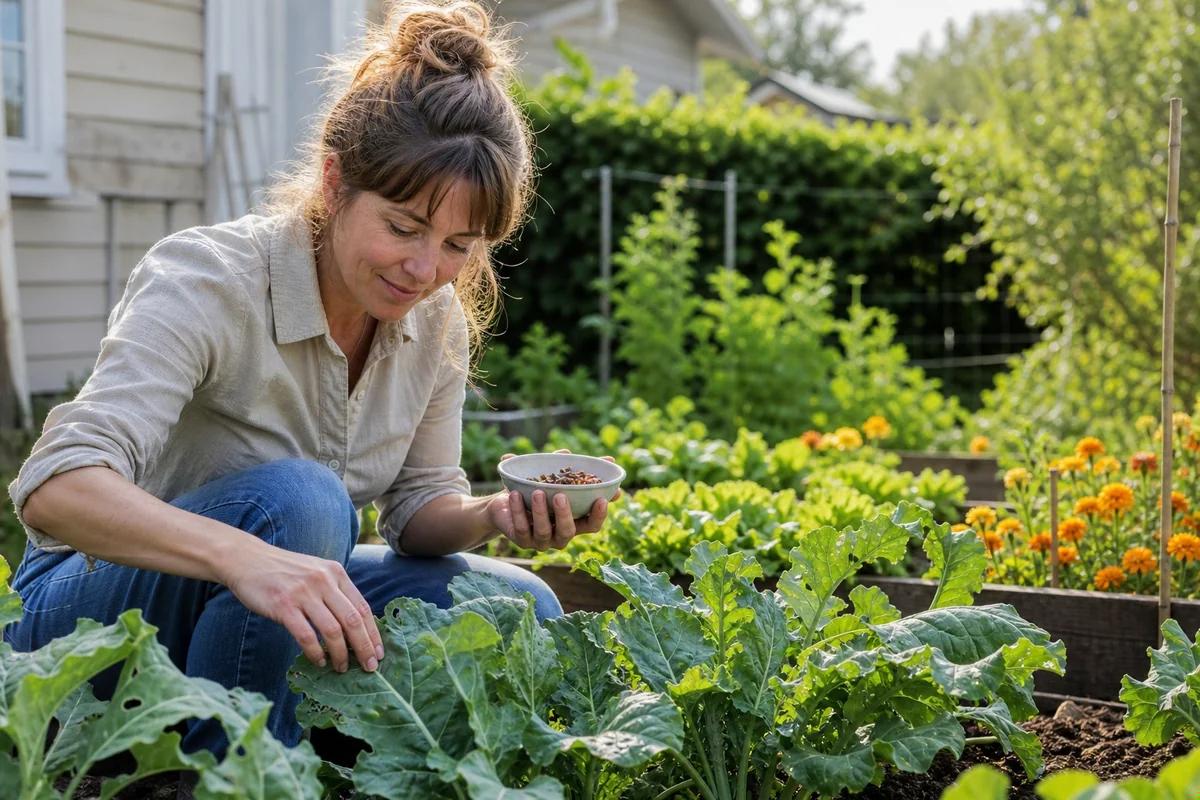

Natural Pest Control for a Vegetable Garden: A Season Plan
Natural pest control for a vegetable garden: crop rotation, row covers, a season-by-season plan, fixes for common pests, and how to spray food crops safely.
The best natural pest control for a vegetable garden is a season plan rather than a spray: rotate crops, cover young plants with row covers, check leaves every few days, hand-pick or hose off pests early, and clean up beds in fall. When a product is needed on food crops, Bt for caterpillars, insecticidal soap for aphids, spinosad for beetles and iron phosphate for slugs are targeted options, applied as the label directs before harvest.
Plan the Garden to Prevent Pests
Many vegetable pest problems are settled before the first seed goes in. A few planning choices make the biggest difference:
- Rotate crop families: move tomatoes and potatoes, squash and cucumbers, and cabbage-family crops to a new bed each year, so pests that overwinter in the soil wake up far from their food.
- Pick resistant varieties: seed catalogs list resistance to diseases and some pests; they cost the same and save work all season.
- Build healthy soil: compost and steady moisture grow sturdy plants that tolerate damage; avoid heavy nitrogen, which invites aphids.
- Time your plantings: sowing a little earlier or later than usual can dodge the peak of pests such as flea beetles or squash vine borers in your area.
- Space plants well: airflow dries leaves, which slows slugs and leaf diseases.
- Plant flowers among the vegetables: dill, cilantro, sweet alyssum and other small-flowered plants feed the lady beetles, lacewings and parasitic wasps that eat pests.
These steps follow the broader approach in our guide to natural pest control for the home and garden, and the natural pest control section covers lawns, flower beds and houseplants too.
A Season-by-Season Pest Plan
Spring
Cover transplants and seedbeds with floating row covers right after planting, tucking the edges into the soil so beetles cannot crawl under. Wrap cardboard or paper collars around tomato and pepper stems against cutworms. Hang a few yellow sticky cards to see which flying pests arrive and when. Start slug patrols early too, since seedlings are their favorite food.
Early Summer
Walk the garden every two or three days and turn over leaves. Squash bugs, cabbage worms and Colorado potato beetles all lay eggs on leaves, and removing egg clusters takes seconds compared with fighting a hatch. Remove row covers from squash, cucumbers and melons when they start to flower, so bees can pollinate them.
Mid to Late Summer
This is peak season for hornworms, cucumber beetles, aphids and spider mites. Hand-pick large caterpillars, hose aphids off with a strong spray, and use a targeted product only where pests are clearly winning. Keep plants watered during dry spells, since drought-stressed plants attract mites and suffer more from feeding.
Fall
Pull spent crops, especially squash vines, tomato plants and cabbage stumps, which shelter overwintering pests and eggs. Turn or mulch beds, plant a cover crop if you can, and note which pests showed up where, so next year's rotation and row covers go to the right beds. A garden notebook or phone photos are enough.
Common Vegetable Pests and Natural Fixes
| Pest | Crops | Natural Fix |
|---|---|---|
| Aphids | Kale, lettuce, peppers, beans | Water spray; insecticidal soap; protect lady beetles |
| Cabbage worms and loopers | Cabbage, broccoli, kale | Row covers; Bt kurstaki on young caterpillars |
| Tomato hornworms | Tomatoes, peppers | Hand-pick; leave ones covered in white wasp cocoons |
| Squash bugs | Squash, pumpkins | Remove eggs; boards as overnight traps |
| Squash vine borers | Summer squash, pumpkins | Row covers until bloom; resistant varieties |
| Cucumber beetles | Cucumbers, melons, squash | Row covers; yellow sticky cards |
| Flea beetles | Eggplant, radish, arugula | Row covers; later planting |
| Colorado potato beetles | Potatoes, eggplant | Hand-pick adults and eggs; spinosad on larvae |
| Slugs and snails | Lettuce, strawberries, seedlings | Morning watering; iron phosphate bait |
Leave hornworms that carry small white cocoons on their backs. Those are the pupae of a parasitic wasp, and the next generation will hunt more hornworms for you.
Natural Sprays on Food Crops
When a spray is the right call, a few rules keep it safe for the harvest and for the bees your vegetables need:
- Check the label for edibles: it lists the crops the product is approved for and how long to wait between spraying and harvest.
- Match the product to the pest: insecticidal soap for aphids and whiteflies, Bt for caterpillars, spinosad for beetle larvae and caterpillars, neem for a range of feeders.
- Spray in the evening: squash, cucumber and bean flowers draw bees during the day; spinosad in particular is toxic to bees until it dries.
- Cover leaf undersides: most sucking pests feed there.
- Wash produce: rinse all harvested vegetables, sprayed or not.
Homemade sprays need extra care on vegetables. A plain soap solution can work on aphids, but it burns tender leaves more readily than a labeled insecticidal soap, so test a few leaves first. Vinegar sprays scorch foliage and are better suited to weeds between pavers than to your lettuce.
Common Questions About Natural Pest Control in Vegetable Gardens
Can I use vinegar as a bug spray on vegetable plants?
Can I use vinegar as a bug spray on vegetable plants?
It is not a good idea. Vinegar does little to insects but scorches leaves, especially on tender greens and seedlings. For soft-bodied pests on vegetables, a labeled insecticidal soap is safer and more effective.
Is it safe to eat vegetables sprayed with neem or Bt?
Is it safe to eat vegetables sprayed with neem or Bt?
Products labeled for vegetables are meant for food crops, but each label lists how long to wait before harvest. Follow that interval and rinse produce before eating it.
Do row covers stop pollination?
Do row covers stop pollination?
Yes, for crops that need insects to pollinate, such as squash, cucumbers and melons. Remove the covers when female flowers open. Leafy greens, cabbage-family crops and root vegetables do not need pollinators and can stay covered.
Does companion planting keep pests off vegetables?
Does companion planting keep pests off vegetables?
Evidence for scents repelling pests is weak, but mixing flowers into vegetable beds helps by feeding predators and parasitic wasps. Trap crops, such as radishes for flea beetles, can also draw pests away from the main crop if you remove the infested plants.
Key Takeaways
- Crop rotation, resistant varieties, healthy soil and good spacing prevent many vegetable pest problems.
- Row covers at planting time keep beetles, caterpillars and borers off young crops; remove them when squash family plants flower.
- Checking leaves every few days and removing eggs and young pests beats treating a full outbreak.
- Bt, insecticidal soap, spinosad, neem and iron phosphate each target specific vegetable pests; follow the label's harvest interval.
- Fall cleanup and notes on what appeared where set up next year's plan, so prevention starts before the first pest does.
- Leave hornworms carrying white wasp cocoons; they are raising your next generation of pest control.
Related Articles
Best Natural Pest Control for the Yard and Garden: Lawn to Beds
Best natural pest control for your yard: lawn care that resists pests, nematodes for grubs, Bt, soap and oil for beds, and habitat fixes for mosquitoes and ticks.
Natural Pest Control for Plants: DIY Methods and Safe Sprays
Natural pest control for plants: identify the pest, remove it by hand or water, make a safe soap spray, and choose soap, oil, neem or Bt for aphids, mites and more.
Natural Pest Control for the Home and Garden: What Works
Natural pest control for home and garden: prevention, beneficial insects and low-toxicity soap, oil, neem and Bt, with safety tips for pets and bees.
Best Natural Bug Sprays for the Home: Contact Kill and Repellent
The best natural bug sprays for the home: STEM, Safer Home, Orange Guard, Vanquar and Waspika peppermint and Chomp! for travel, plus how to use them indoors.