Natural Pest Control for Plants: DIY Methods and Safe Sprays
Natural pest control for plants: identify the pest, remove it by hand or water, make a safe soap spray, and choose soap, oil, neem or Bt for aphids, mites and more.
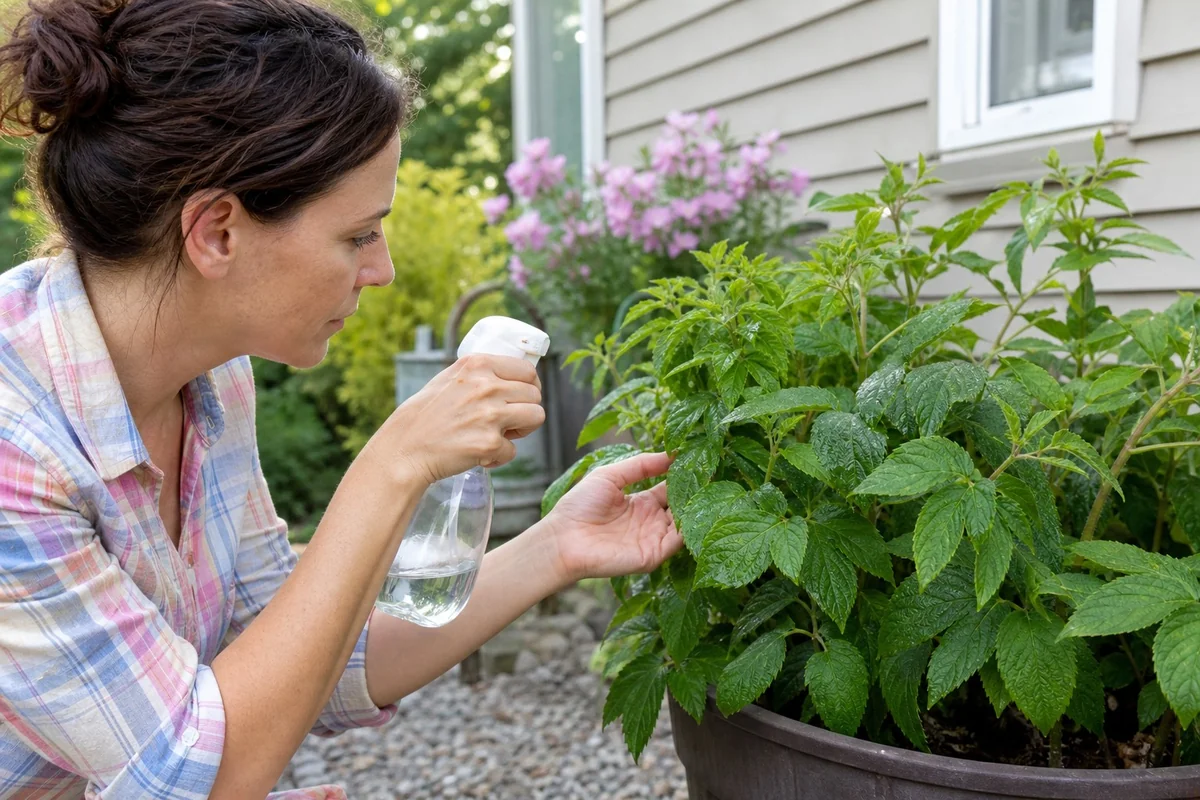
The best natural pest control for plants starts with naming the pest, then removing it by hand, with water or by pruning, and only then spraying. When a spray is needed, insecticidal soap and horticultural oil handle most soft-bodied pests on leaves, neem slows feeders, and Bt targets caterpillars. A homemade soap spray works on contact, but it carries more risk of leaf burn than a labeled product, so test it on a few leaves first.
Identify the Pest Before You Treat
Different pests need different tools, and many leaf problems are not pests at all. Yellow leaves often mean overwatering, brown edges can be sunscald or salt buildup, and white powder on leaves is usually powdery mildew, a fungus. Look under the leaves and along new shoots with a magnifying glass before buying anything.
| Pest | What You See | First Natural Response |
|---|---|---|
| Aphids | Clusters of soft insects on new growth; sticky leaves | Spray off with water; insecticidal soap if they return |
| Spider mites | Fine stippling, yellowing, fine webbing under leaves | Rinse leaves; raise humidity; horticultural oil |
| Whiteflies | Tiny white insects that fly up when disturbed | Yellow sticky cards; soap or oil on leaf undersides |
| Mealybugs | White cottony masses in leaf joints | Dab with rubbing alcohol on a cotton swab |
| Scale | Small brown or tan bumps on stems and leaves | Scrape off; horticultural oil on young crawlers |
| Thrips | Silvery streaks and black specks on leaves | Prune damaged tips; blue or yellow sticky cards |
| Caterpillars | Chewed leaves, holes, dark droppings | Hand-pick; Bt on small caterpillars |
| Fungus gnats | Small black flies around potting soil | Let soil dry between waterings; sticky cards |
Our guide to natural pest control for the home and garden explains how beneficial insects fit into this picture, and the natural pest control section covers yard and vegetable garden pests as well.
Physical and DIY Methods That Work
The safest treatments for plants are mechanical. They kill or remove pests with nothing left on the leaves:
- A strong spray of water: knocks aphids, mites and whiteflies off outdoor plants and rinses dust that spider mites like; repeat every few days.
- Wiping and dabbing: a damp cloth removes scale and aphids from large leaves, and rubbing alcohol on a cotton swab kills mealybugs in leaf joints.
- Pruning: cut off shoots heavily covered in aphids, scale or leafminer trails and bag them.
- Hand-picking: drop caterpillars, beetles and snails into soapy water, ideally in the early morning when they are slow.
- Sticky cards: yellow cards catch whiteflies, fungus gnats and winged aphids and show whether numbers are rising.
- Isolating new plants: keep new houseplants apart for a couple of weeks and check them before they join the others.
- Better watering: letting the top of the potting mix dry out breaks the fungus gnat cycle, and steady watering keeps outdoor plants less attractive to mites.
Homemade Sprays: What Is Safe and What Works
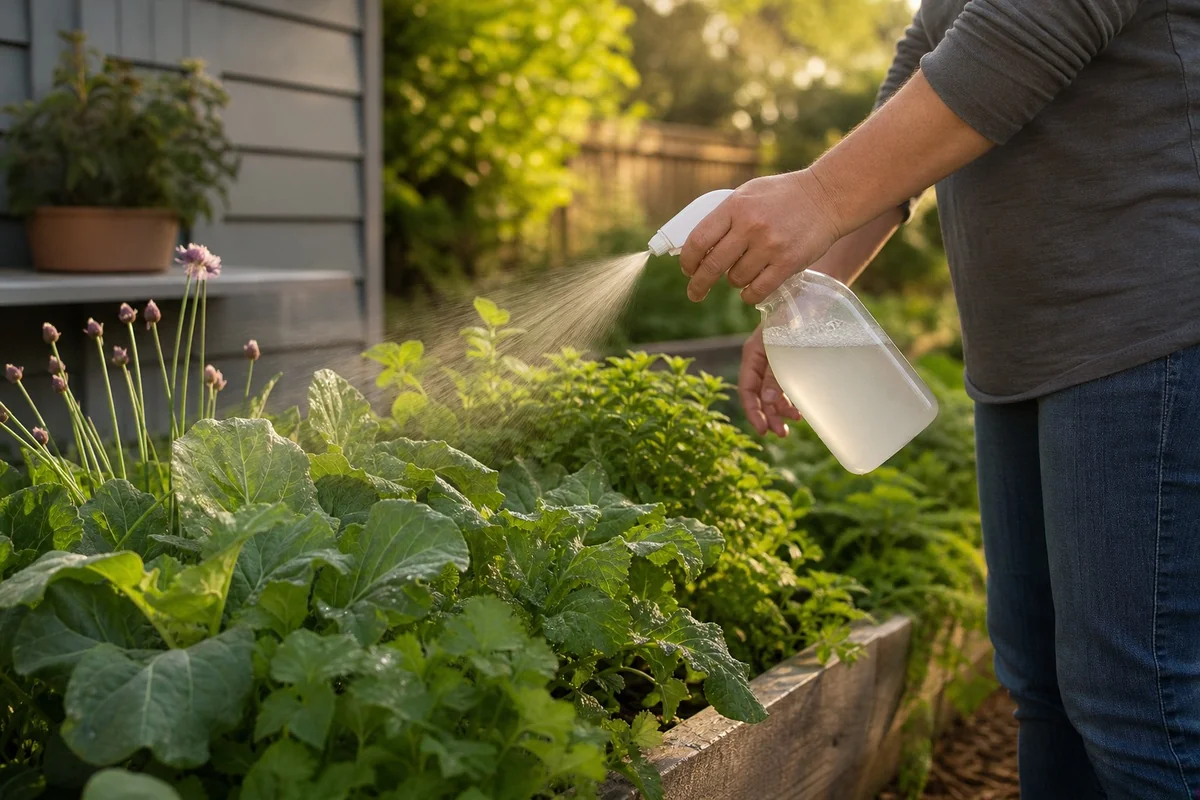
The homemade spray with the best basis is a simple soap solution. University of California Cooperative Extension's guide to soap sprays as insecticides explains that soap kills insects only when it soaks them, so coverage matters more than strength. It puts a home mix at about 4 teaspoons of soap per quart of water, roughly a 2% solution, and warns that homemade sprays injure plants more often than commercial insecticidal soaps.
- Use plain soap: skip detergents with degreasers, bleach or fragrance, which damage leaves.
- Test first: spray a few leaves and wait a day or two for spotting or browning.
- Spray in the cool of the day: never in hot sun or on drought-stressed plants.
- Cover leaf undersides: where aphids, mites and whiteflies feed.
- Rinse sensitive plants: a plain water rinse a few hours later reduces the risk of burn.
Other kitchen recipes have weaker support. Garlic and hot pepper sprays may deter some feeding for a short time, and they can irritate skin and eyes. Baking soda is used against powdery mildew, not insects. Vinegar burns leaves and is better known as a weed killer. Cooking oil mixtures can smother soft insects but clog leaf pores and attract dust; a labeled horticultural oil is refined for that job and far more predictable.
Natural Sprays to Buy
When pests keep coming back, labeled natural products give a known strength and clear directions:
- Insecticidal soap: for aphids, whiteflies, mealybugs, young scale and mites; no residue, so repeat every five to seven days while pests are active.
- Horticultural oil: for scale, mites, whitefly nymphs and overwintering eggs; check the label for sensitive plants and avoid hot weather.
- Neem oil: repels many feeding insects and disrupts their growth; it breaks down fast on leaves, so reapply as the label directs, and keep it away from cats and fish ponds.
- Bt kurstaki: kills caterpillars that eat treated leaves and leaves other insects alone.
- Spinosad: for caterpillars, thrips and leafminers; toxic to bees until dry, so spray in the evening and keep it off open flowers.
Plants that repel bugs get a lot of attention, but the evidence is thin. Strong-smelling herbs and marigolds may confuse a few pests, and some marigold types grown densely as a cover crop can suppress root-knot nematodes in soil. The more reliable benefit of mixed planting is that flowering herbs feed the predators and parasitic wasps that eat pests.
Common Questions About Natural Pest Control for Plants
What are some natural pest control methods for indoor plants?
What are some natural pest control methods for indoor plants?
Isolate new plants, wipe leaves, dab mealybugs with rubbing alcohol, use yellow sticky cards for fungus gnats and let the potting mix dry between waterings. Rinse plants in the shower and use insecticidal soap if pests return.
What are the five methods of pest control?
What are the five methods of pest control?
Pest management usually groups methods into cultural (growing practices), physical or mechanical (barriers, traps, hand removal), biological (natural enemies), host resistance (tolerant varieties) and chemical (pesticides, ideally the least toxic that works).
Do any plants naturally repel bugs?
Do any plants naturally repel bugs?
Strong-smelling herbs and marigolds may deter a few pests, but the evidence is weak. Their bigger value is feeding beneficial insects, which do the real work of keeping pests down.
How do I stop insects eating plant leaves naturally?
How do I stop insects eating plant leaves naturally?
Find the culprit first: chewed holes with droppings point to caterpillars, which you can hand-pick or treat with Bt, while ragged edges at night often mean slugs or earwigs. Row covers keep many leaf-eaters off young plants.
Key Takeaways
- Identify the pest first; many leaf problems are watering, sun or disease issues rather than insects.
- Water sprays, wiping, pruning, hand-picking and sticky cards remove pests without leaving anything on the leaves.
- A plain soap spray kills soft insects on contact, but homemade mixes burn leaves more often than labeled insecticidal soap, so test first.
- Insecticidal soap, horticultural oil, neem, Bt and spinosad each suit specific plant pests.
- Spray in the cool of the day, cover leaf undersides and keep spinosad and neem away from flowers, cats and ponds.
- Garlic, pepper, vinegar and cooking oil recipes have weak support; plain soap is the home remedy worth using.
Related Articles
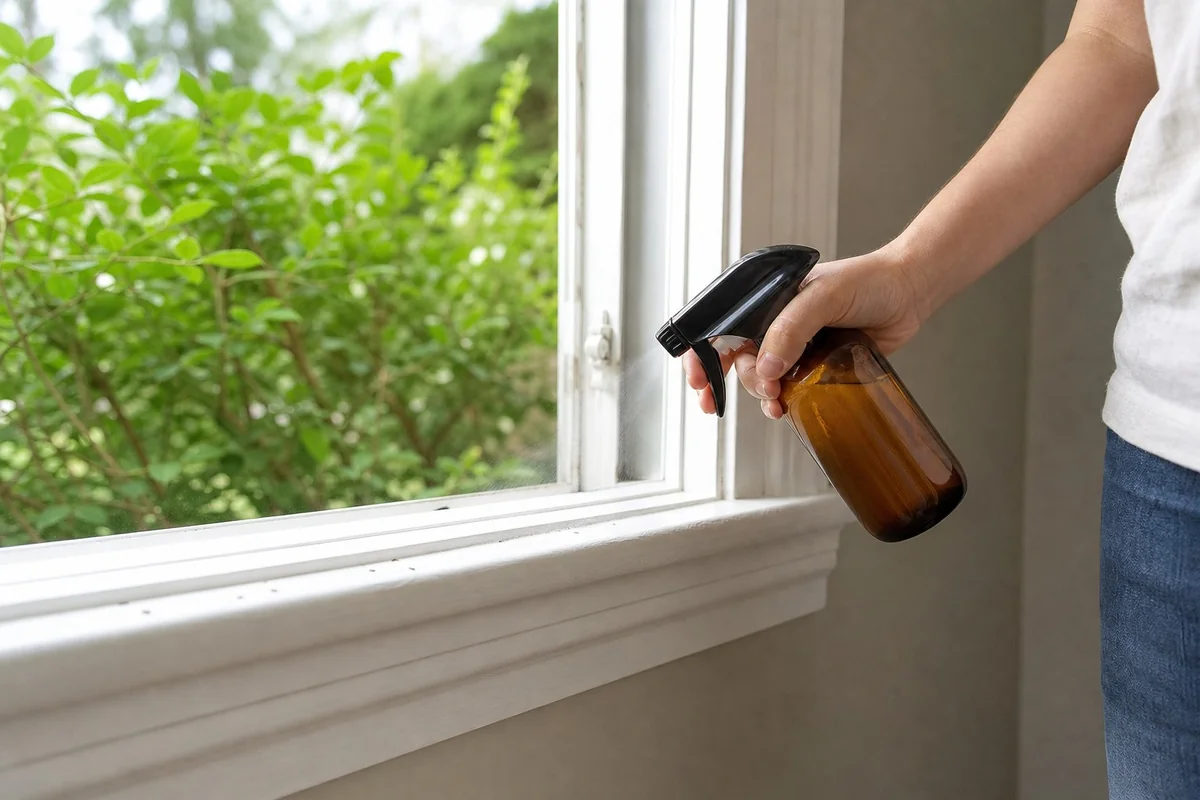
Best Natural Bug Sprays for the Home: Contact Kill and Repellent
The best natural bug sprays for the home: STEM, Safer Home, Orange Guard, Vanquar and Waspika peppermint and Chomp! for travel, plus how to use them indoors.
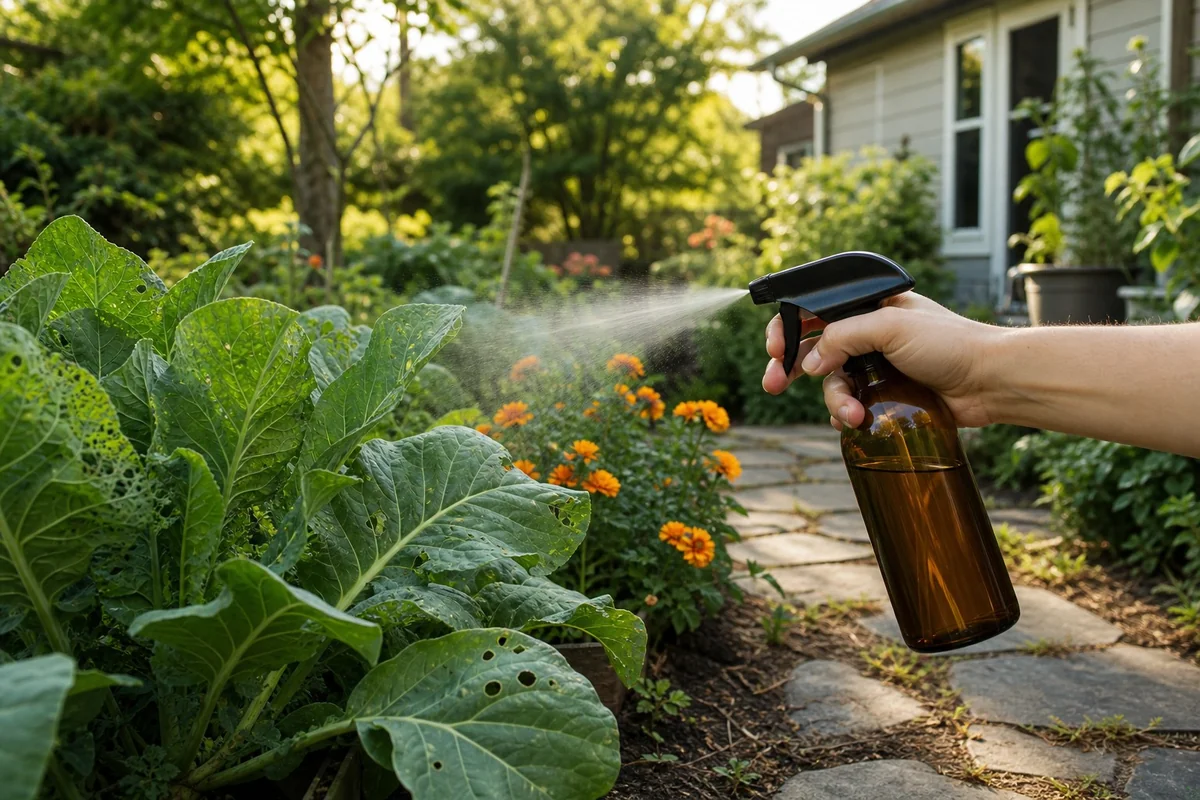
Best Natural Pest Control for the Yard and Garden: Lawn to Beds
Best natural pest control for your yard: lawn care that resists pests, nematodes for grubs, Bt, soap and oil for beds, and habitat fixes for mosquitoes and ticks.
Natural Pest Control for the Home and Garden: What Works
Natural pest control for home and garden: prevention, beneficial insects and low-toxicity soap, oil, neem and Bt, with safety tips for pets and bees.
Natural Pest Control for a Vegetable Garden: A Season Plan
Natural pest control for a vegetable garden: crop rotation, row covers, a season-by-season plan, fixes for common pests, and how to spray food crops safely.