
How to Keep Rats Out of a Chicken Coop for Good
How to keep rats out of a chicken coop: lock up feed, replace chicken wire with 1/2-inch hardware cloth, add a wire apron against digging and trap rats safely.
To keep rats out of a chicken coop, take away the feed they come for, cover every opening with galvanized 1/2-inch hardware cloth instead of chicken wire, lay a wire apron around the base so they cannot dig under, and clear cover nearby. Trap any rats already living there first. Scent repellents add little around a coop and never replace those steps.
Why Repellents Alone Do Not Protect a Coop
A coop gives rats a reliable meal every night: spilled feed, eggs and water, under a roof with warm bedding. A strong smell does not outweigh that, which is why rat “repellents” sprayed or hung around a coop rarely keep rats away for long. What does work is making the coop impossible to get into and not worth visiting.
Rats also matter for the flock's health. UC IPM's rat pest guide notes that rats can carry and transmit diseases to livestock, including poultry, and that Norway rats prefer cereal grains and burrow along foundations and under woodpiles, exactly the conditions around many coops.
The steps below rat-proof the coop itself. For repellent products for the house and other spaces, see our guide to the best rodent repellents for the home; the rodent repellents section covers each product type.
What You Need
Most of the work is done with wire and hand tools, and nothing here is toxic to the flock.
- Galvanized hardware cloth with 1/2-inch openings, 19-gauge or heavier, enough for windows, vents, the run and an apron around the base.
- Wire cutters, a staple gun or screws and washers for fastening the mesh.
- A spade for setting the apron into the soil.
- Metal feed cans with tight lids.
- A rat-resistant feeder, such as a treadle feeder that opens only under a hen's weight, or a habit of taking the feeder in at night.
- Steel wool and sheet metal for small gaps in the coop walls.
- Covered rat snap traps for any rats already living around the coop.
How to Rat-Proof a Chicken Coop Step by Step
- Find the rats' routes. Look for burrow holes along the base, tunnels under the run, gnawed boards, droppings by the feeder and feed vanishing overnight.
- Trap the rats already there. Set covered snap traps along the coop walls and burrows after the hens go to roost, pre-baited unset for a few nights, and close them before you let the flock out.
- Lock up the feed. Store feed in metal cans, since rats chew plastic, and take the feeder in at dusk or switch to a treadle feeder.
- Collect eggs daily and rake up spilled feed so nothing is left for rats overnight.
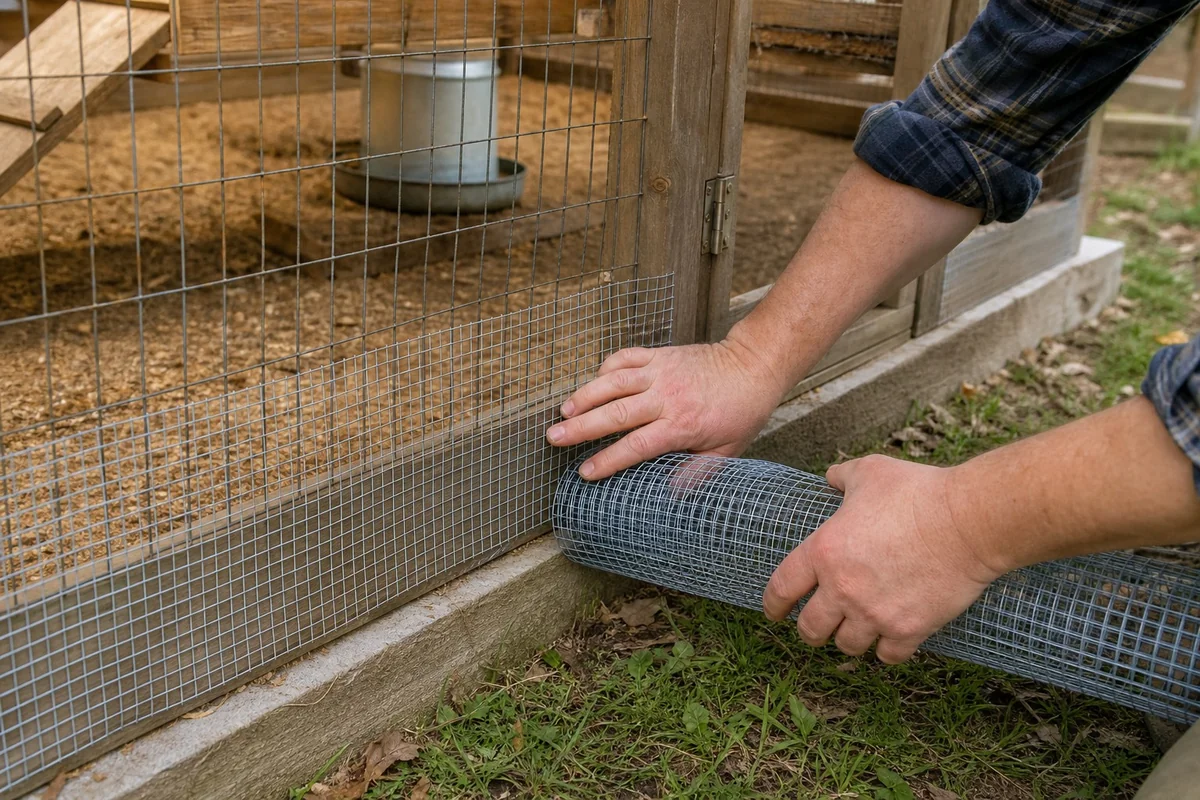
- Replace chicken wire with hardware cloth. UC IPM warns that rats pass easily through lightweight chicken wire; use galvanized 1/2-inch hardware cloth on windows, vents and run walls, fastened tightly at every edge.
- Add a wire apron. Lay hardware cloth flat on the ground along the outside of the coop and run, extending outward, fastened to the base and covered with soil, so a rat digging at the wall hits wire.
- Seal small gaps. Close any opening larger than 1/4 inch in the coop walls, around the door and at the corners with steel wool backed by sheet metal or hardware cloth, not foam or wood, which rats chew.
- Clear the surroundings. Move woodpiles, lumber and compost away from the coop, keep grass short around it and remove dense cover where rats hide.
- Check monthly. Walk the perimeter for new burrows, chewed mesh and gaps at the door, and fix them right away.
Quick Checklist
How to rat-proof a chicken coop, from trapping the rats already there to wiring and sealing the coop.
- Warning: Never use poison or glue near chickens
How Do I Stop Rats Digging Under a Chicken Coop?
Digging is the most common way rats reach a coop built on bare ground, especially Norway rats, which are natural burrowers. A wire apron stops them because rats usually dig down right at the base of a wall; when they meet buried mesh, they tend to give up rather than tunnel far out to get around it.
Where an apron is impractical, raise the coop off the ground on legs or blocks so there is no dark, sheltered gap underneath, or give it a solid floor such as concrete or a hardware cloth floor covered with bedding. Fill existing burrows after the rats are trapped, so new arrivals do not reuse them.
Is There a Rat Poison That Is Safe for Chickens?
No. Chickens peck at sick and dying rodents, and every rodenticide is toxic to birds and to the dogs, cats and wild predators that eat poisoned rats. UC IPM warns that dead rats can contain several lethal doses of poison and that secondary poisoning of pets and wildlife is possible.
The way to remove rats without harming chickens is trapping: covered snap traps set after lockup and closed before release, or open traps inside boxes with rat-size holes. For the traps that fit coops, see the coop trap guide in the rat traps section. Products sold as non-toxic or birth-control baits still belong in tamper-resistant stations away from the flock, following their labels.
Natural Rat Repellents Around Chickens
Peppermint oil, herbs, coffee grounds and other home remedies are popular in coops, but there is no reliable evidence they keep rats away, and scents fade quickly in a ventilated coop. Some keepers use them for odor control, which is a separate job.
What do rats absolutely hate? In practice, an empty, exposed, wired-in coop: no food left out, no cover nearby and no way in. That combination does more than any smell.
Common Questions About Keeping Rats Out of a Coop
Will rats leave a coop on their own once the feed is gone?
Will rats leave a coop on their own once the feed is gone?
Some will, but rats that have burrows nearby often stay and look for other food, including eggs and chicks. Remove the feed and trap at the same time, then seal the coop, so the rats already there do not simply wait for the next spill.
Do mice need smaller mesh than rats?
Do mice need smaller mesh than rats?
Yes. Mice squeeze through openings 3/8 inch wide, so 1/2-inch hardware cloth stops rats but not every mouse. If mice are a problem too, use 1/4-inch hardware cloth on low walls and vents where they get in, and seal gaps larger than 1/4 inch.
Can rats chew through hardware cloth?
Can rats chew through hardware cloth?
Galvanized steel hardware cloth resists chewing far better than wood, plastic or chicken wire, but rats work at edges and loose corners. Fasten mesh tightly with screws and washers or heavy staples, overlap seams, and check corners and the bottom edge during monthly inspections.
Should I move the compost pile away from the coop?
Should I move the compost pile away from the coop?
Yes, if it holds kitchen scraps. Rats burrow under compost piles, especially ones with meat, fish or eggs, and a pile beside the coop gives them shelter next to their food. Move it well away and keep animal products out of it.
Key Takeaways
Rats come to coops for feed, eggs and shelter, so the fix is to take those away and close the way in. Lock feed in metal cans, take the feeder in at night or use a treadle feeder, collect eggs daily, and cover every opening with galvanized 1/2-inch hardware cloth, never chicken wire, with a wire apron around the base against digging.
Trap the rats already living there with covered traps set after lockup, keep poison and glue away from the flock, and treat scent repellents as optional extras. Check the perimeter monthly; a single new burrow or chewed gap is how the next rats get in.
Tonight, after the hens roost, take the feeder in and walk the coop with a flashlight to find every gap.
Related Articles
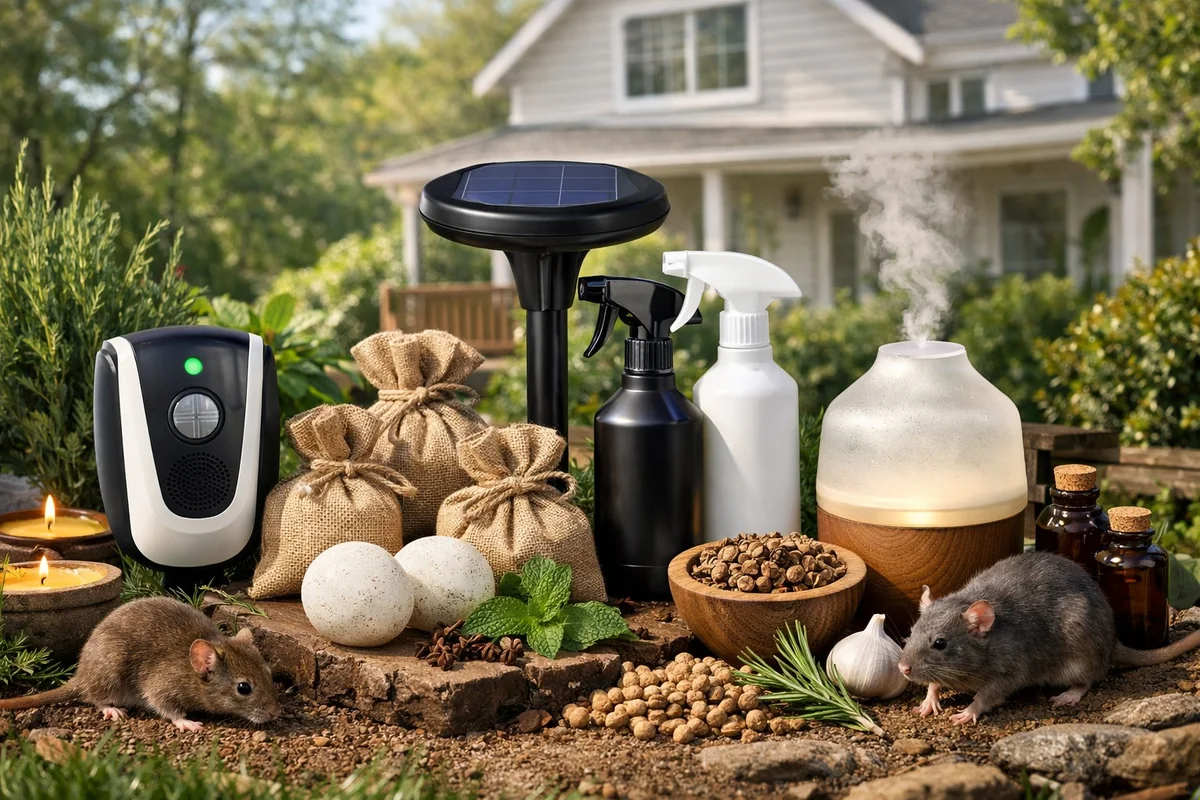
What Repels Rodents? Scents, Remedies and What Really Works
What repels rodents: why sealing gaps beats any smell, and what the evidence says about peppermint, ultrasonic devices, Irish Spring, dryer sheets and vinegar.
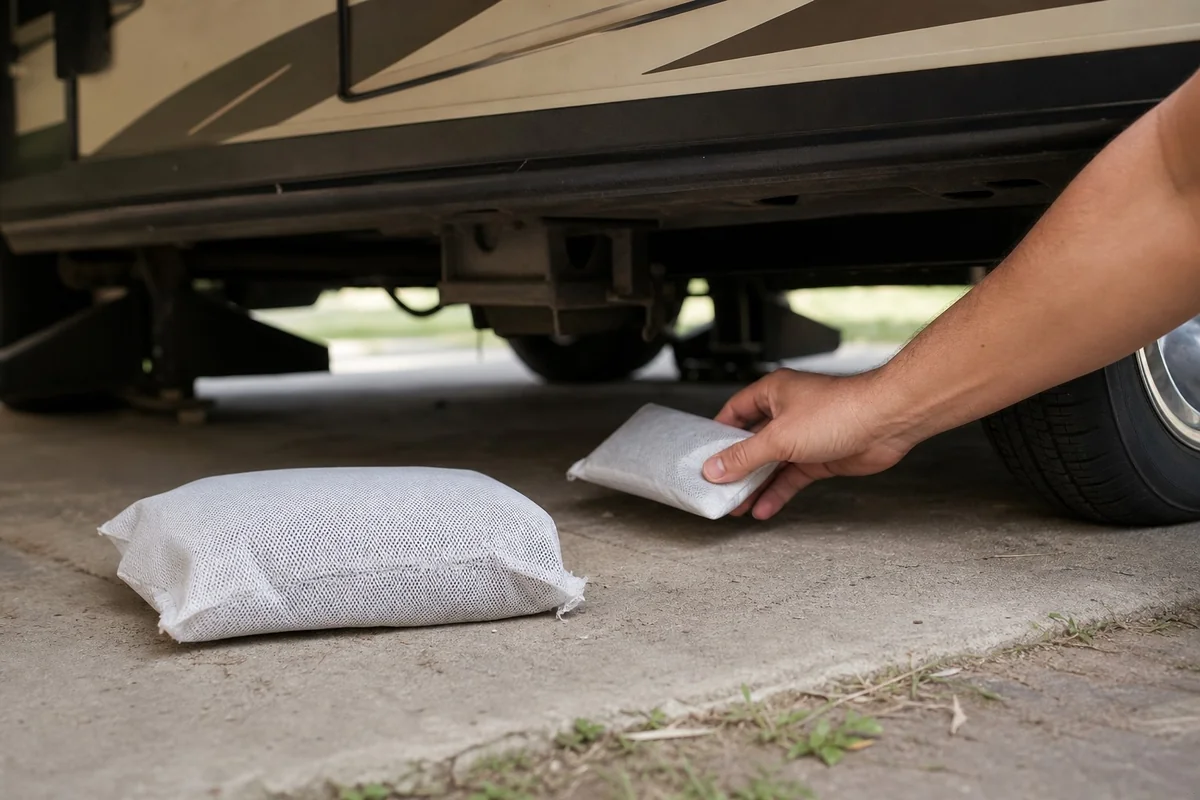
Best Rodent Repellents for RVs and Campers in Storage
The best rodent repellents for RVs and campers: Fresh Cab pouches, BugMD Vamoose Pro, Grandpa Gus's, Mighty Mint and steel wool for sealing, plus a storage plan.
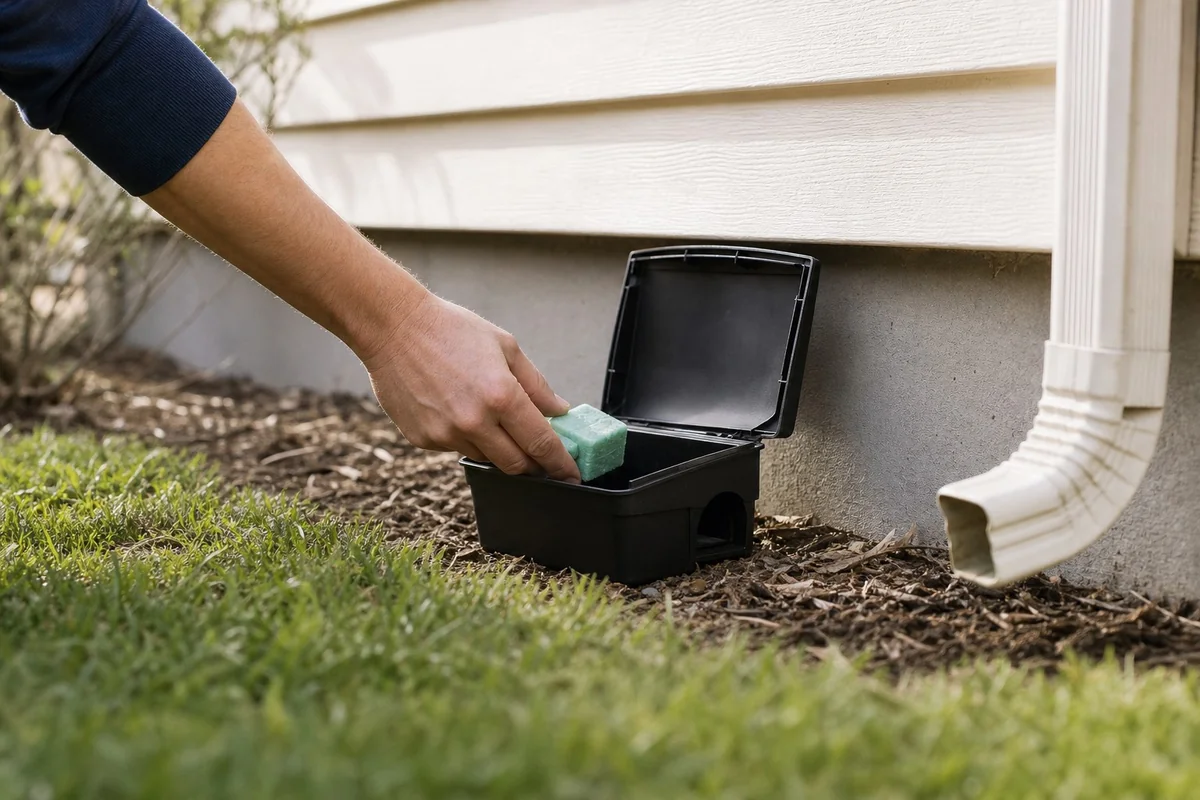
Best Rodent Repellents for the Home: What Actually Keeps Them Out
Best rodent repellents for the home: Xcluder door sweeps and steel wool, Fresh Cab pouches, Tomcat and Mighty Mint sprays, and why ultrasonic falls short.
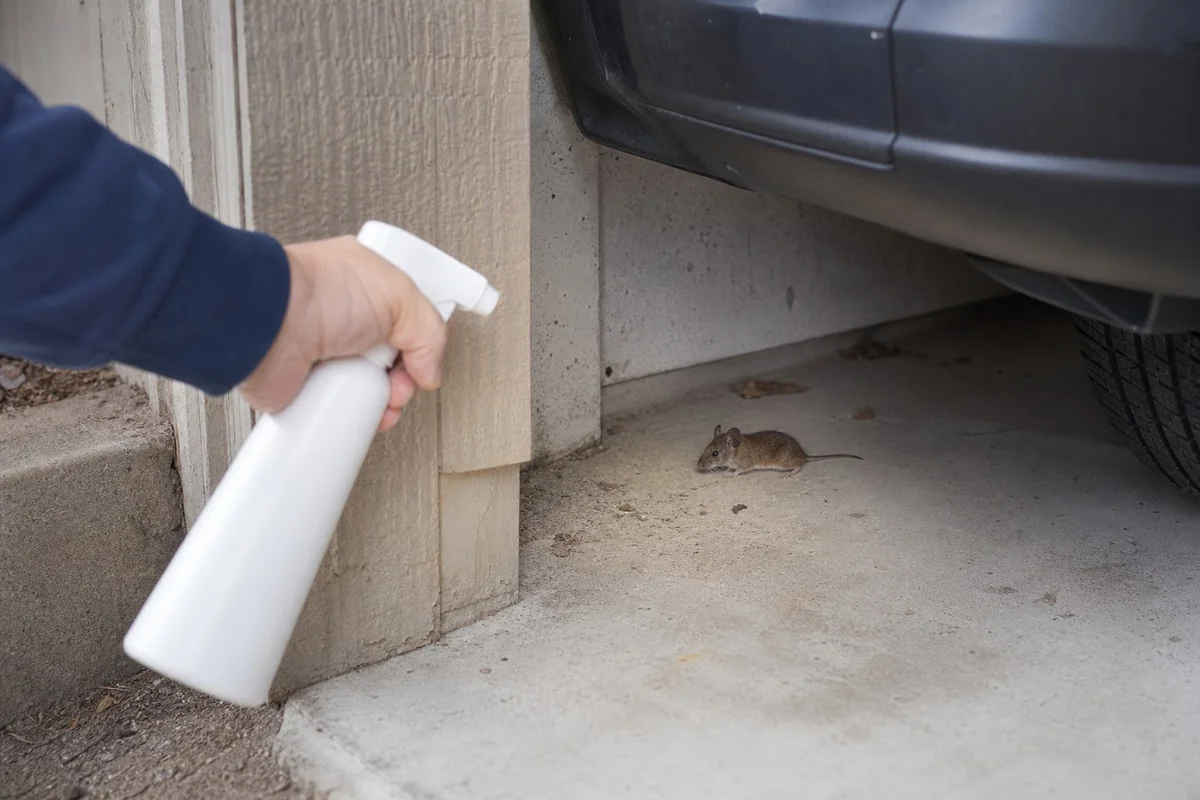
Best Rodent Repellent Sprays: Aerosol, Peppermint and Vehicle
Best rodent repellent sprays: Tomcat Continuous Spray, Mighty Mint, BIO YOLO and Mighty Mint Vehicle Spray, how well sprays work and how to use them with sealing.