 Pest Pro Reviews Editorial Team • • 8 min read •
Best Termite Sprays for Wood: Borate, Foam and Aerosol Picks
Best termite sprays for wood: Bora-Care borate for bare lumber, BioAdvanced foam for voids, TERRO aerosol and spray for infested wood, plus what sprays cannot do.
The best termite spray for wood is Bora-Care, a borate concentrate sprayed onto bare wood that termites then cannot safely eat. BioAdvanced's imidacloprid foam reaches termites inside voids and galleries, TERRO's aerosol treats infested wood and cracks, and TERRO's trigger spray is the budget option for exposed termites. None replaces a professional for an active colony.
- Sprays only reach termites in the wood they touch; colonies in soil or hidden walls need professional treatment.
- Borate wood sprays soak into bare, unfinished wood and protect it from feeding, but cannot penetrate paint or finish.
- Foam aerosols reach termites inside galleries and voids better than liquid sprays applied to the surface.
What a Termite Spray for Wood Can Do
Termite sprays for wood work in two ways. Borate treatments soak into bare wood, so termites that later feed on it die, which protects the lumber rather than hunting the colony. Insecticide sprays and foams kill termites they contact inside galleries, cracks and voids.
Both have limits. University of California IPM's guide to subterranean and other termites says do-it-yourself pesticides against termites are generally not effective and that the most effective methods are for licensed professionals. A spray is a tool for a specific board, post or void, not a cure for termites coming up from the soil.
For the full range of termite products, see our guide to the best termite treatments for the home; the termites section links our flooring and furniture guides.
Identify your needs and get personalized recommendations
Crawl space, attic or new wood.
Hollow galleries in trim or posts.
Termites you can see.
Signs Termites Are in the Wood
Before buying a spray, confirm termites and find where they are working. UC IPM lists the signs to look for:
- Damaged wood: darkened or blistering wood that is thin at the surface and easy to puncture with a knife or screwdriver.
- Galleries: hollow tunnels that follow the grain inside the wood, typical of subterranean termites.
- Mud tubes: pencil-width tubes of soil on foundations, walls or posts, made by subterranean termites traveling from the soil.
- Fecal pellets: tiny pellets with six flattened sides piled below small holes, the calling card of drywood termites.
- Swarmers and wings: winged termites or piles of shed wings near windows and doors.
Mud tubes or damage in several places point to a colony a spray will not reach. A single damaged board, post or piece of trim is where homeowner sprays and foams make sense.
Termite Wood Spray Types Compared
| Type | How It Works | Best For | Limit |
|---|---|---|---|
| Borate concentrate | Soaks into bare wood; termites die after feeding | Framing, sill plates, new or exposed lumber | Bare, unfinished wood only |
| Insecticide foam | Expands into galleries and voids | Termites inside wood and walls | Only where injected |
| Aerosol with crack nozzle | Contact kill and residual in cracks | Infested boards and gaps | Does not soak into wood |
| Ready-to-use trigger spray | Contact kill on surfaces | Exposed workers and swarmers | No colony effect |
Drywood termites are a different case. UC IPM's drywood termite guide notes that home-use products are not effective for localized treatment and that widespread infestations call for whole-structure fumigation or heat by licensed companies.
How We Selected These Products
We compared wood-focused termite products on how they reach termites, their active ingredients, labeled uses and what buyers report. Our sources were the makers' listings, Amazon's review digests and UC IPM guidance; we did not test the products.
We favored products that treat wood directly, such as borates and foams, over general perimeter sprays, which are mostly nuisance-pest barriers. The borate concentrate leads because it protects wood for the long term rather than only killing the termites present today. The foam and aerosols follow for termites already inside wood, ranked by how well they reach galleries and voids.
Bora-Care: Best Overall Termite Spray for Wood
Nisus Bora-Care is a 1-gallon borate concentrate that you dilute and spray or brush onto bare wood.
- The maker says one gallon of concentrate covers approximately 800 square feet, applied in a 2-foot band on wood surfaces.
- It is listed for termites, carpenter ants, wood-boring beetles and decay fungi.
- The maker says it remains active in treated wood for the life of the structure.
- Buyers find it effective, including one report of success against powderpost beetles in hardwood floors; value opinions are mixed.
Choose it for crawl space framing, sill plates, attic lumber, replacement boards and decks before finishing. It has to go on bare wood, so sand or strip finished surfaces first, and it is a protective treatment rather than a fast kill.
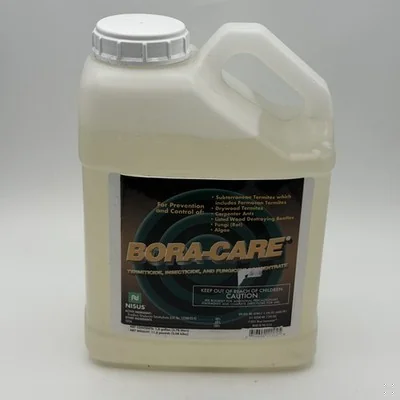
Nisus Bora-Care Wood Treatment Concentrate 1 gal
Best for: Protecting bare framing and lumber long term
- ✓About 800 sq ft per gallon, per the maker
- ✓Also lists beetles and decay fungi
- ✓Effective, per buyers
- −Bare, unfinished wood only
- −Mixed value feedback
Specifications (1)
- Item Form
- Liquid
BioAdvanced Termite and Carpenter Bee Killer Plus Foam: Best Foam for Voids
BioAdvanced's foam comes in an 18-ounce can with imidacloprid, aimed at termites hidden inside wood and wall voids.
- The maker says the foam expands up to 30 times its volume to reach cracks, voids and hard-to-reach spaces.
- It is labeled for wall voids, crawlspaces and the gap between wood and foundations.
- It also lists carpenter bees and wood-infesting beetles.
- Buyers report it works almost instantly on carpenter bees; quality and foaming get mixed reviews, with some cans leaking foam.
Choose it for galleries in a door frame, window trim or deck post where you can drill small holes and inject. Wear gloves and point the can away from yourself, since some buyers report foam escaping from the top.
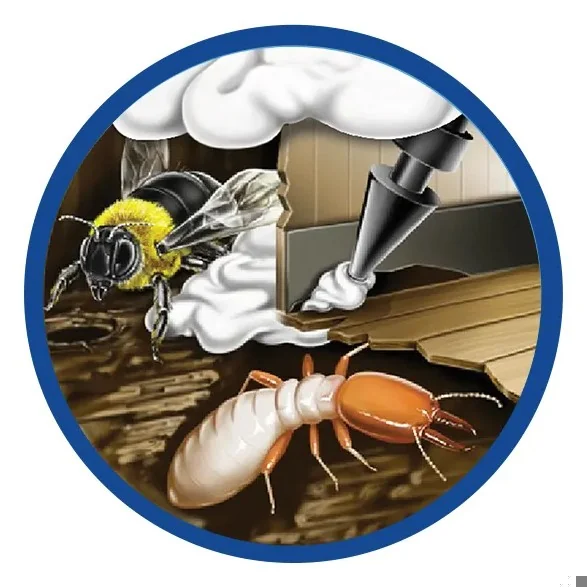
BioAdvanced Termite & Carpenter Bee Killer Plus Foam 18 oz
Best for: Termites inside voids and galleries
- ✓Expands up to 30 times, per the maker
- ✓Labeled for wall voids and crawlspaces
- ✓Works quickly, per buyers
- −Some cans leak foam, per buyers
- −Mixed quality feedback
Specifications (3)
- Active Ingredients
- Lmidacloprid
- Item Form
- Spray
- Liquid Volume
- 18 fluid ounces
TERRO Carpenter Ant, Termite and Carpenter Bee Aerosol: Best for Infested Wood
TERRO's T1901 aerosol comes as two cans totaling 32 ounces, with deltamethrin at 0.03%.
- A two-way nozzle sprays broadly or into cracks, wall voids and infested wood, per the maker.
- It kills on contact and keeps working for up to one month, per the maker.
- The maker notes it is not a sole protection against termites and recommends a professional inspection for active infestations.
- Buyers of the line report it works well on carpenter ants; several report cans that would not spray properly.
Choose it for treating the inside of a damaged board, gaps around window and door frames and swarmers that emerge indoors. Follow up with a borate or professional treatment for lasting protection.

TERRO Carpenter Ant & Termite Killer Aerosol 2-Pack
Best for: Infested boards, cracks and swarmers
- ✓Two-way nozzle for voids and broad spraying
- ✓Works on carpenter ants, per buyers
- ✓No noticeable odor, per buyers
- −Some cans do not spray properly, per buyers
- −Not a stand-alone termite treatment
Specifications (3)
- Active Ingredients
- Deltamethrin 0.03%, Other Ingredients 99.97%
- Item Form
- Spray
- Liquid Volume
- 32 fluid ounces
TERRO Carpenter Ant and Termite Killer: Best Budget Spray
TERRO's T1100 is a 32-ounce ready-to-use trigger spray with deltamethrin at 0.02%.
- The maker says it kills on contact and continues to kill for up to 4 months.
- It is labeled for crack and crevice treatment and crawl spaces, indoors and outdoors.
- Buyers find it effective, especially on carpenter ants, and easy to use.
- Opinions on longevity and value are mixed.
Choose it for exposed termites and cracks in a crawl space or around wooden steps. It is a contact spray, so pair it with foam or borate where termites are inside the wood.

TERRO Carpenter Ant & Termite Killer Spray 32 oz
Best for: A budget contact spray
- ✓Kills on contact, per the maker
- ✓Up to 4 months residual, per the maker
- ✓Easy to use, per buyers
- −Does not reach the colony
- −Mixed longevity feedback
Specifications (3)
- Active Ingredients
- Deltamethrin 00.02%; Other Ingredients 99.98%
- Item Form
- Spray
- Liquid Volume
- 32 fluid ounces
- Bora-Care wins for: protecting bare framing and lumber long term
- BioAdvanced Termite Foam wins for: termites inside voids and galleries
- TERRO T1901 Aerosol wins for: infested boards, cracks and swarmers
- TERRO T1100 Spray wins for: a budget contact spray
The right spray depends on whether you are protecting wood or killing termites already inside it.
How to Spray Wood for Termites
- Confirm the termite: mud tubes mean subterranean termites, six-sided pellets mean drywood; both often need a professional.
- Expose the wood: remove trim, insulation or debris so you can reach the damaged area.
- Probe for galleries: push a screwdriver into suspect wood to find hollow, damaged sections.
- Inject foam into galleries: drill small holes into hollow sections and inject foam per the label.
- Treat bare wood with borate: spray or brush diluted borate onto unfinished surfaces until they are wet.
- Fix the cause: repair leaks, improve drainage and remove wood-to-soil contact.
- Replace badly damaged wood: and consult a contractor for load-bearing members.
Safety When Treating Wood
Wood treatments often go on in tight, poorly ventilated spaces such as crawl spaces and attics. Wear gloves, eye protection and a mask rated for the product, ventilate the area, and keep children and pets away until treated surfaces are dry, following each label.
Never drill into wood near wiring or plumbing without checking what is behind it, and avoid spraying into electrical boxes. Crawl spaces and attics can also be physically hazardous, which is one reason UC IPM leaves full inspections of those areas to professionals. Store concentrates locked away in their original containers, and mix only what you will use that day.
Common Questions About Termite Sprays for Wood
How do you kill termites in wood?
How do you kill termites in wood?
- Probe the wood to find hollow galleries.
- Drill small holes into them and inject a termite foam per the label.
- Spray bare surrounding wood with a borate treatment.
- Fix leaks and wood-to-soil contact.
- Replace badly damaged pieces, and call a professional if termites are in several places or come up from the soil.
What kind of wood is termite resistant?
What kind of wood is termite resistant?
No wood is termite-proof, but some resist better. UC IPM notes Douglas-fir is moderately resistant while hemlock and spruce are not, and resistance depends on the species and on heartwood versus sapwood. Pressure-treated lumber is the practical choice where wood is exposed to weather or near soil.
Can turpentine kill termites?
Can turpentine kill termites?
It may kill termites it soaks, but there is no reliable evidence that it controls an infestation, and turpentine is flammable and strong-smelling indoors. A product registered for termites, such as a foam or borate wood treatment, is safer and more effective.
Can I spray borate on painted wood?
Can I spray borate on painted wood?
No. Borate has to soak into the wood to work, and paint, stain or sealer blocks it. Sand or strip the finish first, treat the bare wood until wet, let it dry and then refinish. For finished furniture or floors, borate is usually not practical without stripping.
What can I spray in the attic to keep termites away?
What can I spray in the attic to keep termites away?
A borate treatment on bare attic framing protects it from drywood termites and wood-boring beetles. Insecticide sprays are not a lasting barrier in attics. If you already see drywood pellets in the attic, get a professional inspection, since hidden infestations may need whole-structure treatment.
Which One Should You Buy?
Bora-Care is the termite spray to buy for wood. It soaks into bare lumber and protects it for years against termites, carpenter ants, beetles and decay, which no contact spray can match.
Choose BioAdvanced's foam for termites already inside voids and galleries, TERRO's T1901 aerosol for infested boards and swarmers, and TERRO's T1100 spray as a budget contact option. If you find mud tubes or damage in several places, call a licensed professional rather than buying more spray.
Before you buy, check whether the wood you want to treat is bare or finished, since that decides whether a borate can work.
Related Articles
Best Termite Treatments for Wood Furniture: Foams and Aerosols
Best termite treatments for wood furniture: Termidor Foam for drywood galleries, BioAdvanced and Spectracide foams, TERRO aerosol, and when to call a professional.
Best Termite Treatments for Wood: Borates, Copper and Foam
Best termite treatments for wood: Bora-Care and Tim-Bor borates for bare indoor lumber, Copper-Green for outdoor wood, and Termidor Foam for wood already infested.
Best Home Termite Treatments: Foam, Borate, Stakes and Spray
Best termite treatments a homeowner can use: Termidor Foam, Spectracide foam, Bora-Care borate, Terminate stakes and TERRO spray, plus when you need a professional.
How to Treat Termites in Wood Flooring, From Below and Above
How to treat termites in wood flooring: spot the signs, tell subterranean from drywood, treat joists and subfloor from below, foam boards, know when to call a pro.